

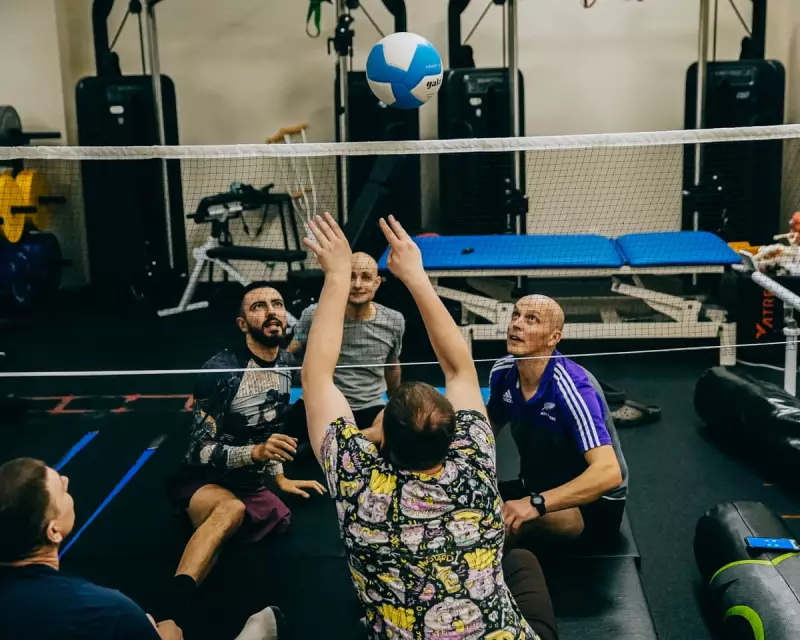
At a specialist rehabilitation centre in Ukraine, the sound of a volleyball game echoes as a group of wounded soldiers motivate each other. Nearby, Vladislav, 31, shares a harrowing video on his phone. The footage, sourced from a Russian military channel, shows a fibre-optic drone homing in on his vehicle with terrifying ease before the screen cuts to black.
A Life Changed in an Instant
Vladislav's life was irrevocably altered on 21 August near Lyman in north-eastern Ukraine. An explosion threw him from his buggy. Conscious but gravely injured, his first thought was not for his mangled left leg. "To be honest, I checked my crotch, if everything's in the right place," he recalls with a grim grin. Assured on that front, he applied a tourniquet, a act that saved his life.
His rescue was followed by a brush with unconsciousness and a vision of a "white tunnel with a light at the end." He was jolted back by a comrade accidentally elbowing his wound. Vladislav is one of dozens of new amputees arriving at the centre each month. While exact figures are guarded, estimates suggest tens of thousands of Ukrainians have lost limbs since the full-scale invasion began in 2022.

British Expertise on the Ground
Providing crucial support to Ukrainian medical staff is a small team of British military personnel – doctors, physiotherapists, and occupational therapists from the UK's defence medical services. Their mission, part of the little-publicised Project Renovator, involves sharing expertise on complex amputee rehabilitation and the use of temporary prosthetics.
"The numbers here are truly humbling," says Mike, a British rehab consultant and army lieutenant colonel. Having served in Afghanistan, he notes the UK team can help "move their patients on to new legs quicker." He is keen to stress the collaboration is a two-way street, with British medics learning from Ukrainian innovations in nerve injury treatment combining surgery, electrical stimulation, and rehab.
Britain has been reticent to acknowledge its military footprint in Ukraine beyond embassy staffing. Security for the medical team remains tight, with Mike being the only member identifiable. UK Defence Secretary John Healey praised their work: "I'm proud that the UK is stepping up to ensure wounded Ukrainian soldiers get the best possible treatment."
The Long Road to Recovery
The centre's approach is holistic. Alongside advanced physiotherapy, it fosters a community spirit through group activities like volleyball. "Part of the approach is to have psychologically aware clinicians," Mike explains, who can identify when patients face mental struggles.
For Vladislav, a former arbitration lawyer, recovery is progressing. He hopes for a final prosthetic and discharge soon. His mental fortitude was tested in solitary moments: "I cried a lot... It was 'like a divorce'." Support from his family, including his baby son Adam, has been vital, though he hid his injury from his pregnant wife for over a month.
The journey is longer for others. Oleksandr, a 48-year-old former fitness teacher, lost both legs below the knee to an artillery shell on 18 October 2024. His treatment has been gruelling, involving multiple surgeries, a month in intensive care, and learning to use a wheelchair. "In the beginning it was hard for me just to sit... I was sweating immediately," he admits, welling up at the memory. Gradual gym work rebuilt his strength and hope. "I knew then I would get through," he says, though his future as a trainer remains uncertain until he masters walking on prosthetics.
The work at the centre underscores a stark reality: the need for long-term rehabilitation support for Ukraine's wounded will persist for years, long after the guns fall silent.






