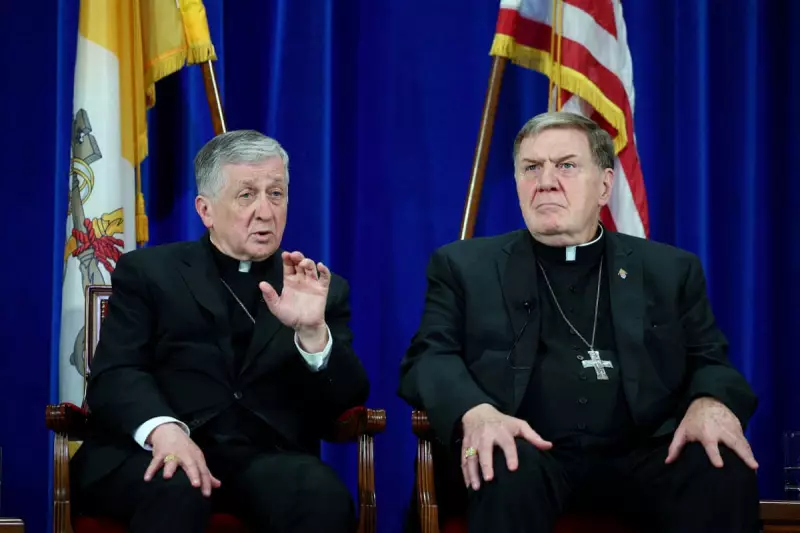
Senior US Church Leaders Issue Stark Warning Over Trump Administration's Foreign Policy Direction
Three prominent cardinals within the American Catholic Church have delivered a powerful critique of the Trump administration's approach to international relations, expressing grave concerns that current policies threaten to undermine global stability and human dignity. The joint statement from Cardinals Blase Cupich of Chicago, Robert McElroy of Washington DC, and Joseph Tobin of Newark represents a significant intervention from religious leaders into contemporary political discourse.
Moral Foundations of American Foreign Policy Under Scrutiny
The cardinals' statement, released on Monday, identifies several specific administration actions that they believe demonstrate a dangerous departure from established diplomatic norms. "Our country's moral role in confronting evil around the world, sustaining the right to life and human dignity, and supporting religious liberty are all under examination," declared the church leaders in their carefully worded document.
While not explicitly naming President Donald Trump, the statement clearly references recent controversial decisions including:

- The pre-dawn military operation in Caracas on 3 January 2025 that resulted in the capture of Venezuelan leader Nicolás Maduro
- Substantial reductions to American humanitarian aid programmes
- Public threats regarding the potential forceful acquisition of Greenland from Denmark
- The ongoing conflict in Ukraine and its implications for international law
Echoes of Papal Concern Over Diplomatic Approaches
The cardinals' intervention follows similar expressions of concern from the highest levels of the Catholic Church. Pope Leo XIV, who became the first US-born pontiff in 2024, recently addressed related themes during a Vatican speech on 9 January. "A diplomacy that promotes dialogue and seeks consensus among all parties is being replaced by a diplomacy based on force," observed the Pope, adding that "war is back in vogue and a zeal for war is spreading."
This marks the second significant critique from US Catholic leadership in recent months. In November 2024, the United States Conference of Catholic Bishops collectively condemned the administration's immigration policies, particularly what they described as the "vilification" of immigrants to justify mass deportation efforts.
Specific Criticisms and Broader Implications
The cardinals' statement articulates particular concern about what they perceive as a normalization of military intervention. "We renounce war as an instrument for narrow national interests and proclaim that military action must be seen only as a last resort in extreme situations, not a normal instrument of national policy," they asserted.
Cardinal Tobin elaborated on these concerns in accompanying comments, warning that abandoning peaceful diplomatic relations risks "escalating threats and armed conflict ... destroying international relations and plunging the world into incalculable suffering." His colleague Cardinal Cupich added separately: "We cannot stand by while decisions are made that condemn millions to live trapped permanently at the edge of existence."
Administration Response and Ongoing Debate
The White House has firmly rejected the cardinals' characterisation of administration policies. Deputy Press Secretary Anna Kelly stated on Tuesday that "President Trump's foreign policy is unequivocally moral" and asserted that his actions had "made the world safer and more stable."
The administration maintains that the Venezuela operation was legally justified and necessary for national security, while the interest in Greenland stems from strategic considerations regarding the resource-rich territory. Regarding aid reductions, officials have previously argued that many USAID projects were financially wasteful and advanced political agendas contrary to administration priorities.

Cardinal McElroy concluded the religious leaders' intervention with a reflection on America's historical role: "In our current national debate about the fundamental contours of American foreign policy, we ignore this reality at the cost of our country's truest interests and the best traditions of this land that we love." The statement suggests these senior church figures believe the current moment represents "the most profound and searing debate about the moral foundation for America's actions in the world since the end of the cold war."