

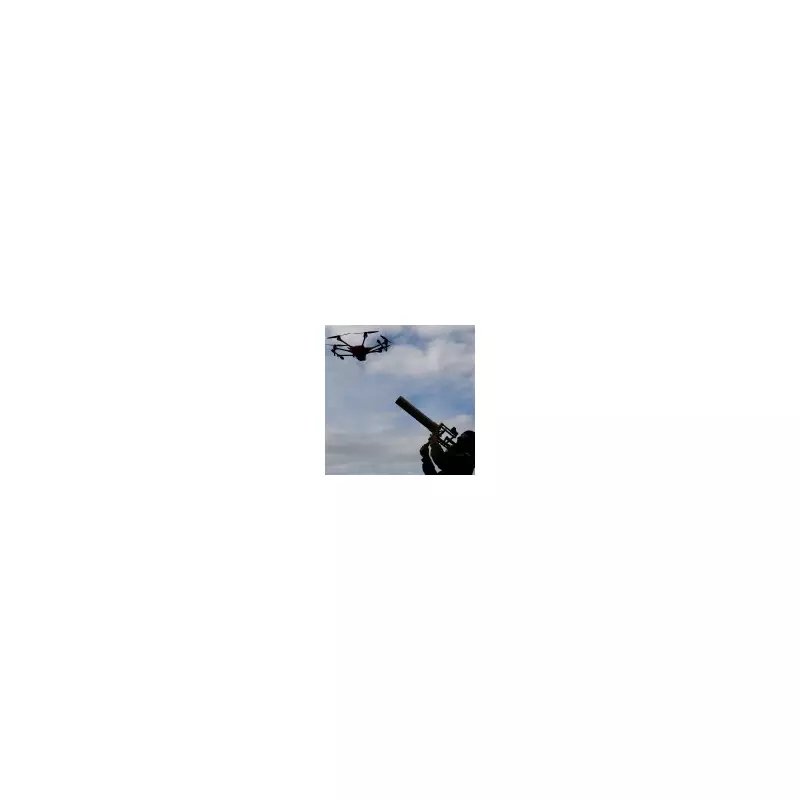
The UK and Europe are at risk of a devastating 'drone 9/11' style attack unless defences at critical sites are urgently strengthened, a leading counter-drone expert has warned.
State Actors 'Poking Around' for Weaknesses
Oleg Vornik, chief executive of the global counter-measures firm DroneShield, issued the stark warning following a spate of unexplained drone incidents at sensitive military and public facilities. He believes a 'state actor' is actively probing NATO's defences to identify vulnerabilities and gauge responses, while simultaneously aiming to spread fear.
Vornik dismissed the idea that recent flights over UK bases were the work of 'local hooligans'. He stated the activity is connected to similar incursions over airports and military sites across Europe, indicating a coordinated campaign.

A Swarm of Suspicious Incidents
The warning comes against a backdrop of numerous concerning reports:
- In November 2024, drones triggered alarms over RAF bases used by the US Air Force on several consecutive nights.
- Drones were seen over the Irish Sea around the time of Ukrainian President Volodymyr Zelenskyy's visit to Dublin on 1 December 2024.
- Munich airport halted operations twice in two days in early October due to drone sightings.
- In 2023, a Premier League match at Southampton's St Mary's Stadium was suspended after a drone entered the arena.
- In June 2024, police seized three drones flown over Taylor Swift concerts in Liverpool.
Vornik emphasised that the threat isn't limited to military-grade drones. He warned that commercially available models, capable of carrying 5-10kg payloads, could be weaponised with explosives, biological agents like anthrax, or even mounted guns. Such drones could target crowded stadiums, airports, or energy facilities with catastrophic effect.
The Race to Reinforce Defences
While the UK Ministry of Defence insists it has robust measures and is 'scaling up' its counter-drone technology, Vornik argues the work needs to happen faster. He calls for a 'large amount' of protective systems at each critical military and public venue.
NATO allies are considering a joint 'drone wall' defence system, combining radars, sensors, and jamming technology from the Baltic to the Black Sea. This initiative follows repeated intrusions by Russian drones into Polish airspace.
The British government is investing heavily in this domain, with a spokesperson confirming over £4 billion is being spent on boosting drone capabilities and more than £1 billion on strengthening integrated air and missile defence.
DroneShield, which has an exclusive UK partnership with BT and technology deployed in Poland near the Ukrainian border, provides AI-integrated systems that can pinpoint a drone operator's location.
'It needs to be done urgently before we see the next drone 9/11,' Vornik concluded, underscoring the pressing nature of the threat to national security.






