

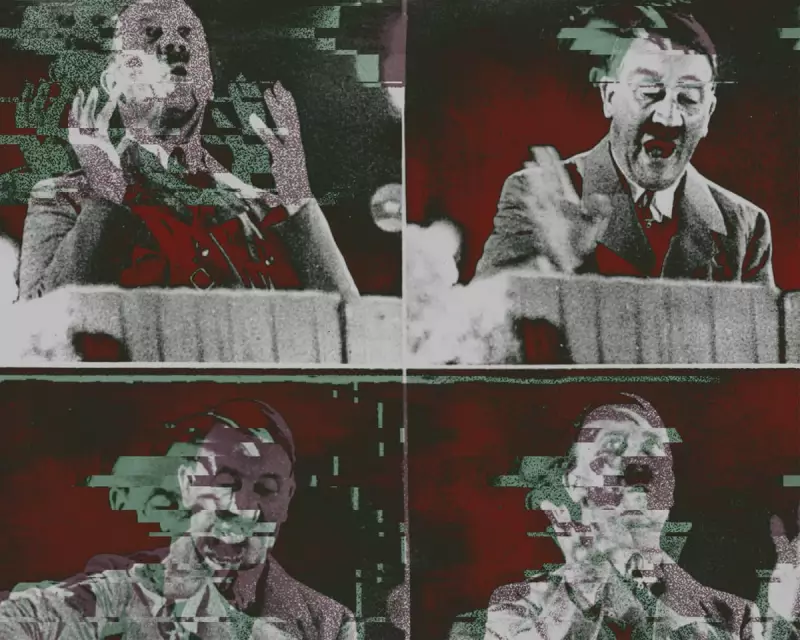
Extremist movements across the ideological spectrum are harnessing advanced artificial intelligence to supercharge their propaganda efforts, creating a significant new challenge for counter-terrorism authorities. Researchers have identified a growing trend where groups from the neo-Nazi far-right to jihadist organisations like the Islamic State are using AI voice-cloning software to recreate and translate the speeches of major ideological figures.
The New Frontier of Digital Propaganda
According to threat intelligence analysts, the adoption of generative AI tools marks a profound evolution in how extremist content is produced and disseminated. Lucas Webber, a senior analyst at Tech Against Terrorism and research fellow at the Soufan Center, explains that earlier methods relied on human translators or basic machine translation, which often lacked nuance. "Now, with the rise of advanced generative AI tools, these groups are able to produce seamless, contextually accurate translations that preserve tone, emotion, and ideological intensity across multiple languages," Webber stated.
This technological leap allows for the transformation of text-based manifestos into engaging multimedia narratives, making extremist ideology more accessible and emotionally resonant for a global, multilingual audience.

Neo-Nazis and the AI Resurrection of Hitler
On the far-right, the use of AI-voice cloning has become particularly prolific. Research from the Global Network on Extremism and Technology (GNet) details how content creators are feeding archival Third Reich speeches into services like ElevenLabs to generate English-language clones of Adolf Hitler's voice. These AI-generated speeches have been disseminated across platforms including X, Instagram, and TikTok, amassing tens of millions of streams.
The technology is also being used to breathe new life into more contemporary extremist texts. In a stark example, Siege – an insurgency manual written by proscribed American neo-Nazi terrorist James Mason – was transformed into an audiobook in late November 2023. A prominent neo-Nazi influencer, using a custom AI voice model of Mason, recreated the entire text, which has served as a foundational text for groups like the Base and the now-defunct Atomwaffen Division.
"The creator of the audiobook has previously released similar AI content; however, Siege has a more notorious history," said Joshua Fisher-Birch, a terrorism analyst at the Counter Extremism Project, highlighting its promotion of lone-actor violence and its status as required reading within violent neo-Nazi circles.
Jihadist Groups and AI-Powered Translation
Meanwhile, pro-Islamic State media outlets on encrypted networks are actively using AI to create text-to-speech renditions of ideological content from official publications. This allows the group to efficiently translate complex teachings from Arabic into a plethora of other languages, dramatically expanding their potential recruitment pool.
This capability addresses a historical bottleneck. Previously, influential English-language propagandists like the late al-Qaeda operative Anwar al-Awlaki had to personally record lectures. Security services have long cited the powerful contagion of his voice. Now, AI can simulate such persuasive delivery at scale and in any language.
Evidence of this activity was spotted on Rocket.Chat, the Islamic State's preferred communications platform. In October, a user posted a video with Japanese subtitles, explicitly discussing the difficulties of translation before the advent of AI, though claiming limited use of the tools for audio.
A Persistent Game of Technological Catch-Up
The proliferation of free AI applications, such as OpenAI's ChatGPT, is providing extremists with a versatile toolkit. Beyond voice cloning, groups like the Base have used these models to generate imagery and streamline operational planning and research, acknowledging their utility as far back as 2023.

This development continues a familiar pattern where extremist groups rapidly co-opt emergent technologies—from cryptocurrency for anonymous fundraising to files for 3D-printed firearms—often staying ahead of regulatory and law enforcement responses. The integration of sophisticated AI into propaganda machinery represents the latest front in this ongoing digital arms race, presenting a formidable challenge for global counter-terrorism efforts aiming to curb the spread of violent ideology.





