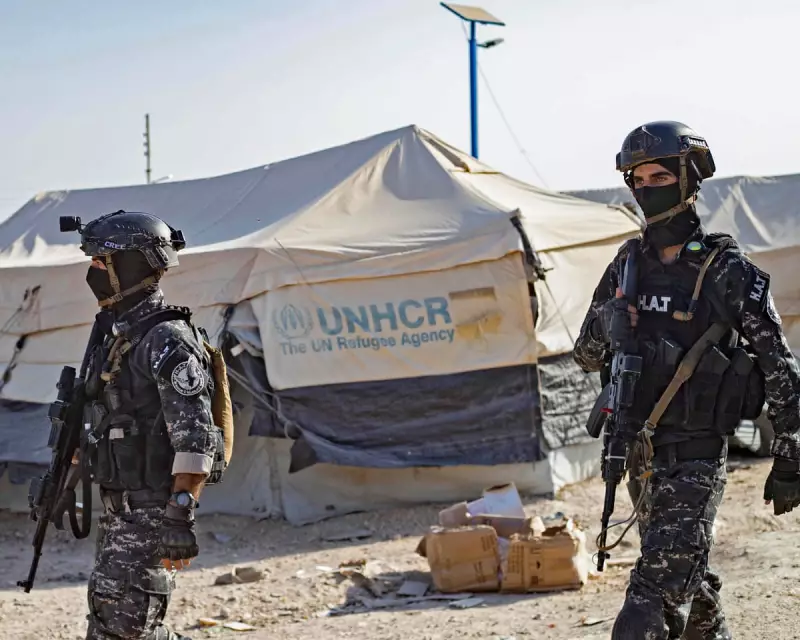
In a significant development in the ongoing Syrian conflict, Kurdish-led forces have announced a withdrawal from a major detention camp in north-east Syria that houses tens of thousands of individuals linked to Islamic State. This move comes as the United States declared it is no longer supporting these forces, and Syrian government troops make rapid territorial gains in the region.
Al-Hawl Camp: A Hub of Extremist Concerns
The al-Hawl camp, which is Kurdish-run, has long been a focal point of international anxiety. It accommodates an estimated 24,000 people, including many of the most radical foreign women suspected of having been members of IS, along with their families. Neighbouring states and the global community have repeatedly warned that the camp serves as a breeding ground for extremism, with fears that a potential jailbreak could unleash chaos.
A spokesperson for the Syrian Democratic Forces (SDF), the Kurdish-led coalition, stated that their forces were compelled to withdraw from al-Hawl and redeploy to northern Syrian cities facing escalating threats. They attributed this decision to what they described as a failure of the international community to provide adequate support.

Syrian Government Assumes Control Amid Escalating Tensions
As the SDF pulled out, the Syrian government announced it would take control of al-Hawl camp, accusing the Kurdish forces of abandoning it without guards and allowing detainees to escape. Similar allegations were made regarding a prison in Raqqa, where 120 prisoners reportedly broke free, though the SDF has denied these claims.
The withdrawal coincides with a dramatic shift in the balance of power on the ground. Syrian government forces have swept through north-east Syria, capturing key areas like Raqqa and Deir el-Zour over the weekend. This advance marks the most significant change in frontlines since the fall of former president Bashar al-Assad in December 2024, with the SDF losing vast swathes of territory it had controlled since 2019 with US backing.
US Shifts Stance on Syrian Conflict
In a notable policy shift, US envoy for Syria Tom Barrack stated that the United States no longer supports the SDF in the fight against IS. He explained that while the SDF had been an effective partner in defeating IS's territorial caliphate by 2019, the situation has fundamentally changed with the establishment of a new central government in Syria under Ahmad al-Sharaa.
Barrack emphasised that Syria now has an acknowledged central government that has joined the Global Coalition to Defeat ISIS, rendering the original purpose of the SDF as the primary anti-ISIS force largely obsolete. This declaration underscores a realignment in US foreign policy towards the region.
Ceasefire Agreements and Ongoing Negotiations
Amid the turmoil, a 14-point ceasefire agreement signed on Sunday by President al-Sharaa and SDF head Mazloum Abdi quickly collapsed after a disastrous meeting in Damascus. However, on Tuesday night, the Syrian presidency announced a four-day ceasefire to allow for the implementation of the agreement.
Under the proposed terms, the Syrian government would refrain from entering Kurdish-majority cities such as al-Hasakah and Qamishli, with security forces drawn from local residents. Additionally, Abdi would nominate a candidate from the SDF for the position of deputy defence minister, along with MPs for the national parliament and lists for public sector employment.
This announcement has temporarily halted further fighting and provided some reassurance to Kurdish officials about the protection of their rights. However, tensions remain high, with senior Kurdish leader Ilham Ahmed accusing Damascus of planning to massacre Kurds and calling for general mobilisation in Kurdish-majority areas.
Potential for Escalated Conflict in Kurdish Regions
If the four-day ceasefire fails and Syrian government forces advance into Kurdish-majority areas, the conflict could intensify significantly. The SDF has fortified positions in these regions, equipped with heavy artillery, drones, and underground tunnel networks. The Kurdish population views this struggle as existential, citing past mass killings by government forces as a grim precedent.

The Syrian government has asserted that its goal is to restore stability and protect government institutions, promising not to enter Kurdish areas. Yet, the rapid advance over the past week has already extended Damascus's control over most of the country, including crucial oil and gas fields and key dams.
This unfolding situation highlights the complex dynamics of the Syrian conflict, where shifting alliances and territorial gains continue to reshape the landscape, with profound implications for regional security and international relations.