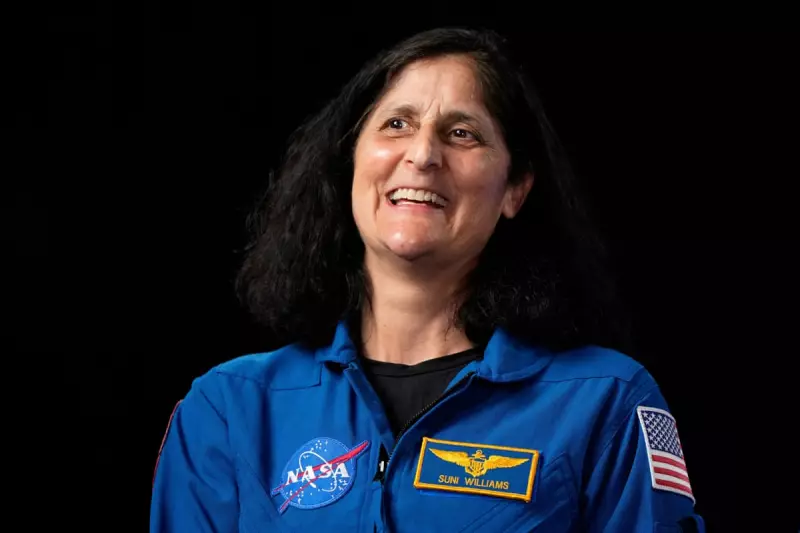
NASA astronaut Suni Williams, a veteran of three space missions and holder of multiple records, has officially retired from the US space agency after 27 years of distinguished service. The announcement came via a NASA press release on Tuesday, marking the end of a career that saw Williams become one of the most accomplished astronauts in the agency's history.
A Trailblazing Career in Space Exploration
Williams, a 60-year-old former US Navy captain, leaves NASA having accumulated 608 days in space across her missions. This impressive total places her second only to fellow astronaut Peggy Whitson, who spent 695 days in orbit. Her retirement was announced on the 96th birthday of Buzz Aldrin, the second man to walk on the moon, symbolising a generational transition in American space exploration.
During her time with NASA, Williams set the record for the most accumulated spacewalk time by any woman, completing more than 62 hours across nine separate extravehicular operations. She also achieved the notable distinction of becoming the first astronaut to run a marathon in orbit, participating officially in the 2007 Boston Marathon from the International Space Station while running on a treadmill.

The Extended Starliner Mission
Williams will perhaps be best remembered for her role in the first crewed flight of Boeing's Starliner capsule in June 2024. What was intended as a 10-day test mission to the International Space Station transformed into a 286-day odyssey when technical problems with the spacecraft prevented a timely return.
Williams and fellow astronaut Barry "Butch" Wilmore launched on what should have been a brief mission but ended up spending nine months aboard the ISS. Their extended stay sparked significant political controversy on Earth, with figures including former President Donald Trump and SpaceX CEO Elon Musk claiming the astronauts had been "stuck" and "abandoned" in space.
The pair eventually returned to Earth in March 2025 aboard a SpaceX Dragon capsule, in what Trump framed as a "rescue" mission by his then-ally Musk. At a post-landing press conference, both astronauts downplayed the political drama, with Williams taking a diplomatic approach when asked about the situation.
NASA Leadership Pays Tribute
NASA's new administrator, Jared Isaacman, praised Williams as "a trailblazer in human spaceflight" in the official retirement announcement. He highlighted how her work has helped lay the foundation for future Artemis missions to the moon and eventual journeys to Mars.
Vanessa Wyche, director of the Johnson Space Center in Houston where Williams was interviewed in March 2025, added her own tribute, stating: "Over the course of Suni's impressive career trajectory, she has been a pioneering leader. Her exceptional dedication to the mission will inspire future generations of explorers."
Looking Toward the Future of Space Exploration
Williams' retirement comes at a significant moment for NASA, just three days after the agency moved the Artemis II rocket to its launchpad at Florida's Kennedy Space Center. This mission, scheduled to launch with a window opening on 6 February, will carry four astronauts around the moon for the first time since 1972.
The Artemis II crew consists of NASA astronauts Reid Wiseman, Victor Glover, and Christina Koch, along with Canadian astronaut Jeremy Hansen. NASA plans to conduct a "wet test" dress rehearsal soon to assess the rocket's readiness for this historic mission.
In an educational initiative connected to the Artemis program, more than 2.5 million people have claimed "boarding passes" that will see their names stored digitally on an SD card flying around the moon aboard the Orion crew capsule. A successful 10-day Artemis II mission would advance plans for Artemis III, which aims to achieve the first human lunar landing in over half a century, currently scheduled for the following year.
Reflecting on her career and the future of space exploration, Williams expressed appreciation for the International Space Station and its role in advancing human knowledge. She noted that the ISS, with its "awe inspiring people, engineering and science," has opened pathways to new exploration of both the moon and Mars.

Williams' three space missions included a December 2006 flight aboard the space shuttle Discovery, a July 2012 journey on a Russian Soyuz spacecraft, and the extended 2024 Starliner mission. Her retirement marks the departure of one of NASA's most experienced and respected astronauts, whose career spanned nearly three decades of human spaceflight advancement.