

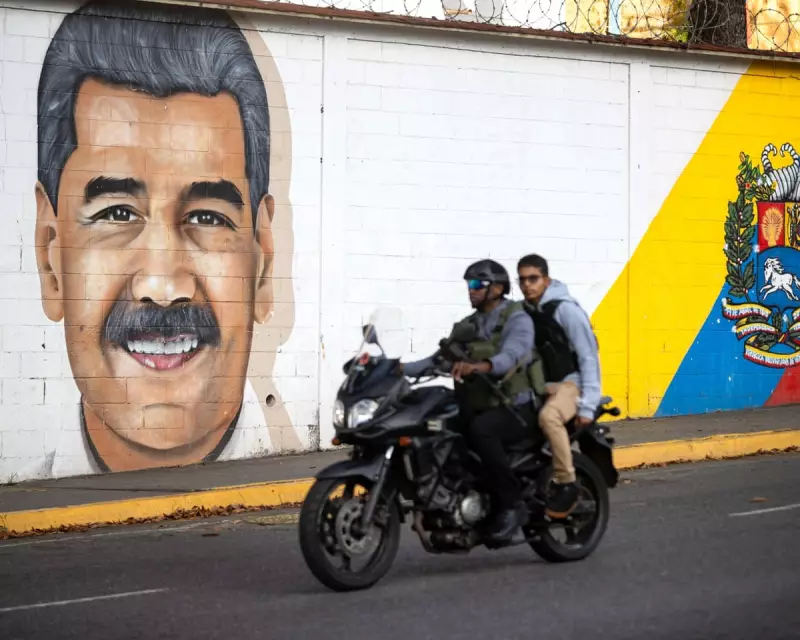
Senior figures in the United States administration have swiftly moved to clarify the country's intentions towards Venezuela, following controversial remarks by former President Donald Trump. This comes after a dramatic US-led operation on Saturday which resulted in the capture of Venezuelan President Nicolás Maduro, who now faces federal criminal charges in the US.
Contradictory Statements from Washington
On Sunday, US Secretary of State Marco Rubio made a series of media appearances to defend the operation that seized Maduro and his wife from Caracas. The raid has been condemned by critics as illegal, and the White House has yet to detail how it intends to manage the political vacuum in the South American nation.
When pressed repeatedly on whether the US would directly govern Venezuela, Rubio stopped short of confirming Trump's claim. Appearing on ABC, he stated the US possessed significant "leverage" over the country and expected it to lead to "positive results." He emphasised that the ultimate goal was to serve the national interests of the United States, by ending Venezuela's status as a "narco-trafficking paradise" aligned with adversaries like Iran.

Rubio's comments were a clear step back from Trump's assertion at a Florida press conference on Saturday. Flanked by officials including Defence Secretary Pete Hegseth, Trump had said the US would run Venezuela "with a group" and would be designating people to be in charge.
Venezuelan Response and Republican Uncertainty
The political landscape in Venezuela remains volatile. Maduro's vice-president, Delcy Rodríguez, now considered the interim president by the remaining leadership in Caracas, gave a defiant speech on state television. She insisted Venezuela "will never again be anyone's colony," directly contradicting Trump's claim that she had told the US she would comply with its demands.
Further confusion emanated from other senior Republicans. Senator Tom Cotton, chairman of the Senate intelligence committee, said there were "still a lot of questions to be answered" about what happens next. When asked who was running Venezuela, he replied, "Who is not running Venezuela is Maduro."
Senator Jim Jordan, chairman of the judiciary committee, was unable to explain Trump's meaning. "We do not know exactly what that means," he told CNN when asked about the plan for the US to run the country, adding a non-committal "We'll see" about the nation's future.
Focus on Leverage and Transition
Throughout his interviews, Secretary Rubio focused on the concept of US influence rather than direct administration. On CBS's Face the Nation, he said assessments would be based on the actions of Venezuela's new leadership, not their public rhetoric. He warned that the US retained "multiple levers of influence," including an oil quarantine, to protect its interests.
He also defended the scope of the capture operation, suggesting that seizing only Maduro, the "top priority," was a deliberate choice to avoid a larger, more protracted intervention. Rubio separately confirmed that the US was not at war with Venezuela and had no ground forces stationed there.
The reaction highlighted a significant divide. Democratic Congressman Jim Himes accused Republicans of "giving the game away" by showing no interest in checking executive power, condemning the intervention as an "imperial adventure." Meanwhile, key Republicans expressed trust in Trump and the military's decisions, despite the unprecedented nature of the capture of a sitting head of state.






