

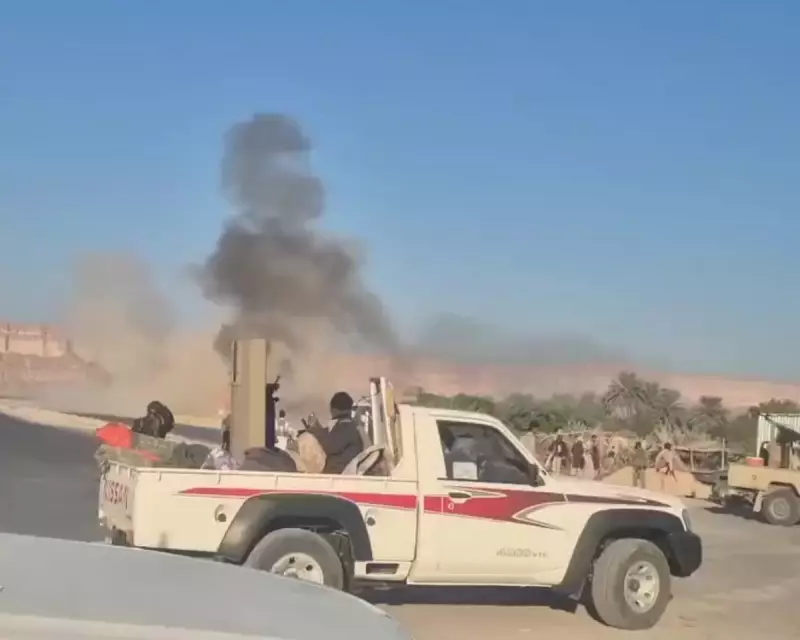
Riyadh has reportedly conducted warning airstrikes near positions held by southern Yemeni separatists, marking a significant military escalation in the ongoing struggle for control of the country's resource-rich east. The strikes, which occurred on Friday, target the United Arab Emirates-backed Southern Transitional Council (STC), which seized the vast provinces of Hadramaut and al-Mahra earlier this month.
Footage Shows Strikes Amid Diplomatic Standoff
Videos released by media outlets linked to the STC purportedly show explosions from airstrikes in the Wadi Nahab area of Hadramaut province. The group claims the strikes landed close to its military positions. These developments follow a direct appeal from Saudi Arabia last Thursday, urging the separatist forces to withdraw from the recently captured territories.
Amr al-Bidh, a special representative for foreign affairs with the STC, stated that the aerial attacks came after its fighters were involved in ambushes in eastern Hadramaut that resulted in two fatalities. Saudi officials have not yet publicly commented on the alleged military action, which remains unconfirmed by independent sources.

The Battle for Yemen's South and Its Oil
The STC, which advocates for the secession of southern Yemen, dramatically expanded its control two weeks ago by moving into Hadramaut and al-Mahra. The takeover of these oil-rich governorates, including the strategically vital region bordering Oman, was met with little resistance as local forces retreated.
This bold move has triggered a political and diplomatic counteroffensive from the Saudi-backed, UN-recognised elements of Yemen's fractured government. They argue that the STC's push for separation lacks broad support across the south and constitutes damaging unilateralism. The international community is largely aligned with Riyadh's position; European nations, Gulf states like Kuwait and Qatar, and Arab League chief Ahmed Aboul Gheit have all called for Yemen to remain a unified country.
A Brewing Crisis Between Saudi Arabia and the UAE
The situation poses a potential confrontation between the two key Gulf allies in Yemen's long-running war. Saudi Arabia's foreign ministry issued a statement on Thursday calling for the STC to withdraw and return to negotiations, stressing the importance of Yemen's unity. In a carefully worded response, the UAE commended Saudi Arabia's role but notably did not endorse the call for an STC withdrawal.
Most analysts believe the STC is dependent on continued UAE military and political support. If Abu Dhabi does not privately or publicly compel its allies to stand down, it could lead to a major rift with Riyadh. Meanwhile, the STC defends its actions, claiming a separate and cohesive south would be a more effective bulwark against the Iranian-backed Houthis who control the north.
The crisis risks diverting focus from the fight against the Houthis, a primary concern for European observers. Demonstrations in the southern port city of Aden on Thursday, calling for STC president Aidarous al-Zubaidi to declare full independence, underscore the rising tensions and the complex challenges facing any peaceful resolution.






