

Under the cover of a thunderous night sky, a heavily armed and masked Colombian troop commander issues a hushed warning. "The only thing I ask for is quiet," he whispers. "They have drones, it's dangerous." With that, he waves our Sky News team forward into the heart of cartel gang territory, right on the volatile border between Colombia and Venezuela.
A Tense Night Mission in a Ghost City
We are in the city of Cucuta, a critical transit hub for both legal and illegal goods moving between the two nations, with guns and cocaine being the most notorious commodities. This region is central to the war on Latin American drug gangs emphasised by US President Donald Trump, who has criticised Colombia's role as a top global cocaine producer and Venezuela as a major shipping point for drugs destined for markets worldwide, including the United States.
Accompanying soldiers from the Colombian Army's Mechanised Cavalry Regiment, we move on foot into the darkened slums. The troops fan out, acting on intelligence that a shipment of weapons and possibly drugs is on the move. The area is eerily deserted, most houses abandoned by civilians fleeing the violence. The only signs of life are barking dogs, startled by our presence. The soldiers urge caution, warning that cartel gunmen often use these empty buildings as hideouts and firing positions.

The Industrial Scale of the Cocaine Trade
Our mission on Wednesday 24 December 2025 ultimately found no traffickers that night. The commander, who cannot be named, explained that intelligence can be flawed or targets can vanish. "In Colombia the war has changed," he said. "Sometimes we find one thing and then find a lot of things." While this raid yielded nothing, the unit's impact is significant. This year alone, they have seized six tonnes of cocaine.
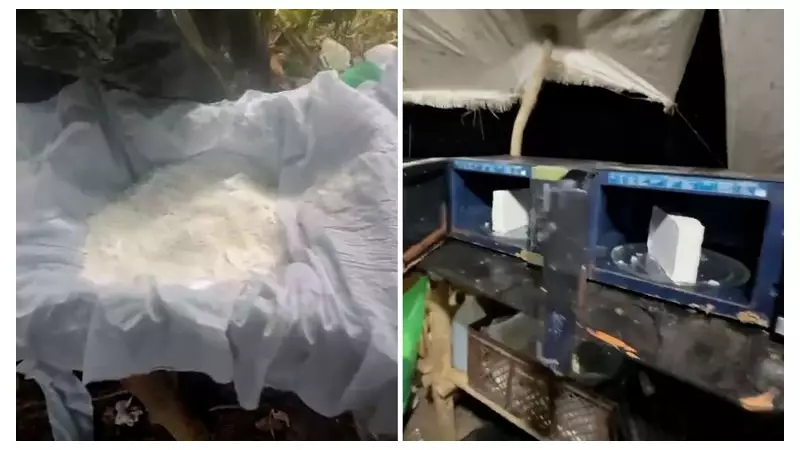
Videos shared with Sky News reveal the staggering industrial scale of the operation they are fighting. Raids on jungle labs uncover vast facilities with huge drums of chemicals and microwaves used to process 'bricks' of cocaine, often abandoned with hundreds of thousands of dollars worth of product left behind. Shovels stand ready to pack the powder into kilo blocks for export, primarily to the lucrative US market.
A Porous Border and a Growing Terror Threat
Lieutenant Colonel Juan Camilo Mazo, commander of Cavalry Group 5, is charged with securing this sector. He highlights the dual challenge: battling sophisticated drug cartels and a growing threat from terror groups collaborating with narcos. The border is long, porous, and largely unfenced. "Control is very difficult," Lt. Colonel Mazo admits, pointing out that in his sector alone there are at least 50 illegal crossing points.
At vehicle checkpoints, a constant flow of hundreds of thousands of people each week is scrutinised. While these stops yield drugs and weapons, success hinges on intelligence. Without specific tips, finding traffickers in such open terrain is nearly impossible. The colonel emphasises the stark contrast in efforts between the two nations: while Colombia demonstrates active attempts to combat the trade, Venezuela appears unable to, a situation with serious potential consequences for its leadership and stability.






