Trump's Controversial 'Board of Peace' Demands $1bn Cash Membership Fee
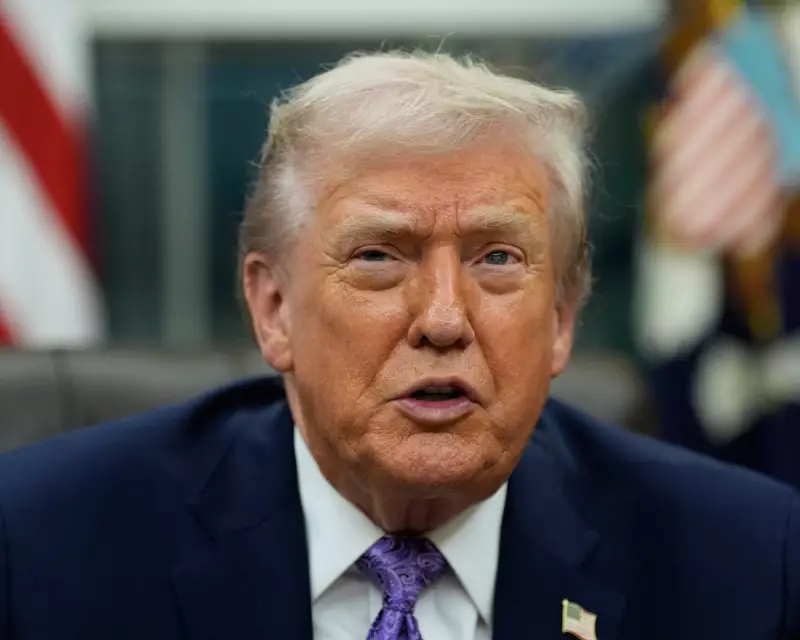
Donald Trump has positioned himself as chairman of a newly proposed 'Board of Peace', an international body that requires participating countries to pay a staggering $1bn in cash to secure membership. This development has sparked significant concern among diplomatic circles, with many viewing it as a direct challenge to established United Nations frameworks.
UN Security Council Endorsement Based on Misleading Premise
When the UN Security Council voted to endorse the board in November, passing Resolution 2803 with a 13-0 majority (with Russia and China abstaining), member states believed they were supporting a Trump-brokered ceasefire initiative for Gaza. The resolution's text focused entirely on the conflict, and diplomats hoped it would bind Trump into meaningful peace negotiations.
However, the charter document circulated to national capitals reveals a dramatically different reality. There is no mention of Gaza in the board's founding document, which instead positions the body as a permanent international institution promoting peace and good governance worldwide. The charter describes the board as "pragmatic", "results-oriented", and "more nimble and effective" than existing institutions - language widely interpreted as criticism of the United Nations.

Concentration of Power in Chairman's Hands
The board's charter establishes extraordinary powers for the chairman - Donald Trump himself, the only individual specifically named in the document. The chairman appears 35 times throughout the text and holds authority to:
- Select all other board members
- Terminate members at will
- Determine meeting schedules and discussion topics
- Issue resolutions independently
Even the $1bn cash payment for "life-membership" offers no guarantee against expulsion by the chairman. This structure replaces the UN Security Council's much-criticised permanent member system with what many consider an even more inequitable arrangement - one where influence correlates directly with financial capacity.
Gaza Mechanisms and UN Displacement Concerns
Despite the charter's silence on Gaza, the board would establish several Gaza-specific structures including a Gaza executive board and a "national committee for the administration of Gaza" - the highest level where Palestinian participation is permitted. An International Stabilisation Force overseen by a US major-general is also proposed.
These mechanisms theoretically support Gaza ceasefire implementation and reconstruction, but analysts fear they primarily aim to displace UN agencies that traditionally handle post-conflict stabilisation. The board appears designed to replace humanitarian-focused organisations with profit-driven business ventures, with figures like Steve Witkoff and Jared Kushner reportedly involved.
Implementation Challenges and Regional Resistance
The board faces substantial practical obstacles. Israel strongly opposes advancing any elements that would restore Palestinian governance to Gaza or grant other nations territory involvement, having already sought to exclude Turkish and Qatari participation in proposed stabilisation forces.
This stalemate between ceasefire phases benefits Israel strategically while leaving over two million Palestinians in precarious conditions - exposed to bombardment and inadequate shelter with minimal reconstruction prospects. Meanwhile, a board potentially including Vladimir Putin seems unlikely to meaningfully address the Ukraine conflict.
Diplomatic Dilemma for Nations
Countries now face an unenviable choice: refuse membership and risk punitive tariffs from the Trump administration (as France has experienced), or join and effectively undermine the UN while submitting to Trump's vision of global governance. This vision resembles an imperial court where nations pay for access and compete for the chairman's favour.
The board's most probable outcome, according to diplomatic observers, is remaining a vanity project while the international community grapples with what many describe as "the invitation from hell" - a proposal that challenges fundamental principles of self-determination, sovereignty, and equitable international cooperation established after the Second World War.