Trump's Arctic Ambitions Spark Diplomatic Crisis Ahead of Davos Summit
Donald Trump has delivered an ominous warning regarding Greenland just hours before crucial face-to-face talks with European leaders at the World Economic Forum in Davos, Switzerland. The US president's journey to the prestigious summit was unexpectedly delayed by what the White House described as a minor electrical issue aboard Air Force One, forcing the aircraft to return to Washington shortly after takeoff so Trump could board an alternative plane for his overnight journey.
"You'll Find Out": Trump's Cryptic Threat Over Greenland
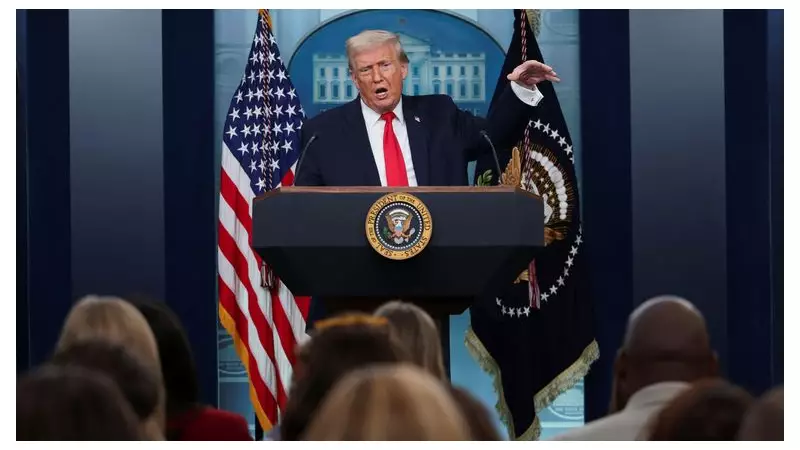
During a lengthy and rambling White House news conference on Tuesday, marking one year since he took office, Trump refused to rule out using military force to seize control of the Arctic island. When pressed about how far he would go to wrest control of Greenland, the president offered the chilling response: "You'll find out." This surprise press briefing comes at a moment of unprecedented tension between the United States and its European allies, primarily fueled by Trump's persistent desire to annex Greenland.
The island remains part of Denmark, a longstanding NATO ally with which the United States maintains a defensive pact. Despite this alliance, Trump has not dismissed the possibility of seizing the territory by force and has threatened imposing tariffs on nations that oppose his ambitions. When questioned about whether pursuing an ally's territory would endanger NATO, Trump doubled down on his conviction that the United States "needs" Greenland for security purposes.

Davos Meetings Amid Growing European Opposition
Trump's presence at the Davos summit will provide a critical opportunity for direct discussions with European leaders who have become increasingly critical of his administration. The president revealed that "a lot of meetings scheduled" would focus specifically on the Greenland situation. Previewing these talks in snowy Switzerland, Trump claimed optimistically: "I think things are going to work out pretty well."
However, his designs on Greenland have already encountered vocal opposition from key NATO allies. Both Sir Keir Starmer and French President Emmanuel Macron have publicly defended Greenland and Denmark during speeches at Davos on Tuesday, with Canadian leader Mark Carney joining their stance. Several European nations have contributed troops to a reconnaissance mission in Greenland, which Trump interpreted as a deliberate provocation.
In retaliation, the president has threatened imposing 10% tariffs on these countries starting February 1st, escalating to 25% from June 1st unless the United States is permitted to purchase the territory. This economic pressure adds another layer of complexity to already strained transatlantic relations.
British Response and Diplomatic Maneuvering
Against this tense backdrop, British Defence Secretary John Healey will travel to Copenhagen on Wednesday to meet with his Danish counterpart Troels Lund Poulsen. Ahead of his diplomatic mission, Healey declared: "The UK has always played a leading role in securing NATO's northern flank in the Baltic and High North, and we will continue to do so alongside our allies."
When questioned about his relationships with British and French counterparts, Trump offered a mixed assessment. While generally positive about their personal interactions, he noted that Sir Keir and Mr Macron "get a little bit rough when I'm not around," adding: "But when I'm around they treat me very nicely." This comment follows Trump's recent criticism of Sir Keir's agreement to transfer the Chagos Islands to Mauritius, despite having supported the deal just last year.
Wide-Ranging Press Conference Coverage
The president's White House briefing covered numerous international issues beyond Greenland. Trump addressed the situation in Venezuela, where President Nicolas Maduro was recently abducted by US forces during a raid on Caracas. The president revealed that his administration has extracted 50 million barrels of oil from the South American nation so far, claiming this would help reduce prices within the United States.

Trump also revisited his longstanding grievance about not receiving a Nobel Peace Prize, stating he had "lost a lot of respect for Norway" over the matter. However, the majority of the nearly two-hour briefing consisted of the president praising his own achievements, darting unpredictably between subjects in what Sky News US correspondent Mark Stone described as an "extraordinary inconsistent ramble... even by his standards."
Stone observed that while right-wing US news networks continued broadcasting the entire monologue, other media outlets moved on, only returning for the question segments. The correspondent noted: "I'd argue that his ramblings - today more than any day - are on a different level from what we saw with Biden. The numerous conservative policy achievements - job numbers up, immigration down, crime down - are lost behind the ramble."
As European leaders prepare for their Davos encounters with the unpredictable American president, Trump's refusal to rule out military action over Greenland and his tariff threats have created what analysts describe as the most severe crisis in NATO's history, testing alliances that have endured for generations.