

Behind the Bluster: Trump's Urgent Need for an Iran Peace Deal
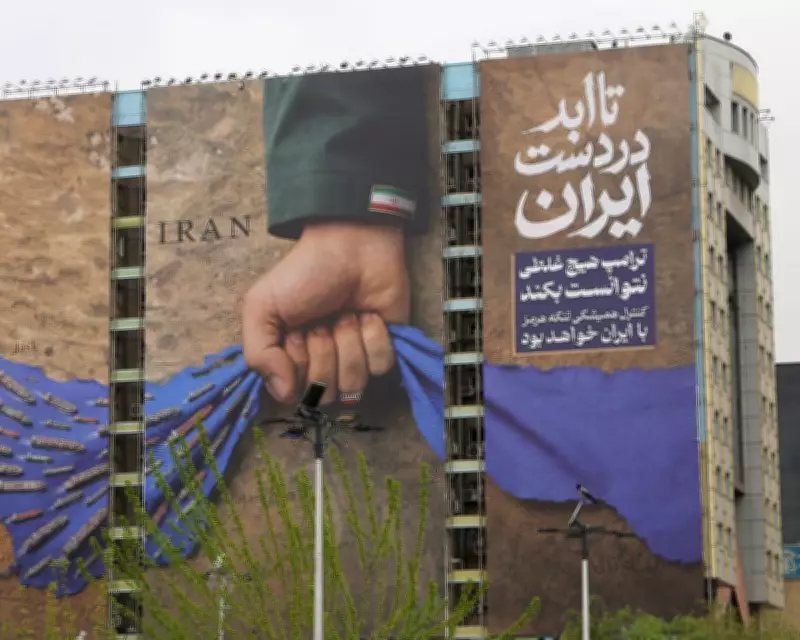
A stark billboard in Tehran's Vanak Square proclaims Iran's control over the Strait of Hormuz and declares Donald Trump's failures, capturing the escalating tensions between Washington and Tehran. As the April 12 deadline passes, the urgency for diplomatic resolution intensifies, with both nations facing critical crossroads.
The Islamabad Talks Breakdown
The recent Islamabad negotiations collapsed predictably, given the vast chasm between Washington's 15-point proposal and Tehran's 10-point counteroffer. Unlike the meticulously negotiated 2015 Joint Comprehensive Plan of Action (JCPOA), which took over two years to finalize, Vice President JD Vance spent less than a full day in Pakistan addressing nuclear issues and multiple other disputes.
Vance's surprising explanation blamed Iran's rejection of American terms, reflecting a miscalculation that Tehran had been defeated following the April 8 ceasefire. This misjudgment prompted Trump's dramatic escalation: imposing a naval blockade on ships traversing the Strait of Hormuz—an act of war that dangerously raises stakes.

Escalating Risks and Economic Fallout
The blockade threatens catastrophic consequences. Iran could retaliate by attacking energy infrastructure in US-aligned Gulf monarchies, potentially spiking global prices for oil, diesel, and liquefied natural gas. Such moves might trigger renewed US-Israeli assaults, reigniting full-scale war. With inflation rising and poll numbers dropping, Trump faces mounting domestic pressure ahead of midterm elections.
Iran, having endured significant damage, risks worsening its economic hardship and reconstruction challenges if hostilities resume. These mutual vulnerabilities create a rare window for renewed diplomacy, facilitated by intermediaries Pakistan and Egypt working behind the scenes.
A Framework for Compromise
A viable solution requires reciprocal concessions. The United States must recognize Iran's right to enrich uranium for non-military purposes under International Atomic Energy Agency (IAEA) safeguards, capped at 3.67% as per the JCPOA. Enhanced monitoring and centrifuge storage would ensure compliance, with an option for Iran to cease enrichment beyond a five-year maximum without accepting Washington's 20-year moratorium demand.
Since Trump abandoned the JCPOA in 2018, Iran has accumulated 440kg of 60% enriched uranium. The US could accept supervised down-blending rather than insisting on complete removal, with agreements renewable every two decades.
Nuclear Pledges and Regional Security
Iran should provide a written pledge against nuclear weapons development, aligning with the late Ayatollah Ali Khamenei's injunction. Following Khamenei's death in a US-Israeli strike, his successor Mojtaba could reinforce this prohibition alongside an Israeli pledge—guaranteed by the US and UN Security Council—to never initiate nuclear attacks against Iran.
In return, Iran would drop war reparations demands, while the US lifts all sanctions and releases frozen assets. Tehran could levy a $2 million fee per oil tanker transiting the Strait of Hormuz, committing to innocent passage rights overseen by an international coalition including Russia and China. This arrangement would fund reconstruction until neutral estimates are met, with Oman sharing surcharge revenues.
Non-Aggression and Implementation
A US-Iran non-aggression pact, ratified by legislatures and embedded in a UN Security Council resolution, would offset Tehran's concession on US military presence in the Middle East. Similar agreements could extend to Gulf states, fostering regional stability.
Three critical conditions must prevail: Washington must compromise alongside Tehran, Trump must extend the April 22 ceasefire deadline acknowledging complex negotiations require time, and Israel must be restrained from attacks that could derail progress. With political will, a peaceful resolution remains achievable despite the towering obstacles.






