

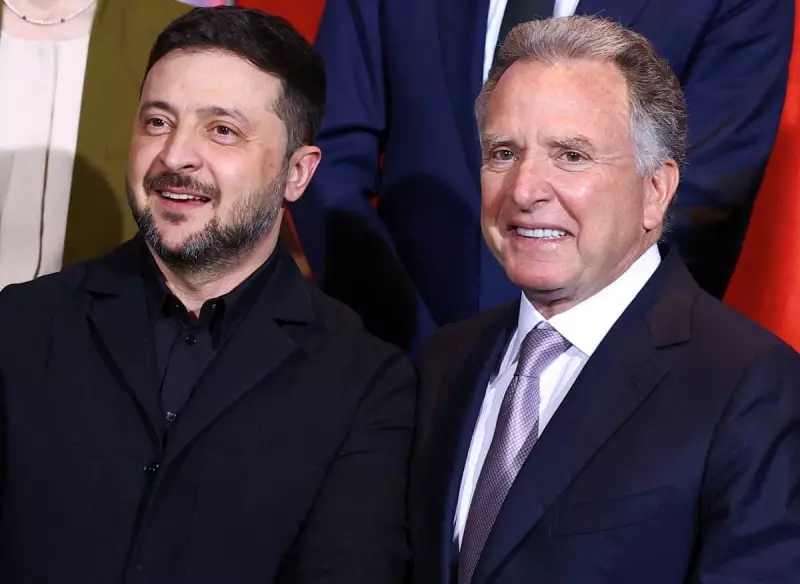
In a significant diplomatic development, the United States has proposed providing Ukraine with NATO-style security guarantees during high-stakes talks aimed at ending Russia's ongoing invasion. The unprecedented offer was made by envoys representing former US President Donald Trump during a meeting with Ukrainian President Volodymyr Zelenskyy in Berlin on Monday.
A Potential Turning Point in the Conflict
The discussions, which have injected a note of cautious optimism among European leaders, mark a potential shift in the West's commitment to Kyiv's long-term defence. US officials, however, cautioned that such a security deal would not remain on the table indefinitely. European participants stressed that the outcome of these negotiations would shape continental security for decades to come.
Following the talks, President Zelenskyy indicated he would request further US sanctions against Russia and additional military aid, including long-range weaponry, if Moscow rejects the current proposals. He also expressed support for a temporary ceasefire, particularly concerning energy infrastructure strikes, during the upcoming Christmas period.

"I think America will apply sanctions pressure and give us more weapons if he [Putin] rejects everything," Zelenskyy told reporters. Former President Trump, commenting from the White House, stated, "We're trying to get it done... We had numerous conversations with President Putin of Russia, and I think we're closer now than we have been ever."
European Reactions and Security Assurances
The Berlin meeting has elicited notable responses from European leaders. German Chancellor Friedrich Merz remarked, "For the first time since the war began, the possibility of a ceasefire is conceivable." Polish Prime Minister Donald Tusk offered a particularly revealing insight, noting he heard from American negotiators that the US would provide security guarantees so robust that Russia would have "no doubt" a future attack would trigger a direct American military response.
Swedish Prime Minister Ulf Kristersson acknowledged that the issue of security guarantees had become "clearer and more credible," but warned that "many difficult questions remain, not least about territories and whether Russia wants peace at all."
Military Action and Diplomatic Pressure
Amid the diplomacy, Ukraine demonstrated its continued capacity to strike Russian assets. Ukrainian officials announced that underwater drones had successfully struck and disabled a Russian Kilo-class attack submarine at the Novorossiysk naval base. A Ukrainian navy spokesperson hailed this first-of-its-kind operation as "another turning point" in the Black Sea naval battle.
On the diplomatic front, the head of Britain's MI6, Blaise Metreweli, accused Russian President Vladimir Putin of stalling negotiations and testing the West with tactics that fall "just below the threshold of war." Meanwhile, Russia's central bank launched a legal claim seeking $230bn in damages from the Euroclear clearing house, seen as a warning against using frozen Russian assets to aid Ukraine.
EU leaders are set to decide this week on a plan to use €210bn in frozen Russian assets to fund a loan for Ukraine's defence and economy. Additionally, an international claims commission will be launched in The Hague to address compensation for hundreds of billions in war damages.






