

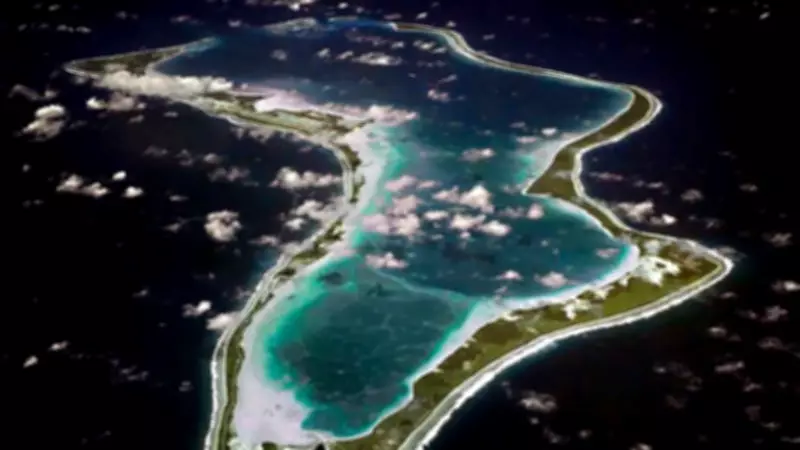
A significant legal victory has been achieved for the Chagossian people as the British Indian Ocean Territory (BIOT) Supreme Court overturned a longstanding ban on living on the outer Chagos Islands. This ruling, delivered on Tuesday, March 31, 2026, marks a pivotal moment in the ongoing struggle for the rights of the indigenous population, who were forcibly removed from their homeland decades ago.
Legal Challenge and Court Decision
The case stemmed from an incident in February 2026, when nine individuals, including four Chagossians, landed on Ile Du Coin, an uninhabited outer island located approximately 135 miles south of Diego Garcia. Upon arrival, they were ordered to leave by the BIOT commissioner, prompting four members of the group to initiate legal action. They argued that a 2004 law, which stripped Chagossians of their right to enter and remain on the outer islands, was unlawful.
In his ruling, Chief Justice James Lewis KC of the BIOT Supreme Court quashed both the 2004 provision and the commissioner's order for the Chagossians to depart. He stated emphatically, "Any rational reason for passing the provision has now disappeared, if there ever was one." The judge further emphasized that excluding an entire population must be justified by a legal source, not merely administrative necessity, highlighting the fundamental human rights at stake.

Background and Political Context
This legal development occurs against the backdrop of a controversial agreement between the United Kingdom and Mauritius. The UK has consented to transfer sovereignty of the Chagos archipelago to Mauritius, while simultaneously leasing back the joint UK-US military base on Diego Garcia for a period of 99 years. This deal has sparked intense political debate, with former US President Donald Trump criticizing it in February as an "act of great stupidity" and a "big mistake."
Justice Lewis noted that the UK-Mauritius agreement effectively removes any justification based on defence or security concerns for preventing repopulation of the outer islands, rendering previous funding issues irrelevant. The Chagossians initially claimed their visit to Ile Du Coin was temporary, aimed at visiting graves, without disclosing plans to establish a permanent settlement, as revealed in court proceedings.
Political Reactions and Appeals
The ruling has not been met with universal acceptance. The Foreign Office has announced that the commissioner is challenging the decision, with a spokesperson stating, "We do not agree with this judgment, and we understand the BIOT administration have appealed it." This sets the stage for potential further legal battles over the fate of the islands and their inhabitants.
In the political arena, the Conservatives have launched sharp criticism against Prime Minister Sir Keir Starmer. Shadow Foreign Secretary Dame Priti Patel accused the government of treating Chagossians as "an inconvenience" and called for the abandonment of what she termed an "appalling" deal with Mauritius. She argued that many Chagossians oppose the handover to Mauritius, an ally of China, and feel betrayed by the process, leading them to take matters into their own hands.
Implications for the Future
This court decision represents a crucial step toward restoring the rights of the Chagossian people, who have long sought to return to their ancestral lands. It challenges the legal frameworks that have marginalized them and opens the door for potential resettlement efforts on the outer islands. However, with an appeal pending and ongoing political tensions, the path forward remains uncertain. The outcome could significantly impact the UK's foreign policy, its relationship with Mauritius, and the broader geopolitical dynamics in the Indian Ocean region.






