

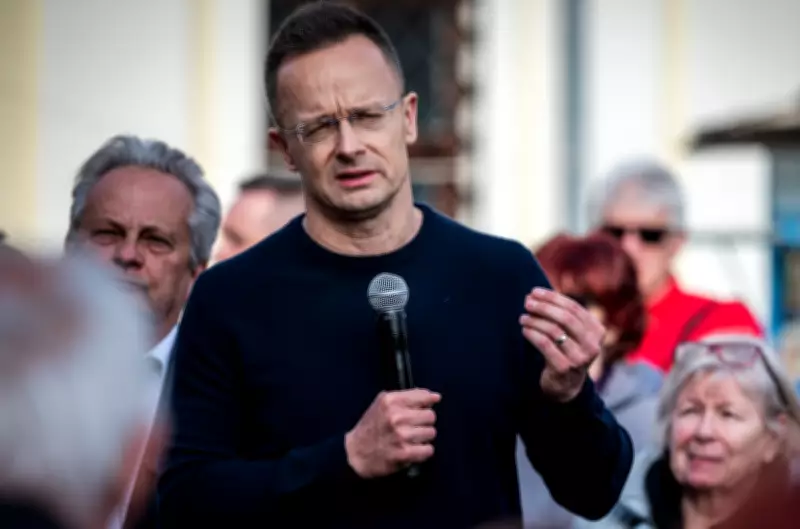
Hungarian Foreign Minister Condemns Interception of Calls with Russian Counterpart
Hungarian Foreign Minister Péter Szijjártó has publicly criticized the interception of his phone calls with Russian Foreign Minister Sergei Lavrov, labeling it a "huge scandal." This controversy emerges just days before a pivotal Hungarian parliamentary election, where Prime Minister Viktor Orbán faces his most challenging political battle in over sixteen years of leadership.
Leaked Audio Sparks International Outcry
A joint media investigation recently published a report based on leaked audio recordings allegedly capturing conversations between Szijjártó and Lavrov. In one instance, Szijjártó is reported to have told Lavrov, "I am always at your disposal," while in another, he appears to offer assistance in amending European Union sanctions that have impacted Russia. Szijjártó did not deny the occurrence of these calls but instead focused on the alleged wiretapping by foreign intelligence services.
"It is a huge scandal that foreign secret services were continuously wiretapping my phone calls and that these foreign secret services have now made these phone calls public one-and-a-half weeks before the Hungarian parliamentary election," Szijjártó stated in a social media video. The leaked report has prompted strong condemnation from several European Union figures, including the prime ministers of Poland and Ireland, who have expressed concerns over Hungary's diplomatic alignments.

Ukraine's Strong Reaction and Call for Investigation
Ukraine's Foreign Minister Andriy Sybiga has urged a thorough investigation into the matter, describing the leaked conversations as "obsequious reporting to Russian patrons." He further emphasized, "Disgusting, it is a disgrace, and it really should be subject to investigation." This incident adds to the ongoing tensions between Ukraine and Hungary, particularly regarding Hungary's perceived closeness to Moscow amidst the ongoing conflict.
Ukrainian President Volodymyr Zelenskyy has criticized Hungary for "pleasing" Moscow, especially as Budapest's veto over a crucial €90 billion EU support package delays Ukraine's recovery and winter preparations. Zelenskyy highlighted the financial strain, noting, "Because the €90bn support package is still blocked, we cannot use the €5bn planned for protection and recovery to get ready, no matter what this winter will be like." He attributed this obstruction to one individual in Europe opposing the collective will, in an apparent reference to Orbán.
Broader Implications for EU Unity and Regional Stability
Orbán's government has maintained a Kremlin-friendly stance within the EU, often blocking efforts to present a united front in support of Ukraine. Critics have likened Orbán to "Putin's Trojan horse in the EU," citing his repeated resistance to sanctions and aid packages. This latest scandal underscores the deepening divisions within the European Union regarding its approach to Russia and the war in Ukraine.
In related developments, EU top diplomat Kaja Kallas and several foreign ministers visited Bucha, Ukraine, to express support for accountability over Russian atrocities committed there. Kallas remarked, "This morning in Bucha we were reminded of what is at stake. There is no starker example of Russia's brutality than what happened there." Meanwhile, a Russian military plane crash in Crimea resulted in 29 fatalities, with initial assessments pointing to technical issues as the cause.
Zelenskyy also commented on Russia's efforts to isolate its internet from the global network, describing it as "a step 100 years back" that could lead to reliance on outdated communication methods like "paper mail, telegraphs, and horses." This move, characterized by escalating internet restrictions and blocks on platforms like Telegram, reflects the broader technological and diplomatic shifts in the region.






