Trump's Board of Peace Encounters Widespread International Reluctance
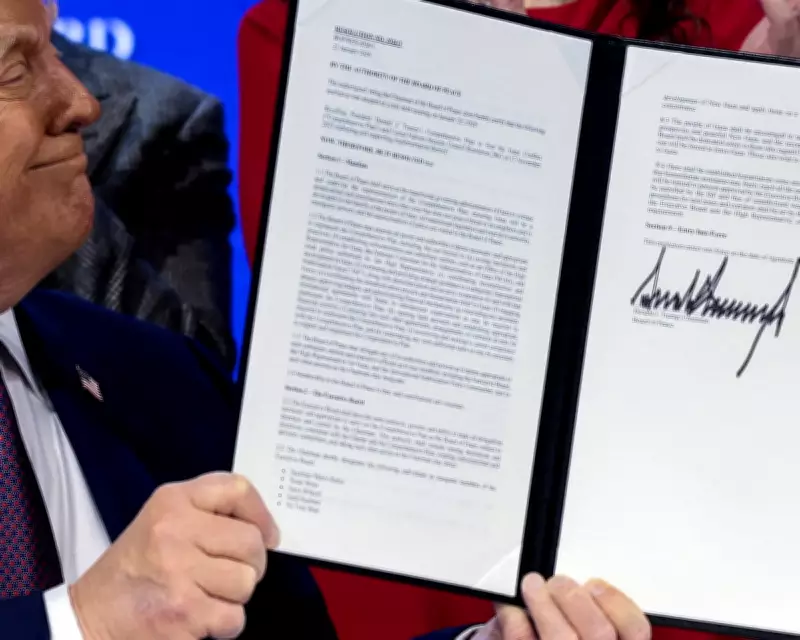
In a significant development on the global stage, former US President Donald Trump unveiled a signed resolution for his newly established Board of Peace during a charter announcement in Davos, Switzerland, on January 22, 2026. This initiative, originally conceived through a UN Security Council resolution with the primary goal of implementing a Gaza peace plan, has rapidly transformed into a contentious entity, drawing scrutiny and avoidance from many of the world's leading democracies.
Key Allies Distance Themselves Amid Concerns Over Trump's Dominance
Reports indicate that influential Western nations, including France, Germany, the United Kingdom, and Canada, are expected to abstain from the inaugural meeting of the Trump-led Board of Peace later this month. Their reluctance stems from a charter that grants Trump extensive authority, designating him as the permanent chair with powers to control meetings, veto decisions, and appoint successors, effectively creating a fiefdom under his influence. The board's executive board, composed of Trump's close associates such as his deputy national security adviser and family members, further solidifies his grip, making it unlikely for any challenge to his leadership to arise.
The financial burden of participation is another critical factor deterring nations, with a staggering $1 billion fee required for membership. This high cost, coupled with Trump's unpredictable foreign policy approach—exemplified by recent threats against Canada—has raised alarms about the board's potential to interfere in sovereign affairs. In a speech in January, Trump boasted about the board's capabilities, stating, "We can pretty much whatever we want to do", a declaration that starkly contrasts with the UN's original vision for a focused peace-building body.

Limited Global Support and Democratic Deficits
Upon its formation in November, Trump extended invitations to approximately 60 countries, but only around 20 have committed to join. The list includes nations such as Albania, Argentina, Israel, Saudi Arabia, and Turkey, with Reuters noting that "few of the countries that have signed up for the board are democracies". This lack of democratic participation underscores the board's isolation from mainstream international consensus, as it positions itself as a rival to the UN by promising a "more nimble and effective international peace-building body".
French officials have publicly expressed concerns, citing potential conflicts with the UN, prompting Trump to retaliate with threats of tariffs on French products. The board's charter, which omits any mention of Gaza despite its initial purpose, highlights its evolution into a broader tool for Trump's ambitions, raising questions about its legitimacy and effectiveness in fostering global harmony.
Implications for International Peace and Governance
The Board of Peace's structure grants Trump unilateral control, including the ability to remove executive board members and veto decisions, which critics argue could undermine collaborative peace efforts. With Trump's emotional and capricious track record in foreign affairs, there are genuine fears about entrusting such power to a single individual. As the board moves forward, its success in attracting broader support remains uncertain, with many nations weighing the risks of involvement against the high financial and political costs.
This situation reflects broader tensions in global diplomacy, where Trump's unilateralist tendencies clash with traditional multilateral frameworks. The board's future will likely depend on whether it can adapt to address these concerns or remain a polarized entity in the international arena.