

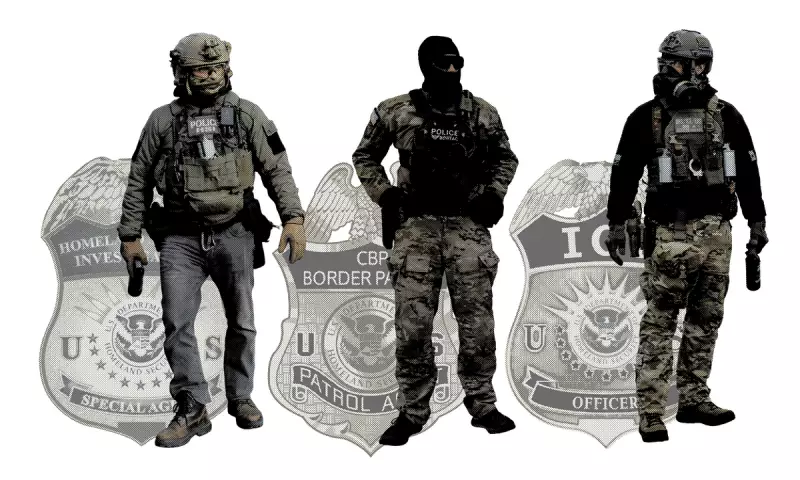
Since January 2025, the Trump administration has deployed a significant surge of armed federal officers to multiple prominent cities across the United States, many of which are led by Democratic officials. This escalation forms a core part of the President's agenda for mass arrests and deportations within the country's interior, often directly opposing the wishes of local leaders.
The Frontline Agencies of Homeland Security
These operations are primarily coordinated under the Department of Homeland Security (DHS), the US's third-largest federal agency. DHS Secretary Kristi Noem has become the public face of this aggressive push, frequently appearing with enforcement teams during raids. The department's immigration enforcement is spearheaded by two key agencies.
The most visible operator is Immigration and Customs Enforcement (ICE). Following the passage of the One Big Beautiful Bill Act in 2024, ICE's budget soared to $28.7 billion, and its officer count more than doubled from roughly 10,000 to 22,000 by 2025. ICE's main enforcement arm is its Enforcement and Removal Operations (ERO) branch, whose deportation officers have shifted from jail hand-offs to conducting unprecedented public and workplace arrests.

ICE's investigative branch, Homeland Security Investigations (HSI), has also been increasingly reassigned from complex international crime cases to support ERO's deportation efforts on the streets. Furthermore, Customs and Border Protection (CBP) and its Border Patrol unit, traditionally focused on ports of entry and the border, are now heavily involved in urban enforcement, with Commander Gregory Bovino maintaining a high profile in cities like Minneapolis.
Expanding the Net: Tactics and Wider Consequences
The crackdown extends beyond traditional immigration agencies. The administration has drafted in personnel from the FBI, DEA, ATF, US Marshals Service, and Diplomatic Security Service to support its mass deportation agenda. A notable and controversial tactic has been the use of officers who often wear masks and refuse to identify themselves, raising significant concerns about accountability.
These operations are deliberately focused on immigrants living within the US, as unauthorised border crossings have plummeted. Raids now frequently target homes, businesses, commercial parking lots, and even sensitive locations like schools and hospitals. While the strategy delights the President's core political base, it is also tearing families apart and spreading fear in communities.
Local Resistance and Sanctuary Cities
The federal push has created a stark divide with local law enforcement. In many Republican-led areas, police cooperate closely under formal 287(g) agreements with ICE. Conversely, numerous Democratic-led jurisdictions, particularly self-declared "sanctuary cities", actively limit cooperation. They refuse ICE requests to detain individuals arrested on non-immigration charges, attempting to obstruct federal removal efforts.
This unprecedented domestic deployment marks a historic and contentious chapter in US immigration enforcement, centralising power in federal agencies and creating deep political and social fissures across the nation.






