

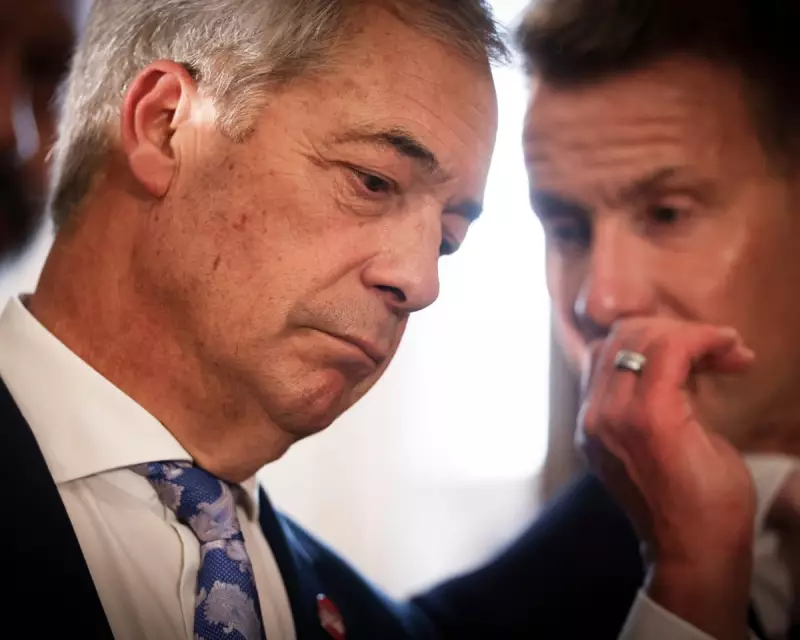
As the new year begins, a critical question hangs over British politics: has Nigel Farage's moment already passed? The charismatic leader of Reform UK faces a make-or-break 2026, but recent trends suggest his party's surge in the polls may have reached its zenith.
The Polling Peak and Subsequent Dip
Reform UK enjoyed a remarkable ascent throughout 2025, climbing to a steady lead in opinion surveys last spring. The party's support solidified over the summer, hitting a high of 29% in YouGov polling and 33% with More in Common. This positioned Farage as a potential kingmaker, even earning him comparisons to Donald Trump during a feted visit to Washington.
However, the latest data indicates a shift. YouGov's December polling showed Reform's vote share falling to 26%, its lowest level since April. Analysts attribute this dip to a resurgence for Conservative leader Kemi Badenoch and a combined Liberal Democrat and Green vote approaching 30%. The political landscape remains volatile, with the upcoming May local elections likely to provide more confusion than clarity.

The Perils of a One-Man Band
Despite its polling success, Reform UK remains fundamentally a vehicle for its leader's persona. The party lacks the deep bench of experienced politicians and policy professionals traditionally required to form a credible government. This weakness is exposed by constant internal turmoil.
The party has seen three different chairs in under two years, a revolving door of leadership that undermines stability. Its latest leader in Wales is currently serving a prison sentence. Key figures like 'shadow chancellor' Nick Candy, a property tycoon, and defectors from the Conservatives such as Andrea Jenkyns and Lee Anderson—who has stood for both Labour and the Tories—do not constitute the cohesive, disciplined team voters expect.
This stands in stark contrast to the historically successful model of British cabinet government, built on collective loyalty and competence, a model that has fractured in recent years but which voters still instinctively seek.
Policy and Association Risks
Farage has also navigated a tricky path on policy and international associations. While he has skilfully made immigration his central issue, this is a double-edged sword. Single-issue parties can flourish, but their fortunes are tied to the public salience of that issue, which is unpredictable by the time of the next election in 2029.
His attempts to align with global populist figures carry significant risk. A pilgrimage to Mar-a-Lago to secure praise from Donald Trump and Elon Musk backfired when Musk later expressed contempt over Farage's refusal to endorse Tommy Robinson. While Farage wisely distanced himself from Trump's more extreme allies like the Heritage Foundation, his purported friendships with figures like Steve Bannon are a liability when only 22% of British voters view Trump favourably, versus 72% who do not.
He is now frantically trying to broaden his appeal, highlighting issues like the countryside and net-zero energy subsidies to lure disaffected Tory voters.
The Westminster Reality Awaits
Nigel Farage's undeniable platform charisma—his affable, humorous, and concise style—plays perfectly to a certain public mood. Yet these are the qualities of a compelling campaigner, not necessarily a competent head of a governing party. They are ill-suited to the grinding, detail-oriented, and collegial work of Westminster's committees and corridors.
The most reliable prediction for the next election is a hung parliament and a multiparty shambles. In that complex environment, where negotiation and patience are paramount, a party built around one man and defined by internal chaos is unlikely to thrive. While Farage's year began with him on top, the trajectory suggests he may not end it there.






