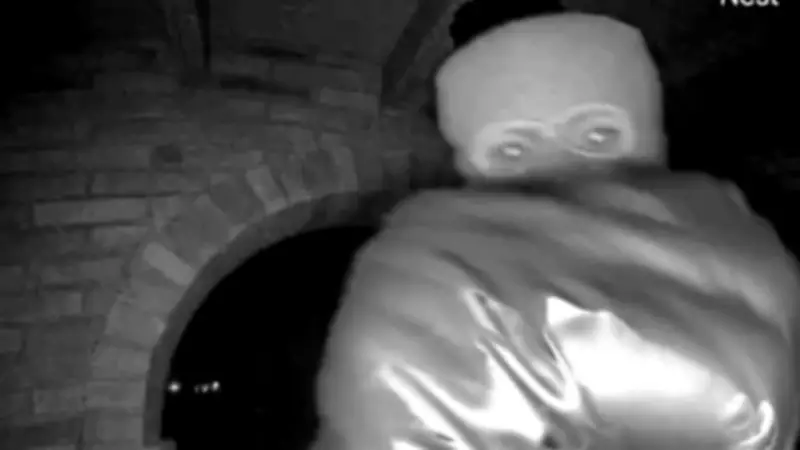
Nancy Guthrie Doorbell Footage Sparks Privacy Debate Amid FBI Investigation
The retrieval of doorbell footage showing a masked, armed suspect at the front door of missing 84-year-old Nancy Guthrie has become a pivotal development in the case, but it has also ignited widespread concerns over privacy rights in the digital age. This incident underscores the complex interplay between law enforcement efforts and individual data protection.
How the Footage Was Retrieved
Nancy Guthrie, who lives alone near Tucson, Arizona, had a Nest camera installed on her front door. Initially, Pima County Sheriff Chris Nanos stated that the camera was disconnected just before 2 a.m. on February 1, the night of her disappearance, and no footage was preserved despite software detecting movement. Sheriff Nanos noted that Ms. Guthrie did not have a subscription with Nest, which would have automatically saved recordings.
However, on February 10, FBI director Kash Patel announced that footage had been recovered via "backend systems." He explained that the FBI and Pima County Sheriff's Department collaborated with private sector partners to recover images or video that may have been lost, corrupted, or inaccessible due to factors like the removal of recording devices. The video was retrieved from residual data in these systems, though the exact methods and reasons for the delay were not disclosed.

Retired New York police sergeant Joseph Giacalone suggested the FBI might have intentionally delayed the release to investigate the suspect independently. Former FBI cybercrime agent E.J. Hilbert highlighted the challenges, comparing the process to finding a needle in a haystack, as Google deletes billions of data points hourly and legal procedures can be time-consuming.
Privacy Implications of the Retrieval
The existence of this footage has raised significant privacy concerns, particularly because Ms. Guthrie did not have a subscription and her device was disconnected. Experts question how Google was able to collect, access, and share the footage. Michelle Dahl, executive director at the Surveillance Technology Oversight Project, expressed alarm over the privacy implications, noting that while the information is crucial for the investigation, it highlights risks with home surveillance data.
Google's privacy policy clarifies that videos can be captured when devices are offline, meaning users might not see indicators when footage is sent to servers. The policy also states that footage can remain on cloud servers for varying periods, and users have the right to view and delete it. Stacey Higginbotham, a policy fellow at Consumer Reports, explained that Google routinely purges footage but it can still be retrieved before being wiped, similar to emails in a trash folder.
Legal and Ethical Considerations
The increase in internet-connected home cameras has benefited law enforcement, but it also raises questions about data ownership and sharing. Ms. Dahl pointed out that under many user agreements, camera companies require a warrant or consent to share footage with law enforcement, but legal loopholes can allow bypassing these steps. Some agreements specify that data belongs to the company, not the user, enabling sharing at their discretion without notification.
In a transparency report, Google's Nest stated that it works with law enforcement while maintaining user privacy, analyzing requests to ensure they are not overly broad and notifying users about legal demands. The company has assisted in the Guthrie investigation but has not provided further details. This case serves as a reminder for the public to consider the consequences of surveillance data ending up in cloud systems and to explore options where data is not transmitted off-site.
As the search for Nancy Guthrie continues, the debate over balancing investigative needs with privacy protections remains at the forefront, urging a reevaluation of how home surveillance technologies are managed and regulated.