

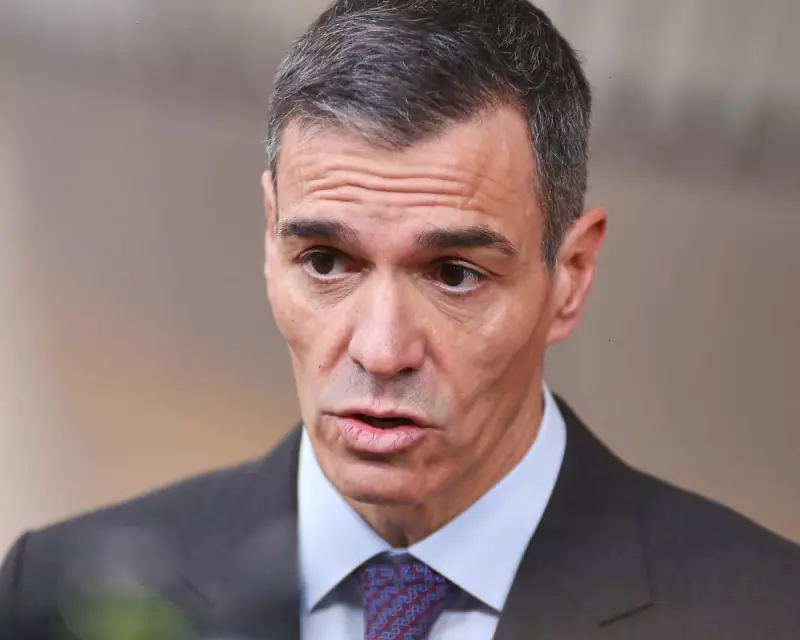
Spain's Prime Minister, Pedro Sánchez, confronts a critical political examination this Sunday as voters in the south-western region of Extremadura head to the polls. The snap election represents the first major electoral test since a cascade of corruption and sexual harassment allegations engulfed the Prime Minister's inner circle, his Spanish Socialist Workers' party (PSOE), and his administration.
A Region Once Loyal Turns into a Battleground
The outcome in Extremadura will resonate far beyond its regional borders, serving as a crucial barometer for the political damage inflicted by recent scandals. Once a reliable stronghold for Sánchez's PSOE, the region has been under the control of the conservative People's party (PP) since 2023. At that time, the PP formed a short-lived coalition with the far-right Vox party, despite finishing narrowly behind the socialists.
The regional president, María Guardiola, called this snap vote two months ago after the PSOE and her former allies in Vox jointly rejected the proposed budget for the coming year. While the election is a regional matter, national politicians and analysts will dissect the results to gauge the extent of the PSOE's electoral punishment.

A Litany of Scandals Haunting the Socialists
The PSOE campaign is burdened by multiple judicial investigations. The socialist candidate in Extremadura, Miguel Ángel Gallardo, is set to face trial on charges of influence-peddling and abuse of office. The case centres on allegations that he helped create a tailor-made public sector job for the Prime Minister's brother, David Sánchez, eight years ago. Both men deny any wrongdoing.
This trial stems from a complaint by Manos Limpias (Clean Hands), a far-right-linked group known for strategic lawsuits. The same organisation is behind a judicial probe into Sánchez's wife, Begoña Gómez. She is accused of using her influence to secure sponsors for a university master's course she ran and misusing state funds, allegations she strongly denies.
Further compounding the crisis, in June Sánchez ordered his right-hand man, Santos Cerdán, to resign as the PSOE's organisational secretary. A Supreme Court judge found "firm evidence" of Cerdán's potential involvement in a kickback scheme for pandemic-era sanitary equipment contracts. The scandal also implicates former transport minister José Luis Ábalos and his aide, Koldo García, all of whom protest their innocence.
Adding to the party's woes are recent, damning accusations that the PSOE leadership has failed to tackle sexual harassment by senior male figures. These claims starkly contradict Sánchez's 2018 pledge upon taking office to lead a government "unmistakably committed to equality".
High Stakes and a Shifting Political Landscape
The opposition PP, led by Alberto Núñez Feijóo, has seized on the turmoil. Feijóo has expressed hope that Sunday's vote will trigger a "domino effect" toppling Sánchez and rescuing Spain from what he calls a "swamp of corruption, sexism and extortion".
Current polling suggests President Guardiola will struggle to win an absolute majority, likely forcing her into another governing pact with Vox—a prospect she initially resisted in 2023. Vox, which withdrew from five PP-led regional governments last year over migration disputes, is expected to drive a hard bargain for its support.
Political scientist Pablo Simón of Madrid's Carlos III University notes that while the full impact of the harassment cases is unclear, polls indicate a significant shift. "This is the first election since the European ones in 2024 and I think we're going to see a trend in Extremadura that's happening right across Spain," Simón said. He predicts the combined right-wing bloc of PP and Vox could attract 55% to 57% of the vote.
Simón warns that Sunday's result could herald a nationwide setback for the PSOE, with demoralisation spreading among left-wing voters ahead of further regional votes in Aragón, Castilla y León, and Andalucía. This growing pressure will intensify on Sánchez as he attempts to navigate the remaining years of the legislature until 2027.






