

Landmark Court Ruling Challenges NSW Government's Protest Control Powers
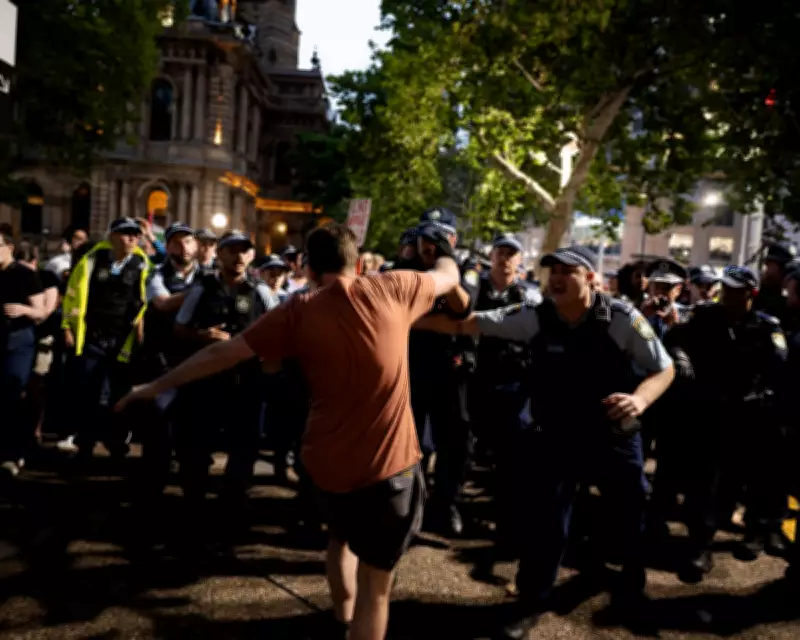
In a significant development for civil liberties, New South Wales' highest court has delivered a ruling that could dramatically limit government attempts to control political speech and protest activities. The decision comes in the wake of February's violent anti-Herzog rally in Sydney, which itself triggered a police watchdog investigation into allegations of widespread police misconduct.
Constitutional Protection of Political Communication
The full bench of the NSW Court of Appeal, comprising Chief Justice Andrew Bell alongside Justices Julie Ward and Stephen Free, struck down anti-protest legislation introduced following the Bondi beach terror attack. The court found that discouraging all protests to protect social cohesion placed an impermissible burden on the implied constitutional right to freedom of political communication.
The justices explicitly stated that protecting the community from political expression merely because it might be "upsetting, inflammatory and divisive" does not constitute a legitimate constitutional purpose. They emphasized that "suppressing public debate of certain kinds may be a means to a legitimate end, but it cannot be a legitimate end in itself."

Implications for Proposed Slogan Bans
This ruling arrives at a critical moment for the Minns government, which had been considering banning the phrase "globalise the intifada" following recommendations from a NSW parliamentary inquiry. While that inquiry suggested banning the phrase only when used to incite hatred, harassment, intimidation or violence, the court's decision raises serious questions about any broader restrictions.
Constitutional expert Professor Anne Twomey from the University of Sydney warned that "having read this judgment, I would be very, very reluctant to go ahead with legislation banning certain slogans." She emphasized that any future attempts to restrict speech or protest for similar reasons "is not going to wash with this court."
Twomey clarified that legitimate restrictions must be directed at preventing actual violence rather than merely avoiding distress or offense. "If what the government is trying to do is just to stop people being upset, or some sort of vague notion of social coherence, then under this judgment, that's just not going to be sufficient to justify the law," she explained.
Impact on Anti-Herzog Protest Charges
The court's decision has raised immediate questions about the 26 protesters charged with various offenses following February's violent rally against Israeli President Isaac Herzog's visit. The struck-down law had prevented the use of the state's permit-style system that typically protects protesters from being charged by NSW police during authorized marches.
Majed Kheir, a solicitor representing some protesters, described the ruling as "one of the greatest victories for civil liberties in Australian history" and suggested lawyers might now apply for police to withdraw charges. He argued that "police on the night were acting beyond the scope of their duties and their powers, because, in accordance with today's judgment, those powers were unconstitutional."
However, Sam Lee, a supervising solicitor at Redfern Legal Centre, noted the situation remains complex. The area had been placed under a major events declaration during Herzog's visit, granting police expanded move-on and stop-and-search powers. Additionally, not all protesters face summary offenses charges that would have been protected by the permit system.
Broader Consequences for Protest Rights
Beyond the immediate implications, legal experts predict far-reaching consequences from this landmark decision. Lee stated that the judgment "puts brakes on the Minns government's ability to use executive power to minimise people's rights to protest."
The ruling may also influence challenges to similar legislation in other jurisdictions, including Queensland's ban on phrases like "from the river to the sea" and "globalise the intifada," despite being in a different legal territory.

As NSW police work through the judgment's implications, the decision establishes a stronger constitutional framework protecting political communication while requiring governments to demonstrate clear, violence-related justifications for restricting protest activities and political slogans.





