

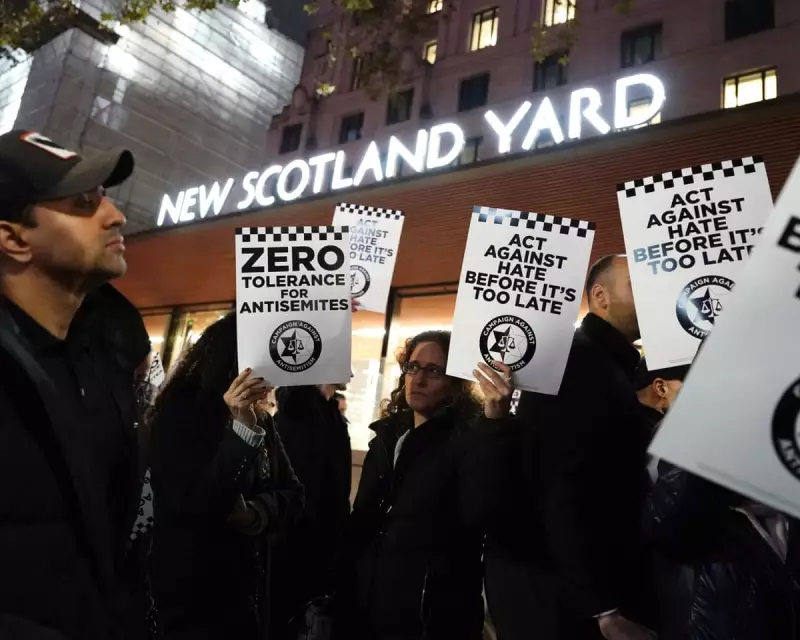
In late 2025, two horrific attacks—one on a Manchester synagogue and another on Bondi Beach in Australia—sent shockwaves through Jewish communities worldwide. These events, which claimed multiple lives, hardened a belief among the diaspora that a historic hatred is intensifying once more. In Britain, the crisis is perceived as so severe that discussions have emerged in the United States about potentially offering asylum to British Jews.
A Long History of Prejudice in Britain
To understand the current moment, it is essential to look beyond the Holocaust, which for many marks the beginning and end of British Jewish history. According to Professor David Feldman, director of the Birkbeck Institute for the Study of Antisemitism (BISA), the story is far longer and more complex.
Jews were expelled from England in the 13th century and only began to resettle in significant numbers in the late 1600s. Even then, Britain's fundamentally Christian identity embedded prejudice into law and public life. It was not until 1858 that a professing Jew could sit in Parliament.

Professor Feldman stresses that widespread, everyday discrimination persisted well into the late 20th century. "Until then, in the UK, private schools had quotas for the numbers of Jewish children they would take," he explains. "My own parents were not allowed to join a golf club as late as 1973."
The Battle Over Defining Antisemitism
A core challenge in confronting antisemitism today is a fundamental disagreement over its definition. "We are living through a breakdown in consensus over what antisemitism is," Feldman argues. This debate increasingly centres on Israel and Zionism.
The widely adopted International Holocaust Remembrance Alliance (IHRA) working definition, published in 2016, has been at the centre of controversy. Feldman, who helped draft the alternative Jerusalem Declaration on Antisemitism (JDA), suggests the IHRA definition can be interpreted to label criticism of Israel as a ‘racist endeavour’ as antisemitic.
This clash reflects a deeper divide between viewing antisemitism as a unique form of hatred versus situating it within universal anti-racist principles. The politicised nature of the debate, Feldman notes, often descends into name-calling, making constructive solutions harder to find.
Rising Fear Amid Conflicting Data
The data paints a concerning picture of community sentiment. A major survey in summer 2025 found 35% of British Jews felt unsafe in Britain, a dramatic rise from 9% in 2023. The Community Security Trust recorded 1,521 antisemitic incidents in the first half of 2025 alone.
Yet, Feldman points out that broader surveys of public attitudes in the UK and Australia suggest antisemitic prejudice in the general population is actually diminishing. This paradox raises critical questions about the source of violent incidents and acute fear.
The perpetrators of the Manchester and Bondi attacks were inspired by ISIS. While some campaigners link chants at pro-Palestinian protests to a normalisation of antisemitic rhetoric, Feldman distinguishes this from the organised Islamist extremism behind the attacks. "The majority of demonstrations have been peaceful and not anti-Jewish," he states.
From 'Antisemites' to a 'Reservoir' of Prejudice
In his analysis, Feldman distinguishes between committed antisemites and what he terms a "reservoir of antisemitism." The former, ideologically driven individuals, constitute perhaps 5-7% of the population. The latter refers to negative stereotypes and images about Jews that circulate more widely in the culture.
Surveys show around 30% of people in Britain may agree with at least one negative stereotype about Jewish power or values. "This is what I and my colleagues at BISA call the reservoir of antisemitism," Feldman explains. It is this reservoir that people may casually draw upon, for instance, by attributing Western support for Israel solely to ‘Jewish influence’.
He argues that government policy, under both Conservatives and Labour, has focused too much on punishing the ‘antisemites’ while neglecting the need for broad educational programmes to address the ingrained prejudices of the ‘reservoir’.

A Path Forward: Security Plus Education
Feldman is sceptical of political promises to ‘root out’ antisemitism, a prejudice over a millennium in the making. A more realistic goal, he proposes, is to minimise and contain it.
This requires a twin approach: robust security and protection for Jewish communities must be allied with sustained, principle-led education. He criticises parts of the left for sometimes failing to recognise antisemitism within its ranks, linking this to a framework of racism that focuses primarily on the legacies of colonialism and enslavement, potentially overlooking other forms.
"Racism arises in different ways for different groups, but it’s wrong and it’s abhorrent in all cases for the same reasons," Feldman concludes. "Once we see this, we can see that our efforts to combat antisemitism should be allied to 360-degree anti-racism." As anxiety persists and incidents continue, re-examining these longstanding approaches has never been more urgent.





