

The year 2025 witnessed a significant surge in creative and non-violent resistance across the United States, as citizens responded to the policies of Donald Trump's administration. Sociologists note that tactical innovation—the introduction of novel protest methods—has historically been a key driver for successful social movements. This year's wave of activism, spanning cities from Los Angeles to Washington DC, engaged countless Americans in exercising their First Amendment rights through ingenious means.
Symbolic Actions and Community Defence
Activists employed highly symbolic acts to draw attention to specific issues. In Los Angeles, following the death of day labourer Roberto Carlos Montoya Valdez during an immigration sweep, organisers targeted Home Depot stores. About 100 volunteers participated in an "ice scraper buy-in" in Monrovia last month. They repeatedly purchased and returned a $0.17 ice scraper, creating enough disruption to temporarily close a store, symbolising a demand to "scrape ICE" out of their premises.
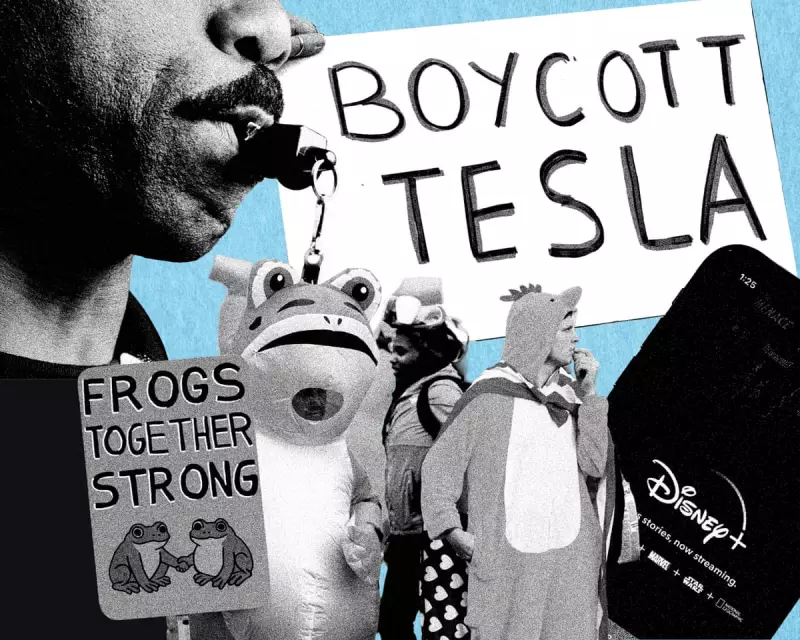
In Chicago, a simple plastic whistle became a powerful tool for community alert and protection. Since a deportation crackdown began in early September, the high-pitched sound has served as a citywide warning of nearby ICE agents. The Little Village Community Council distributed whistles, leading to whistle-packing parties and their placement in Little Free Libraries, a tactic since adopted in New York and New Orleans.

Creative Disruption and Economic Pressure
Protestors found innovative ways to disrupt operations and apply economic pressure. The "No Sleep for ICE" campaign in June saw Los Angeles community members target hotels housing federal agents. Using rallies, noise, and even a band playing Mexican songs at a Hilton hotel, they successfully disrupted the Trump administration's immigration operations in the city.
Economic activism also took centre stage. The #TeslaTakedown movement, born in February from a coalition of climate activists and anti-Trump advocates, organised protests at showrooms, encouraged selling Tesla stock and cars, and promoted anti-Elon bumper stickers. By the end of May, Elon Musk had ended his role as a "special government employee" and Tesla's US sales hit a new low.
A swift backlash also hit The Walt Disney Company. After Disney pulled Jimmy Kimmel's show on 17 September following pressure from FCC chair Brendan Carr, activists spurred a subscription cancellation campaign. This led to roughly 3 million Disney+ and 4.1 million Hulu cancellations, influencing ABC to reinstate Kimmel by 23 September.
Cultural Resistance and Psychological Campaigns
Activists leveraged culture and psychology to make their point. In Portland, the Portland Frog Brigade uses inflatable frog costumes—a tactic known as "tactical frivolity"—to protest outside an ICE facility. The whimsical approach aims to defuse tension and counter narratives labelling protestors as violent extremists.
In Memphis, the group Free the 901 launched "Joy Rising: Block by Block" pop-up parties. These events combine voter registration, "know your rights" training, and community celebration to oppose the deployment of the National Guard and empower Black and brown communities.
In Washington DC, organisers from Free DC initiated nightly cacerolazos at 7pm, where residents bang pots and pans for five minutes. This Latin American-inspired antifascist symbol protests aggressive federal law enforcement in the district.
A poignant ad campaign by Women's March Win took a psychological approach, urging ICE agents to "walk away." The ads, aired in Chicago, Charlotte, and West Palm Beach, feature an agent returning to his daughter after a day shown breaking car windows, asking viewers, "What will you say when she asks about your day?"
This year's protest landscape demonstrates a strategic shift towards innovation, symbolism, and broad public engagement. As sociologist Doug McAdam's research suggests, such tactical creativity is often a precursor to peak movement activity, signalling a potent and evolving resistance.






