

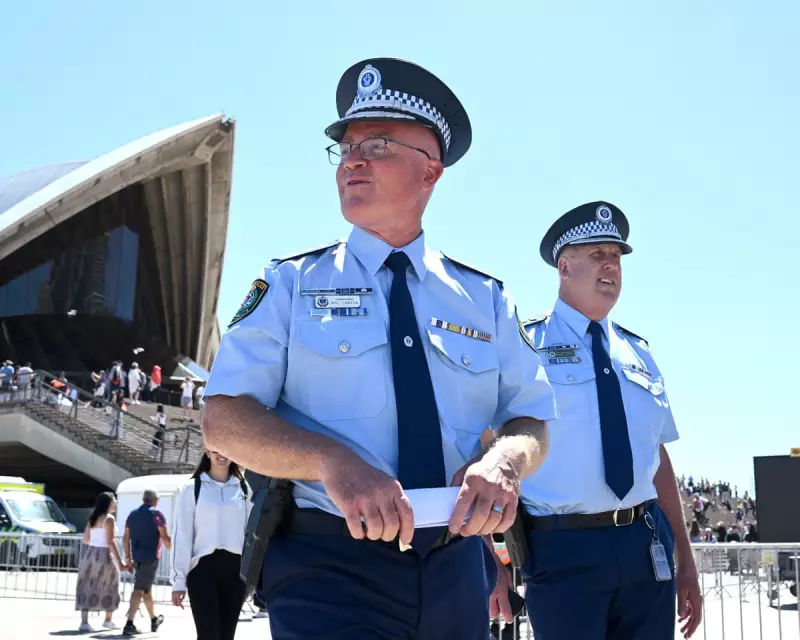
New South Wales police have extended a controversial ban on unauthorised protests in parts of Sydney for a third time, but have carved out an exemption to allow the major annual Invasion Day rally to proceed. Police Commissioner Mal Lanyon announced the 14-day extension of the special powers on Tuesday, while confirming that the large-scale demonstration on 26 January has been officially authorised.
Balancing Safety and the Right to Protest
Commissioner Lanyon stated that the renewed declaration would still cover a significant area, from Darling Harbour through the northern CBD, along Oxford Street and into the entire eastern suburbs police command. However, in a key concession, Hyde Park has been removed from the restricted zone. This allows the Invasion Day protest to march from its traditional starting point at Hyde Park to Victoria Park on Monday.
"It's about getting the balance right between community safety and a right to protest," Lanyon told reporters. He emphasised the context of the decision, coming less than six weeks after the Bondi terror attack, which he described as "the most serious and devastating terrorism act ever [committed] in New South Wales."

Major Police Operation Planned for 26 January
The police chief revealed that a substantial security operation is planned for Australia Day. Approximately 1,500 police officers will be deployed across various 26 January events, with around a third of that force dedicated to monitoring protests. Alongside the Invasion Day rally, police have also authorised an anti-immigration march organised by the group March for Australia, which will proceed from Prince Alfred Park to Moore Park.
Lanyon defended the ongoing use of the special powers, known as the Form 1 declaration, which was rushed through parliament after the Bondi attacks. He argued that while it hasn't stopped protests entirely—noting 49 "static protests" had occurred—it had succeeded in "taking the heat out of the community."
Protest Laws Tested Ahead of Invasion Day
The limits of the police declaration were tested just days before the announcement. On Sunday, a group protesting Indigenous deaths in custody attempted to march from Hyde Park while the ban was still in effect for that location. NSW Police Assistant Commissioner Peter McKenna estimated about 200 demonstrators were met by "a few hundred" police officers. The crowd was ordered to move on and ultimately dispersed without arrests, but not before chanting "we'll be back" and "see you on Invasion Day."
Rally organiser Paul Silva, nephew of David Dungay Jr who died in custody, told media they expected a crowd "100 times bigger" on 26 January. Assistant Commissioner McKenna acknowledged that thousands could attend the Invasion Day rallies, potentially making police operations more difficult if crowds sought conflict. He reminded the public that the laws are temporary, stating, "We've got an obligation to enforce the laws."
Commissioner Lanyon issued a warning that police would be monitoring protester behaviour over the next fortnight and indicated the declaration could be altered again if community risk heightened. This monitoring will also inform decisions on future protests, including any planned around the upcoming visit of Israeli President Isaac Herzog.






