In a stark rebuke of international cooperation, the United States under the Trump administration has embarked on a path of profound isolation, formally withdrawing from 66 international treaties, conventions, and organisations. This sweeping rejection encompasses global efforts on climate change, migration, cultural heritage, clean water, renewable energy, and the trade in timber and minerals, all dismissed as contrary to national interests.
The Everyday Architecture of American Division
According to cultural anthropologist Anand Pandian, this political stance mirrors a deeper, more insidious trend woven into the fabric of daily American life. In his recent book, Something Between Us: The Everyday Walls of American Life, and How to Take Them Down, Pandian argues that patterns of isolation and division have become endemic.
He points to increasingly fortified homes and neighbourhoods, the popularity of oversized vehicles, a mindset treating the body as a fortress, and media ecosystems that shut out opposing views. These "interlocking walls" sharpen divides between 'insiders' and 'outsiders', making it easier to disregard our inherent connections to others.

Pandian's research, drawn from conversations with Americans from all walks of life, reveals troubling attitudes. He recalls a home security podcaster at a 2021 builders' convention stating smart lights could divert burglars to "someone else’s home", framing safety as a zero-sum game. Similarly, an automotive designer reported focus group participants preferring larger SUVs so that, in an accident, "I want my kids in the bigger car"—a sentiment prioritising personal safety over collective well-being.
From Personal Fortresses to Failed Climate Diplomacy
This cultivated indifference, Pandian contends, makes it difficult to perceive how individual fates are bound together. Social and environmental crises are then seen as distant problems for 'others', not shared responsibilities. This mindset provides fertile ground for the rejection of climate diplomacy and the celebration of fossil fuels by leaders.
"These developments represent more than a policy framework catering to powerful lobbies," Pandian writes. "They also reflect habits of thought that address our wellbeing in sharply individualistic terms." The consequence is a failure to grasp a fundamental reality: that America's future is inextricably linked to the welfare of those beyond its borders.
Economic inequality and environmental instability drive migration to distant shores, including the US. The vicissitudes of global weather manifest as natural disasters, like the Los Angeles wildfires. Attempting to bar the door and turn up the air conditioning, Pandian warns, will only result in a warmer, more unpredictable world outside.
Stitching the 'Single Garment of Destiny' Back Together
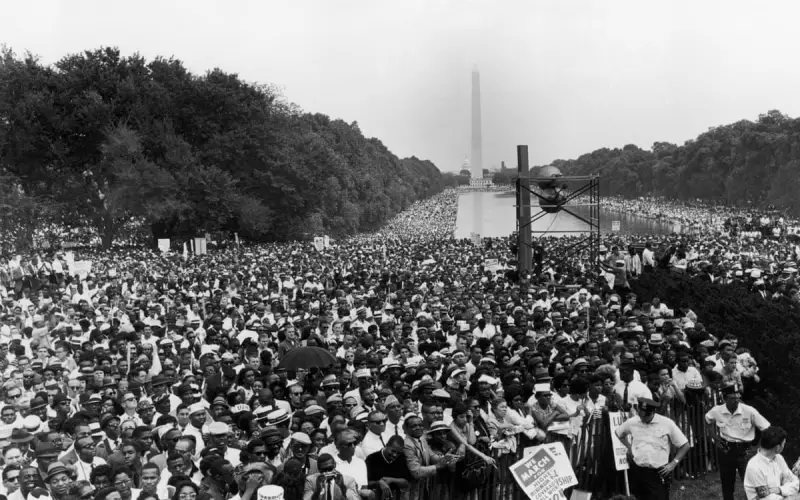
The path forward, the anthropologist suggests, lies in rediscovering the "inescapable network of mutuality" described by Martin Luther King Jr in his 1963 Letter from Birmingham Jail. King's vision of a "single garment of destiny" may be fraying, but it can be repaired through mutual aid and collective solidarity.
Pandian finds hope in grassroots movements. He highlights clean water activists in Newburgh, New York, who organised against "forever chemical" contamination. They fostered a "watershed awareness", understanding that upstream choices affect those downstream. Through public "I Am Water" conversations, they encouraged people to see themselves as part of a wider, shared ecology.
"We had to start with our own bodies before going to the body of water itself," activist Gabrielle Hill explained. Inspired by threats to democracy, Hill successfully ran for local office, centring her campaign on communal resources: clean public water, accessible transport, and affordable housing. She champions an African proverb: "If you want to go fast, go alone. If you want to go far, go together."
Pandian's conclusion is unequivocal: going it alone is a path to autocracy, not autonomy. Repressive powers thrive when we deny our interdependence. True security and well-being are conceived not in isolation, but as a communal resource. Our fates are bound together, whether we choose to acknowledge it or not.