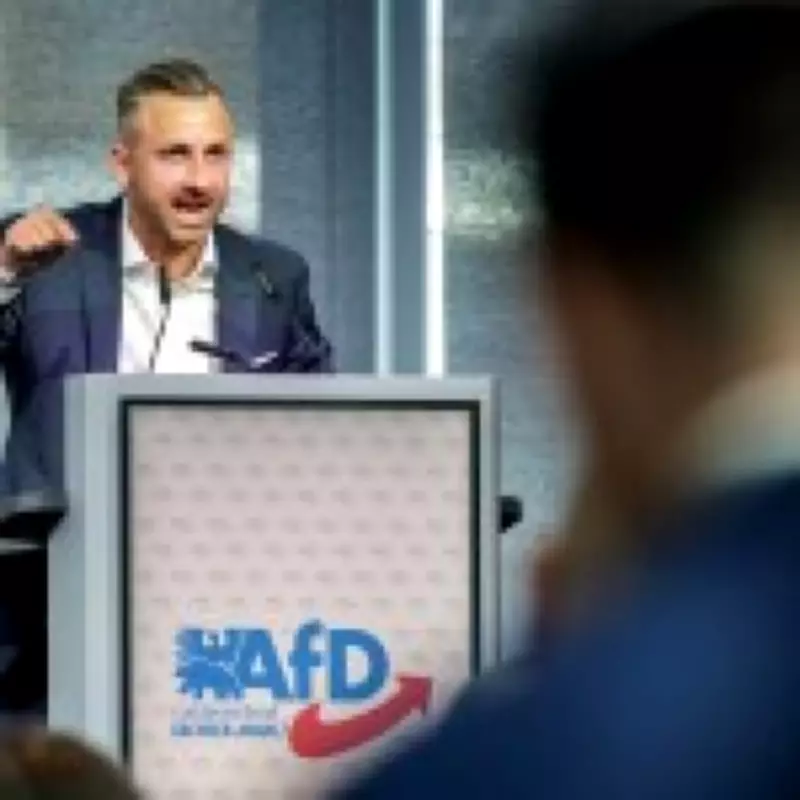
German Far-Right Party Advocates 'Remigration' and Free Russian Language Instruction
The Alternative for Deutschland (AfD) chapter in Saxony-Anhalt, a region in former East Germany, has unveiled a controversial manifesto ahead of September elections, promoting what it calls a "180-degree turn" in migration policy. The party is campaigning on promises of consistent deportations and even offering free Russian lessons to counter what it describes as "anti-Russian" sentiment in Germany.
'Remigration' Policy and Deportation Promises
Lead candidate Ulrich Siegmund stated unequivocally: "We say yes to consistent deportations." The manifesto, reviewed by CNN, advocates for "remigration," a term that has drawn criticism for its association with Nazi-era rhetoric. This policy specifically targets the deportation of immigrants and refugees, with particular focus on non-white individuals. Notably, the proposal extends even to Ukrainian refugees who fled the ongoing conflict, suggesting they would be subject to removal under AfD's plans.
Pro-Russian Stance and Language Initiative
The AfD's platform takes a distinctly pro-Russian position, criticizing what it calls the "anti-Russian policies" of Germany's established political parties. The party claims these policies "are not in Germany's interest" and are "dividing Europe." In response, the AfD pledges to lift all sanctions against Russia and introduce free Russian language lessons in Saxony-Anhalt. This educational initiative is framed as a countermeasure to what the party perceives as widespread anti-Russian sentiment within the country.

Security Concerns and Intelligence Leak Allegations
This pro-Russian alignment comes amid serious security concerns. German authorities have reportedly grown worried about potential AfD leaks of sensitive information to foreign powers, including Russia and China. Members of Parliament fear their AfD colleagues might be actively sharing intelligence on military and security matters with these nations.
These concerns are not without precedent. In 2024, Germany experienced what was described as the worst intelligence breach since the Cold War when British military secrets were compromised. A recording of a 38-minute call involving Luftwaffe Lieutenant General Ingo Gerhartz was broadcast on Russian state television. During the conversation, Gerhartz revealed that "British troops were already on the ground" in Ukraine—a highly sensitive disclosure that alarmed NATO allies. Then-Chancellor Olaf Scholz pledged a thorough investigation into what he called a "very serious leak."
Broader Security Context and Military Preparedness
The AfD's apparent affinity for Russia stands in stark contrast to Germany's official security posture. The German government has recently announced preparations for a "potential Russian attack in the next two years." Lieutenant General Gerald Funke, head of the German armed forces support command, expressed particular concern about Russian "hybrid warfare" and the potential for mass casualties in any conflict scenario.
"Whereas in Afghanistan I had a regrettably high but manageable number of wounded, I now have to plan for the possibility of a thousand injured personnel a day," Funke told The Times. "The closer you look at it, the more complex it becomes and the harder it is to imagine." This statement underscores the serious security challenges Germany faces, making the AfD's pro-Russian policies particularly contentious within the current geopolitical landscape.
The AfD's election platform in Saxony-Anhalt thus represents a significant departure from mainstream German politics on multiple fronts—immigration policy, foreign relations with Russia, and national security priorities—setting the stage for a heated electoral battle in September.