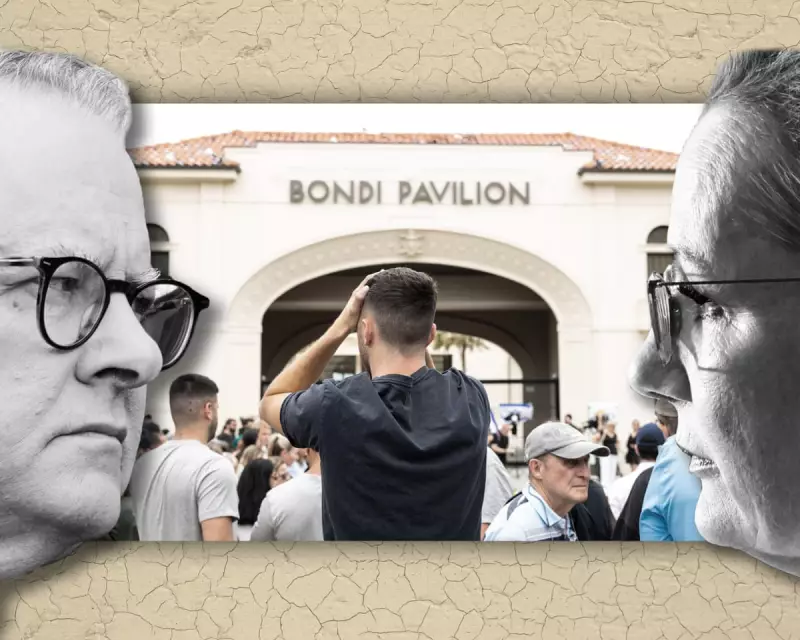
Prime Minister Anthony Albanese has expressed regret over the political fallout from the Bondi terror attack, as he faces the most serious challenge to his leadership since his landslide election victory. The controversy centres on his government's refusal to establish a federal royal commission into the tragedy, a decision that has drawn fierce criticism from political opponents, community leaders, and even members of his own party.
A Call for Unity Amidst Rising Tensions
Speaking from Parliament House, Mr Albanese defended his position, pointing out that previous governments did not call royal commissions after the Port Arthur massacre or the Lindt Cafe siege. He emphasised his government's support for a New South Wales state-based inquiry and a separate federal review by Dennis Richardson into intelligence and law enforcement, due in April. "I regret the politicisation of this attack," the Prime Minister stated, urging for "urgency and unity, not division and delay."
However, the opposition has intensified its critique. Deputy Liberal leader Sussan Ley doubled down on her accusations, claiming the Prime Minister and Foreign Minister Penny Wong had not shown sufficient empathy. "I make no apology for my passion on that occasion," Ley asserted. This political friction unfolds against a backdrop of declining public support, with recent polls showing Albanese's popularity at its lowest point since the May election.

Community Anger and Political Repercussions
The government's stance has provoked significant dismay within the Australian Jewish community, which was directly targeted in the attack. Alex Ryvchin of the Executive Council of Australian Jewry argued that only a full royal commission could provide the necessary answers, calling the need to plead for one "deeply insulting." This sentiment is echoed by some Labor MPs, with Mike Freelander and Ed Husic publicly breaking ranks to support calls for a national inquiry.
Political historian Chris Wallace contends the episode has "profoundly damaged" Albanese's prime ministership. She highlighted a perceived failure to act with urgency on the Segal report into antisemitism and an unfavourable public comparison with the more visibly active NSW Premier, Chris Minns. Pollster Tony Barry noted the core political risk for Albanese is a prevailing voter perception that he is "weak," a critical flaw when national security is salient.
Defining a Prime Minister's Legacy
History shows that crisis responses can define political legacies. John Howard's decisive action on gun reform after Port Arthur cemented his reputation, whereas Scott Morrison's holiday during the Black Summer bushfires damaged his. The path Albanese chooses now—whether to hold firm or relent to pressure for a broader inquiry—could similarly make or break his second term.
While some constituents have sent messages of support to their MPs, disgusted by the politicisation of the tragedy, the pressure is mounting. As the summer break begins, the Prime Minister navigates a complex landscape where demands for accountability, community trust, and political strength are on a collision course. The government's next moves will be scrutinised as the nation seeks both answers and healing.