Prime Minister Faces Protests During Eid Celebration Visit to Sydney Mosque
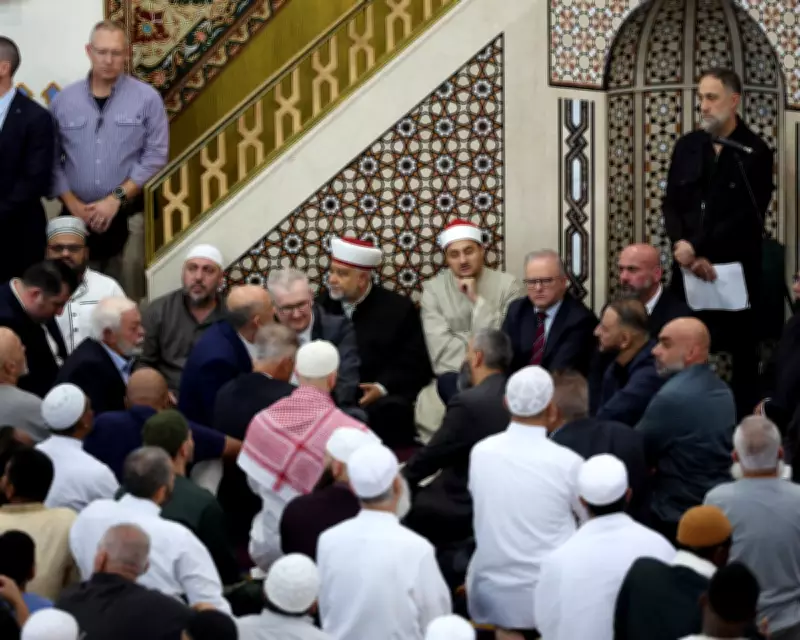
Prime Minister Anthony Albanese and Home Affairs Minister Tony Burke visited Lakemba mosque in Sydney's west on Friday morning to mark Eid al-Fitr, the celebration marking the end of Ramadan. The visit, intended as a gesture of community engagement, was disrupted by vocal protesters within the mosque who expressed their discontent with Australia's foreign policy positions.
Heckling Interrupts Mosque Visit
During the visit, while Albanese sat listening to Lebanese Muslim Association secretary Gamel Kheir read a statement criticizing Australia's involvement in Middle East conflicts, several worshippers began protesting the politicians' presence. Witnesses reported hearing shouts of "disgrace," "shame," and "genocide supporters" directed at the prime minister and minister.
One man who booed Albanese was escorted from the premises by police officers. He was subsequently released without charge after receiving a move-on direction. Following the disruption, Albanese made a swift exit from the mosque, avoiding a large crowd that had gathered on the steps outside.

Albanese Attributes Protest to Government Actions
At a press conference later that day, Albanese addressed the incident, stating that among approximately 30,000 people in Lakemba for Eid celebrations, the reception had been "overwhelmingly ... incredibly positive." He acknowledged "a couple of hecklers inside" but emphasized that "they were dealt with" by the community itself.
The prime minister offered a specific explanation for the protest, claiming: "Some people don't like the fact that we have outlawed extremist organisations like Hizb ut-Tahrir, and that brought a response from a couple of people." However, Guardian Australia analysis of videos from the event found no references to the banned organization in the protesters' statements. The prime minister's office did not provide evidence supporting Albanese's claim when contacted for comment.
Community Organization Defends Engagement Decision
The Lebanese Muslim Association issued a statement defending its decision to host the prime minister, acknowledging the "high emotions" within the community due to "ongoing suffering in Gaza and the devastation in Lebanon." The organization emphasized that these issues are "deeply personal" for many community members.
"Choosing to engage with the elected leadership of this country is not a betrayal of those concerns," the statement read. "It is how we give them a voice. Walking away from engagement has not advanced our community, nor has it changed outcomes overseas."
The association clarified that its "position on Gaza and Lebanon is clear and unchanged," continuing to "stand with those suffering, to call for justice, and to advocate for an end to violence and the protection of innocent lives." They argued that government engagement "strengthens our ability to express where it matters the most."
Historical Context of Political Tensions
This incident follows a similar event approximately one year ago when Tony Burke was forced to leave a Muslim prayer event in Lakemba due to security concerns. Protesters had planned to heckle and interrupt Burke during his scheduled address to Ramadan congregants on March 21 last year, ultimately causing him to depart before completing his remarks.
Bilal Rauf, a barrister and senior adviser to the Australian National Imams Council, highlighted community frustrations with government actions, citing Albanese's invitation to Israeli President Isaac Herzog following the Bondi terror attack and police responses to Muslim men praying during protests against Herzog's visit.
"So many people in our society are connected to what's happening around the world, and they are hurting," Rauf stated. "They are seeing their family members killed. They are seeing homes of family burned."
Broader Regional Context
The mosque visit occurred against the backdrop of escalating Middle East tensions, with Israel conducting air and artillery strikes in Lebanon while continuing ground operations against Hezbollah. According to Lebanese health ministry figures, these actions have resulted in at least 912 fatalities, including 111 children, with 2,221 wounded and over one million people displaced.

Additionally, the Australian government recently announced it would deploy a specialist surveillance aircraft and air-to-air missiles to the United Arab Emirates to protect Australians in the Gulf state, which has been targeted by Tehran in retaliation for U.S. and Israeli actions against Iran.