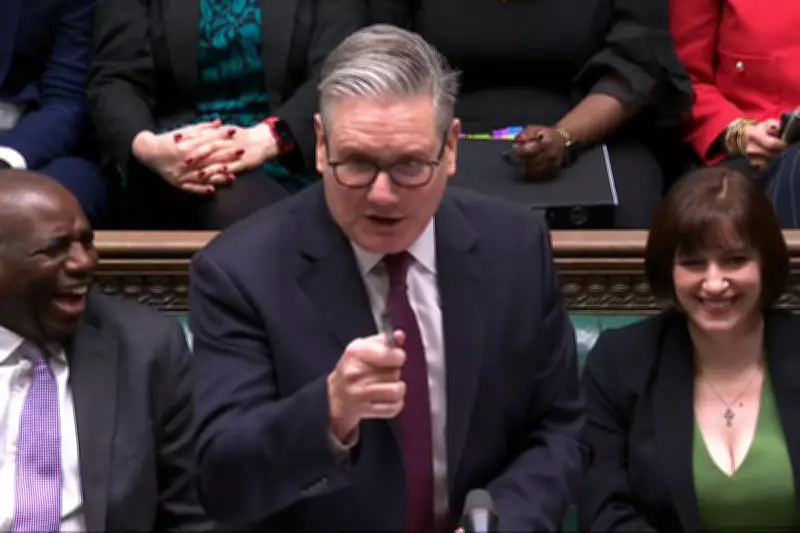
Badenoch's Fiery PMQs Attack: Starmer Accused of Exploiting Victims for Political Survival
In a dramatic Prime Minister's Questions session that exposed deepening political fractures, Conservative leader Kemi Badenoch delivered a scathing indictment of Prime Minister Keir Starmer, accusing him of caring about victims of sexual abuse only "to save his skin." The explosive exchange marked another turbulent chapter in what has become a bruising week for the Labour leader, whose political future appears increasingly precarious.
A Brutal Grilling Over Accountability and Judgment
The confrontation unfolded on Monday as Badenoch pressed Starmer about his judgment and accountability during what has become a crisis-ridden period for his administration. In response to the intense questioning, Starmer acknowledged he had "accepted responsibility and apologized for the mistakes" made, but this did little to quell the mounting criticism.
Badenoch's attack centered on what she characterized as Starmer's pattern of prioritizing the "Downing Street boys club" while "stuffing government with hypocrites and paedophile apologists." Her remarks highlighted growing concerns about ethical standards within the Labour government as multiple scandals continue to unfold.

The Matthew Doyle Controversy Deepens
The immediate catalyst for Badenoch's accusations involves newly-appointed peer Matthew Doyle, Starmer's former director of communications. Labour removed the whip from Doyle after revelations emerged that he had campaigned for friend Sean Morton, who had been charged in 2016 with possessing indecent images of children.
According to detailed reports, Morton was suspended from the Labour Party following the charges, yet Doyle maintained belief in his innocence and traveled to Scotland to campaign for him as an independent candidate. Morton subsequently pleaded guilty and was convicted in 2018, making Doyle's support particularly troubling.
This situation represents another significant embarrassment for Starmer, with Downing Street officials admitting they were unaware of Doyle's campaigning activities before he was elevated to the peerage in December. During PMQs, Starmer claimed Doyle "did not give a full account of his actions," but this explanation failed to satisfy his critics.
Pattern of Behavior or Isolated Incidents?
Badenoch argued forcefully that the scandal surrounding former US ambassador Peter Mandelson should not be viewed as an "isolated incident." She asserted that Starmer had "established a pattern of behavior" that demonstrated poor judgment, particularly regarding his inability to "explain why he gave Doyle a peerage" given the concerning background.
Starmer attempted to deflect the criticism by highlighting recent defections from the Conservative Party to Reform, but Badenoch dismissed this tactic as demonstrating "stratospheric levels of delusion" about where the real problems lie.
Leadership in Freefall Amid Resignations and Challenges
The Prime Minister's leadership position has been the subject of intense speculation following a testing week triggered by high-profile resignations from Downing Street. Morgan McSweeney, Starmer's chief of staff, initiated the turmoil with his sudden departure on Sunday as outrage grew over Peter Mandelson's appointment to the US Ambassadorship.
Mandelson was ousted from his position last September, but the recent release of Epstein files from the US Department of Justice has raised deeper questions about why he was appointed initially. The controversy intensified when Tim Allan, Starmer's director of communications, announced his departure on Monday to "allow a new Number 10 team to be built."
Scottish Labour leader Anas Sarwar compounded Starmer's difficulties by publicly calling for his resignation, citing "too many mistakes" that had undermined confidence in his leadership. While a rallying of Cabinet ministers and former deputy Prime Minister Angela Rayner helped temporarily secure Starmer's position, tensions continue to mount amid reports of a potential challenge from Health Secretary Wes Streeting.

The combination of ethical controversies, high-level resignations, and internal party challenges has created what many observers describe as the most serious crisis of Starmer's premiership, raising fundamental questions about his judgment and ability to lead the government through turbulent times.