Door-to-Door Campaign in Brighton Urges Boycott of Israeli Goods
In the English city of Brighton and Hove, a grassroots initiative has volunteers knocking on doors to ask residents to stop buying Israeli products. The campaign aims to create what organisers call an apartheid-free zone, expressing solidarity with Palestinian people. However, this effort has ignited a heated debate, with local Jewish communities warning it could fuel antisemitism and create division in a city known for its inclusivity.
Volunteers Face Accusations of Antisemitism
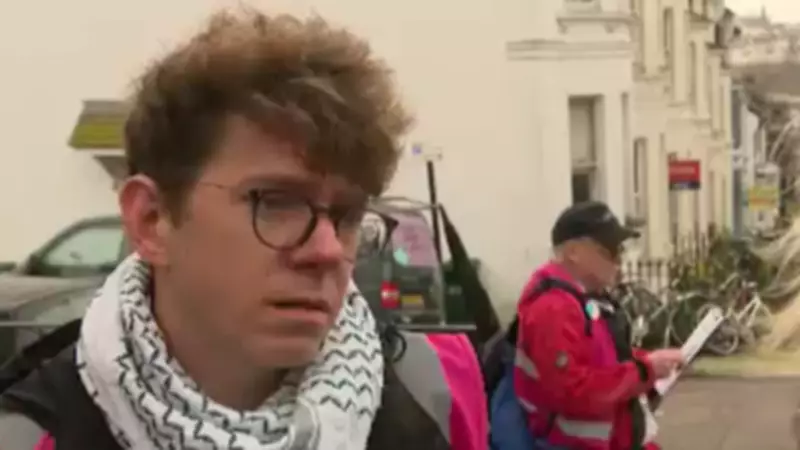
Seymour, an organiser who prefers not to give his full name, briefs volunteers before they head out into Brighton's streets. He acknowledges that residents might question if the campaign is antisemitic or racist. "People might genuinely ask us if we're antisemitic or racist," Seymour says. "I know that can be a shocking question to get if you're motivated by anti-racism. But treat it as an honest question." He emphasises that the door-knocking is conducted politely, comparing it to political canvassing by parties like the Conservatives or Labour.
During one interaction, a volunteer explains the boycott to a resident, who responds by asking, "So I can't eat hummus?" The volunteer clarifies, "Well, you can eat hummus but just not Israeli hummus." Seymour identifies as anti-Zionist rather than antisemitic, stating, "The Zionist ideology is an apartheid ideology in our view." Yet, he understands why some might feel uncomfortable with the campaign.

Jewish Community Voices Concerns Over Targeting
Vicky Bhogal from the organisation Jewish and Proud has been monitoring the campaign online and following volunteers. She expresses deep distress, saying, "It makes me feel sick to my stomach. Because I feel that it's a targeted campaign to turn the people of Brighton against Jews who support Israel." Bhogal argues that "Any campaign against Israel is a campaign against British Jews. You can't separate it. The way I see it is that the modern face of antisemitism is anti-Zionism."
Fiona Sharpe, community liaison for the Sussex Jewish Representative Council, highlights a broader sense of insecurity among Jews in Brighton and across the UK. "I think there is an underlying feeling that this country and this city is dealing with an underlying sense of antisemitism and mistrust unlike anything I have ever experienced," she says. Sharpe notes that Jews are often pressured to take purity pledges, disavowing support for Israel to prove their loyalty. "I'm a British Jew. I don't need to justify my existence and my place in my city to anybody," she asserts, adding that antisemitism affects all segments of British society.
Impact on Local Arts and Culture
The tensions extend beyond door-knocking into Brighton's cultural scene. Josh Breslaw, a Brighton-based drummer for the band Oi Va Voi, shares his experience of cancellations due to political pressures. After a venue in Bristol cancelled a gig following complaints from pro-Palestinian activists, promoters in Brighton demanded he sign a declaration that the performance wouldn't be political. When he refused, the show was cancelled. Breslaw says, "I've never heard of anyone doing anything like that before. I would call it anti-Jewish racism straight up."
He criticises what he sees as a loyalty test in the music industry, where artists must align with certain views to perform. "In the music industry, there does seem to be this kind of loyalty test - this Spanish Inquisition. If you say the right thing - if you post the right statement online - then you can play," Breslaw explains. "If you refuse to say what they want you to say - regardless of your beliefs - then you're on the outside. The right kind of Jews will be allowed to perform."

Broader Context of Antisemitism in the UK
This local campaign in Brighton occurs against a backdrop of rising antisemitism across the United Kingdom. Reports indicate increased incidents and a general sense of mistrust within Jewish communities. Fiona Sharpe remarks, "There is no part of British society that is not marred and scarred by antisemitism." The debate in Brighton reflects wider national concerns, highlighting how grassroots activism can intersect with complex issues of identity, politics, and prejudice.
As volunteers continue their door-to-door efforts, the city grapples with balancing free speech and protest with the need to protect minority groups from harm. The situation underscores the delicate line between anti-Zionism and antisemitism, a topic that remains deeply contentious in communities across Britain.