Canadian Separatists Face Treason Allegations Following Covert US Meetings
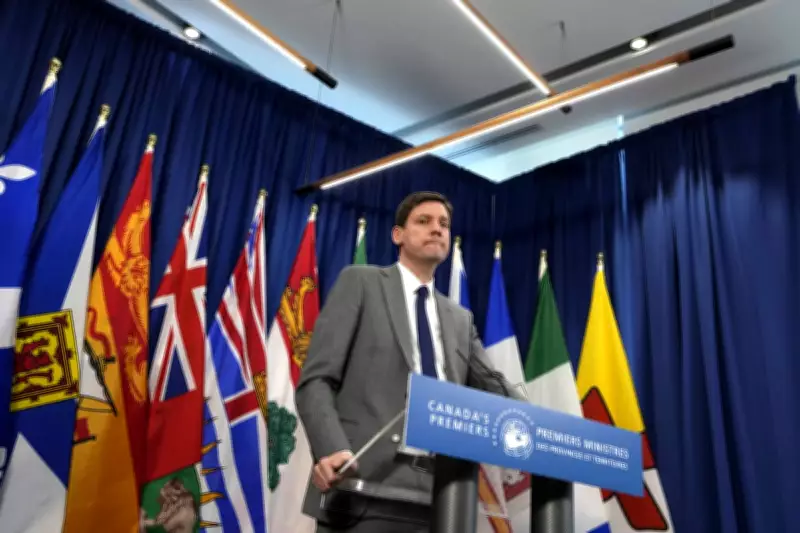
British Columbia Premier David Eby has levelled accusations of "treason" against separatist activists from Alberta following revelations of their covert meetings with officials from the United States State Department. The premier's stark condemnation came during a press conference on Thursday, where he denounced efforts to seek foreign assistance in breaking up Canada.
"An Old-Fashioned Word for That"
"To go to a foreign country and to ask for assistance in breaking up Canada, there's an old-fashioned word for that – and that word is treason," Eby stated unequivocally to reporters. He emphasised the fundamental inappropriateness of seeking to weaken Canadian sovereignty through external intervention, particularly referencing a US president who has shown limited respect for Canada's independence in the past.
The premier's remarks were prompted by a Financial Times report that first exposed the clandestine discussions between far-right Alberta separatists and members of Donald Trump's administration. These meetings form part of what appears to be increasingly emboldened efforts by a minority faction within the oil-rich province to pursue independence from Canada.

Alberta's Independence Movement Gains Momentum
Organisers of the Alberta independence campaign, which currently enjoys only minority support among residents, are actively collecting signatures to trigger a provincial referendum. Their ambitious goal requires nearly 178,000 signatures over the coming months, with campaigners travelling extensively across Alberta to gather support.
The separatist group has publicly articulated its desire for a $500 billion credit facility from the US Treasury to fund the establishment of a new nation should their referendum prove successful. This financial aspiration has raised significant concerns about the potential for foreign economic influence in Canadian domestic affairs.
Political Reactions and Growing Concerns
Alberta Premier Danielle Smith, who has consistently rejected separation and advocates for "a strong and sovereign Alberta within a united Canada," faces mounting criticism. Opponents argue her government has recently facilitated the petition process for referendums, potentially enabling separatist ambitions.
Ontario Premier Doug Ford added his voice to the controversy, suggesting Smith needs to "stand up [to the separatists] and say enough is enough." The political pressure reflects broader anxieties about maintaining national unity in the face of divisive movements.
US Involvement and Indigenous Perspectives
US Treasury Secretary Scott Bessent appeared to endorse the separatists' efforts during an interview with conservative website Real America's Voice, praising Albertans' independence and noting discussions about potential referendums. This perceived support from American officials has intensified worries about foreign interference in Canadian sovereignty.
Prominent Indigenous leaders in Alberta have scheduled addresses on the matter, having previously warned that Elections Alberta remains "ill-equipped" to handle potential foreign meddling in referendum processes. They emphasise that any secession would require consultation with treaty holders, whose agreements predate Alberta's establishment as a Canadian province.
Analysts Warn of Escalating Risks
Conflict researcher Thomas Homer-Dixon has described the separatists' strategy as a "fifth column" approach, involving collaboration with external forces to destabilise Canada. He warns of realistic scenarios where a failed separation referendum could be declared "fake" by Trump, potentially leading to US military movements along the Montana border and demands for Alberta to become America's "51st state."
"We need to be planning right now to neutralise this kind of activity, well in advance," Homer-Dixon cautioned. "The reality is, right now, we're just sleepwalking into it." His analysis highlights growing fears that outside influence could disproportionately empower separatist movements, threatening Canada's territorial integrity and political stability.