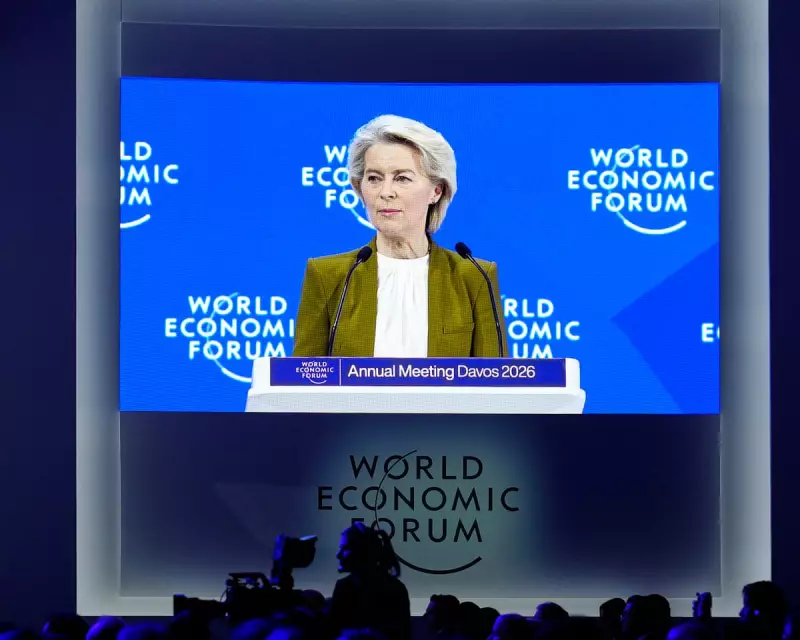
Davos 2026: A World in Flux as Old Certainties Crumble
The annual gathering of political and business elites at the World Economic Forum in Davos has opened against a backdrop of escalating global tensions, trade threats, and a rapidly disintegrating international order. This year's event, more than ever, highlights a world struggling to adapt to shifting power dynamics and the erosion of long-standing certainties.
The Trump Effect: A Wrecking Ball in the Alps
Donald Trump has dominated the week's proceedings, using the Alpine summit as a platform to promote his vision of global affairs. His unscheduled unveiling of a new "board of peace" cleared the morning schedule, featuring allies but notably excluding G7 nations. Trump's rhetoric, particularly regarding Greenland, has escalated, with observers noting his speech contained elements described as "pure racism" by analysts.
Heather Stewart, the Guardian's economics editor reporting from Davos, notes that even those sceptical of Trump felt compelled to attend his events. "It's a compelling spectacle," she says. "People who aren't necessarily fans still want to be there because it feels historic."

The Changing Face of Globalisation
The World Economic Forum was once synonymous with a stable, rules-based global trading system dominated by a select group of powerful nations. That order has fundamentally changed. Conversations about tariffs, economic nationalism, and sovereignty, once marginal at Davos, now permeate discussions throughout the event.
Nigel Farage's presence at this year's forum underscores this shift. Having previously derided Keir Starmer as a "full-on globalist" for attending, Farage himself appeared in 2026, telling supporters: "My message to Davos is simple. You guys, the globalists, have had it your way for far too long."
Moments of Resistance and Recognition
Amid Trump's dominance, Tuesday saw what Heather describes as a "day of resistance" taking shape ahead of his delayed arrival. Canada's prime minister, Mark Carney, delivered a significant speech arguing that the old rules-based international order was always partly fictional and has now definitively collapsed.
Carney warned that pretending this order will simply re-emerge leaves countries vulnerable to coercion, urging so-called middle powers to build new, flexible alliances or risk being "on the menu." Emmanuel Macron struck a similar chord, speaking of a "shift towards a world without effective collective governance where multilateralism is weakened by powers that obstruct it."
Beyond the Geopolitics: The Davos Bubble
Despite the overwhelming focus on geopolitics, Davos remains a place for deal-making and idea exchange. The programme still features packed panels on artificial intelligence, the future of work, technology, and global growth. It's a hierarchical bubble where access is everything, badges matter profoundly, and the world's elite congregate in one snowy Swiss town.
Heather observes the surreal nature of the event: "You just spot people like Rishi Sunak wandering around. And there are lots of spontaneous conversations – most of them, obviously, about Trump."
What Davos Reveals About Our Future
This year's gathering feels unusually alive precisely because so much remains unsettled. The question hanging over proceedings is whether this represents the beginning of resistance or simply acceptance of a new reality. As Heather puts it: "We can't all just sit around waiting for another flavour of US president to show up and then go back to how things were. So much has been blown up. You can't put the genie back in the bottle."
Davos 2026 serves as a front-row seat to a messier international future, where old alliances fracture, economic power is wielded openly as a weapon, and the global community grapples with the consequences of a world order in profound transition.