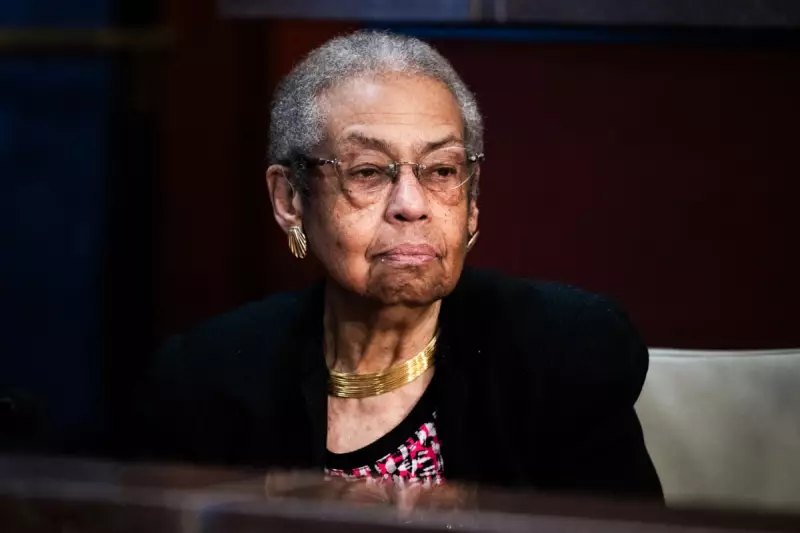
Eleanor Holmes Norton, the long-standing non-voting House delegate representing Washington DC, has formally announced her decision to retire from Congress at the conclusion of her current term. The 88-year-old Democrat made the announcement on Tuesday, marking the end of a 33-year tenure dedicated to championing the rights of DC residents.
A Legacy of Advocacy and Determination
In a post on social media platform X, Norton reflected on her decades of service, stating: "With fire in my soul and the facts on my side, I’ve raised hell about the injustice of denying 700K taxpaying Americans in DC – the same rights given to residents of the states for 33 years." She expressed pride in her accomplishments, gratitude to the district, and confidence in the next generation of leaders.
Elected to the House of Representatives in 1990, Norton became renowned for maximising the limited powers available to her as one of six non-voting delegates. While these delegates can introduce legislation and vote in committees, they are barred from casting votes on the House floor itself.

Transforming a City and Confronting Challenges
Norton assumed office during a particularly turbulent period for Washington DC, which was grappling with significant population decline, widespread disinvestment, and the devastating crack cocaine epidemic. Through persistent effort, she successfully pressured often-distracted federal lawmakers to approve policies that contributed to the city's remarkable turnaround.
She also spearheaded efforts to resist federal interference in district affairs, though these campaigns met with mixed results over the years. Her unwavering commitment to local autonomy remained a cornerstone of her political philosophy.
The Unfulfilled Quest for Statehood
Throughout her career, Norton's paramount objective, shared by DC's predominantly Democratic political establishment, was to achieve statehood for the district. Washington DC's approximately 700,000 residents currently possess three electoral votes in presidential elections but lack voting representation in the US House and Senate, despite outnumbering the populations of states like Wyoming and Vermont.
Norton was present in Congress when the House approved a bill in 2021 to grant statehood to most of Washington DC, which would have created the 51st state. However, the legislation faced vehement Republican opposition and ultimately failed to secure the necessary support in the Senate.
Final Months and Emerging Questions
As her tenure drew to a close, questions regarding Norton's capacity to continue serving began to surface. Once celebrated as a powerful and dynamic orator, she increasingly relied on reading prepared statements during committee hearings.
In 2025, she encountered a primary challenge from a city council member. Subsequently, local broadcaster NBC Washington reported that a police document described her as being in the "early stages of dementia" following an incident where she lost over $4,400 to a fraudulent scam.
Eleanor Holmes Norton's retirement concludes a significant chapter in Washington DC's political history, leaving a legacy defined by passionate advocacy and an unrelenting pursuit of equality for the district's residents.