Senate Democrats Demand ICE Reforms in Homeland Security Funding Bill
Senate Minority Leader Chuck Schumer has issued a forceful demand that legislation funding the Department of Homeland Security must include significant reforms targeting federal immigration enforcement agencies. This move sets up a dramatic confrontation with Republican leadership that could potentially trigger a partial government shutdown within days as funding deadlines approach.
Democrats Unite Behind "Common Sense" Policy Goals
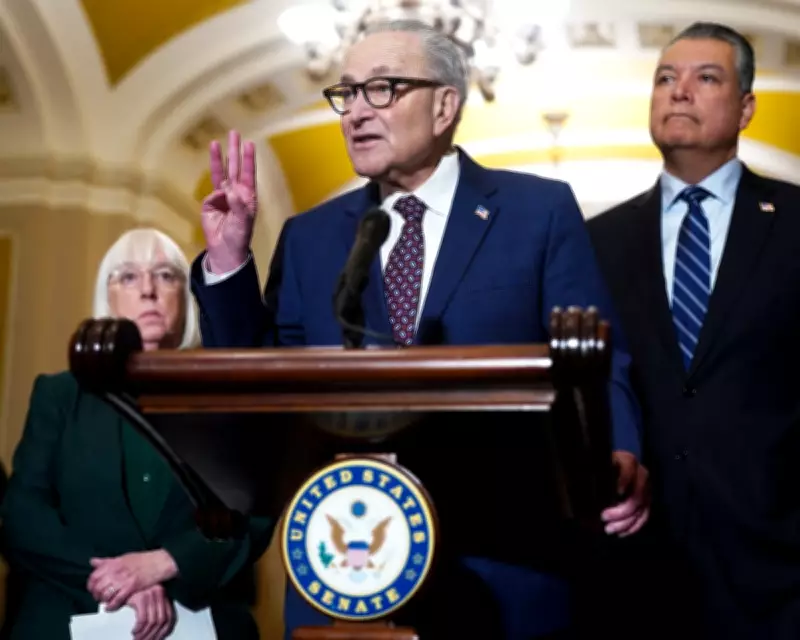
Speaking to media at the US Capitol on Wednesday, Schumer announced that Senate Democrats have united behind what he described as "common sense and necessary policy goals that we need to rein in ICE and end the violence." The demands come in response to the weekend killing of US citizen Alex Pretti by federal agents in Minneapolis, which has galvanized Democratic opposition to current immigration enforcement practices.
The proposed reforms include several specific measures:

- A prohibition on patrols by Immigration and Customs Enforcement agents without coordination with local and state police departments
- The establishment of a uniform code of conduct for federal immigration agents
- A requirement for independent investigations into any violations of conduct standards
- A ban on mask wearing by federal agents during operations
- A mandate that agents wear body cameras and carry proper identification at all times
"These are common sense reforms, ones that Americans know and expect of law enforcement," Schumer declared. "If Republicans refuse to support them, they are choosing chaos over order, plain and simple. They are choosing to protect ICE from accountability over American lives."
Republican Response and Shutdown Concerns
Shortly before Schumer unveiled the Democratic demands, Senate Majority Leader John Thune indicated some openness to discussing ICE reforms but showed no willingness to alter Republican plans to proceed with voting on spending bills on Thursday. All six funding measures were approved by the House of Representatives last week and now face Senate consideration.
"Democrats have objected, and so we're anxious to hear what their demands are, what their requests are, what their asks are," Thune stated. "I think the administration is willing to sit down with them and have a discussion, perhaps a negotiation about how do we move forward. But the one thing I do know... is that a government shutdown is not in anybody's interest."
The Republican leader noted that the current DHS funding bill already contains provisions Democrats have previously supported, including reduced funding for ICE compared to Trump administration requests, money for body cameras for agents, and resources for de-escalation training programs.
Procedural Challenges and Historical Precedents
The Democratic opposition creates significant procedural challenges. Any changes to the DHS funding bill in the Senate would require the legislation to return to the House for another vote, creating time pressures as Friday's funding deadline approaches. Republicans control the Senate with 53 seats, but most legislation requires at least 60 votes to overcome filibuster rules, making bipartisan compromise essential.
This scenario echoes a similar confrontation that occurred last September, when Democrats refused to support government funding bills unless tax credits for Affordable Care Act health plans were extended. That standoff resulted in the longest government shutdown in US history, lasting 43 days before a compromise was reached.
Patty Murray, the top Democrat on the Senate Appropriations Committee, emphasized that her party has no similar objections to the other five spending bills currently pending. These measures would authorize funding for departments including Labor, Defense, and Health and Human Services through September.
"Democrats are ready to avert a shutdown," Murray told reporters. "We have five bills we all agree on – about 95% of the remaining budget. It is ready to go. We can pass those five bills, no problem. The ball is in the Republicans' court, but when it comes to DHS, we cannot ignore what happened on Saturday."

Internal Democratic Dynamics and Broader Implications
Most Democratic senators appear publicly supportive of their party's strategy regarding the DHS appropriations bill. Some have joined calls for Homeland Security Secretary Kristi Noem to resign or be fired over Pretti's death, though opinions vary on whether this should be tied to funding negotiations.
Senator John Fetterman of Pennsylvania, representing a crucial swing state, has expressed support for Noem's removal but voiced hesitation about precipitating a government shutdown. "I've... spent significant time hearing many different positions on the funding bills and maintain that I will never vote to shut our government down, especially our defense department," he stated earlier this week.
The standoff highlights deepening political divisions over immigration enforcement policies and government spending priorities. As the Friday deadline looms, both parties face mounting pressure to either reach a compromise or accept responsibility for what could become another disruptive government shutdown affecting numerous federal agencies and services.