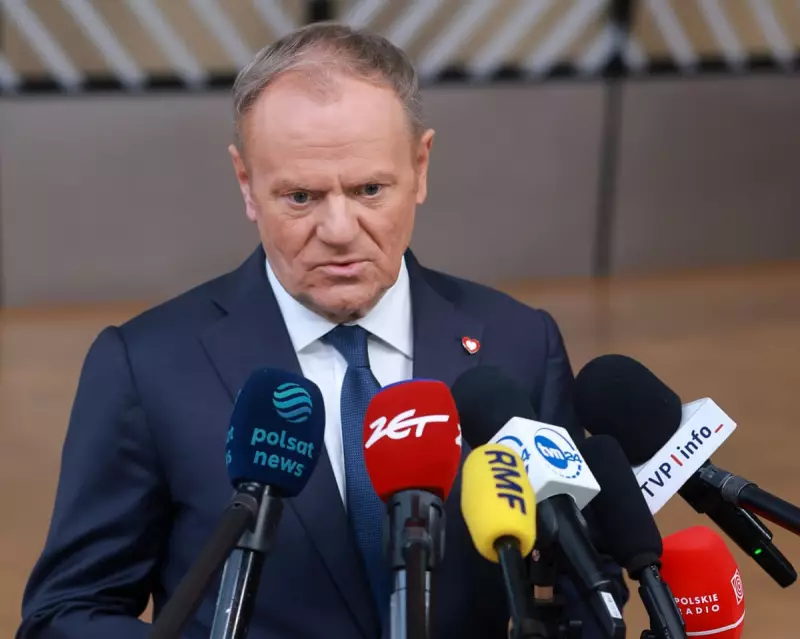
European Union leaders are locked in a high-stakes debate over how to finance Ukraine's war effort, with a stark warning from Poland's prime minister framing the decision as a choice between "money today or blood tomorrow." The two-day summit in Brussels, described as make-or-break, is focused on finding a way to provide Kyiv with an estimated €136bn it needs for 2026 and 2027.
The €90bn Loan and the Russian Assets Dilemma
At the heart of the discussions is an unprecedented proposal from the European Commission: a €90bn "reparations loan" for Ukraine, partially secured against profits generated by frozen Russian sovereign assets. Following the 2022 invasion, the EU immobilised approximately €210bn of Russian state assets, with about €185bn held at the Brussels-based securities depository, Euroclear.
German Chancellor Friedrich Merz voiced strong support for this approach, arguing it was preferable to burdening European taxpayers with new joint debt. "We are basically faced with the choice of using European debt or Russian assets for Ukraine, and my opinion is clear: We must use the Russian assets," Merz stated.

However, the plan faces significant opposition. Belgium, which hosts Euroclear, is demanding cast-iron guarantees from fellow member states. Prime Minister Bart De Wever used a vivid analogy, telling his parliament: "Give me a parachute and we’ll all jump together." Belgium fears being left solely liable for massive legal claims from Russia if the scheme is challenged in court.
Zelenskyy's Urgent Plea and Divisions Among Leaders
Ukrainian President Volodymyr Zelenskyy addressed the summit remotely, urging a swift decision. He warned that forecasts indicate his country faces bankruptcy by spring 2025 without sustained Western support. "I know that Russia is intimidating different countries over this decision. But we should not be afraid of threats – we should be afraid of Europe being weak," Zelenskyy told the assembled leaders.
His appeal highlighted the strategic imperative, noting that much of the funding would be spent on European-made weapons, thus reinvesting in the bloc's own defence industry.
The summit revealed a deeply divided bloc. A coalition including Germany, Sweden, and the Netherlands backs the Russian-assets loan. Conversely, Italy, Malta, and Bulgaria favour a traditional EU loan secured against the bloc's budget. Italian Prime Minister Giorgia Meloni warned that using the frozen assets without a watertight legal basis would hand Moscow "the first victory since the start of the war."
Further complicating matters, Hungary's Prime Minister Viktor Orbán has dismissed the idea of using Russian assets as "stupid" and has vowed to veto any proposal for new joint EU borrowing to fund the war.
Legal Threats and Broader Diplomatic Moves
The tension in Brussels is set against a backdrop of escalating legal threats from Moscow. On Thursday, Russia's central bank announced it would seek damages from European banks for the "illegal blocking and use of its assets," having already filed a claim for $230bn against Euroclear. Belgian security officials have also reported that the country's politicians and finance bosses have been targeted by Russian intelligence over the seized assets.
Simultaneously, a separate diplomatic track is unfolding. According to reports, US and Russian officials are expected to meet in Miami this weekend to discuss a potential peace plan associated with former President Donald Trump. The talks are said to involve Trump's envoy Steve Witkoff and his son-in-law Jared Kushner on the American side, with Putin's economic envoy Kirill Dmitriev representing Russia.
As the summit entered its final scheduled day, European Commission President Ursula von der Leyen vowed not to leave without a solution. French President Emmanuel Macron expressed confidence a technical agreement could be found, urging unity: "We are going to find a technical solution, therefore we must not be divided over technical details. Everyone must be listened and heard." The outcome will determine not only Ukraine's immediate financial lifeline but also the EU's cohesion in confronting Russian aggression.