Farage's Bold Declaration of Right-Wing Unity Meets Harsh Reality Check
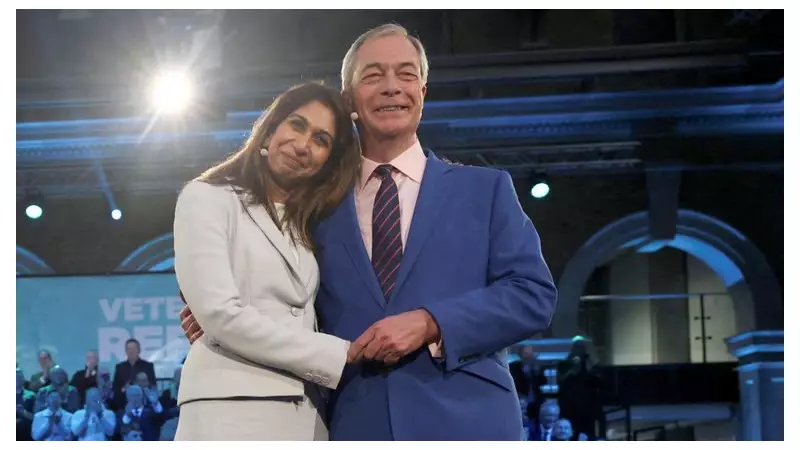
Nigel Farage initiated his second news conference of the day alongside Suella Braverman with a confident assertion: "The centre right is finally uniting." However, the subsequent events painted a starkly different picture, challenging this optimistic proclamation head-on.
Braverman's Vitriolic Assault on Her Former Party
Following Mr Farage's introduction, the scene unfolded into a twenty-five-minute tirade by the latest Tory defector, Suella Braverman. Her attack on the Conservative Party was notably more acerbic than any previous defector to Reform UK, marking a significant escalation in political hostilities.
Ms Braverman did not hold back, repeatedly using the word "betrayal" to describe her experiences. She criticised the party's refusal to ban "hate marches", stating, "The Conservative Party should be disgusted with itself, frankly." Furthermore, she accused colleagues of vilifying her as Islamophobic, labelling it another great betrayal.

In a personal jab, she attacked Kemi Badenoch, alleging that the leader claimed she was having a nervous breakdown, a remark Ms Braverman suggested was repeated. She expressed feeling "politically homeless" for two years and "ashamed of the Conservative Party", while also blaming Theresa May for mishandling Brexit.
Conservative Party's Controversial Response and Backlash
The Tory reaction to Ms Braverman's departure added fuel to the fire. They issued a statement claiming, "The Conservatives did all we could to look after Suella's mental health, but she was clearly very unhappy." This mental health reference was widely condemned as inappropriate and below the belt, prompting outrage among senior Conservatives.
Within hours, the party retracted the offensive sentence in a "correction", but the damage was done. Mr Farage himself denounced the slur as "pretty abusive" and vowed not to stoop to their level. This incident highlighted the toxic undercurrents in the political landscape, with Ms Braverman describing the environment as "very toxic" and akin to a witch-hunt.
Broader Political Context and Reactions
The defections, including those of Nadhim Zahawi, Robert Jenrick, and Andrew Rosindell, have been met with unprecedented bile from the Tories, signalling deep rifts. In Parliament, veteran MP Sir Julian Lewis hinted at rare cooperation between Conservatives and Reform UK on issues like the Chagos handover, but such instances remain exceptional.
Labour, seizing the opportunity, mocked Mr Farage for "stuffing his party full of a band of failed Tories", a sentiment that gains traction as Reform UK's ranks swell with disaffected Conservatives. This dynamic overshadows ongoing Labour internal conflicts, shifting the political spotlight.
Assessing the Claim of Right-Wing Unity
Despite Mr Farage's bold statement, the evidence suggests otherwise. Ms Braverman's brutal critique and the Conservatives' retaliatory remarks expose significant fractures within the centre-right. The notion of unity appears more aspirational than actual, with personal attacks and bitter recriminations dominating the discourse.
As political tensions simmer, it becomes clear that any semblance of coalition-building is fragile at best. The ongoing defections and hostile exchanges indicate a fragmented right-wing bloc, far from the united front Mr Farage envisions.