Muslim Leader Condemns Government's Approach to Islamophobia Amid Rising Hate Crimes
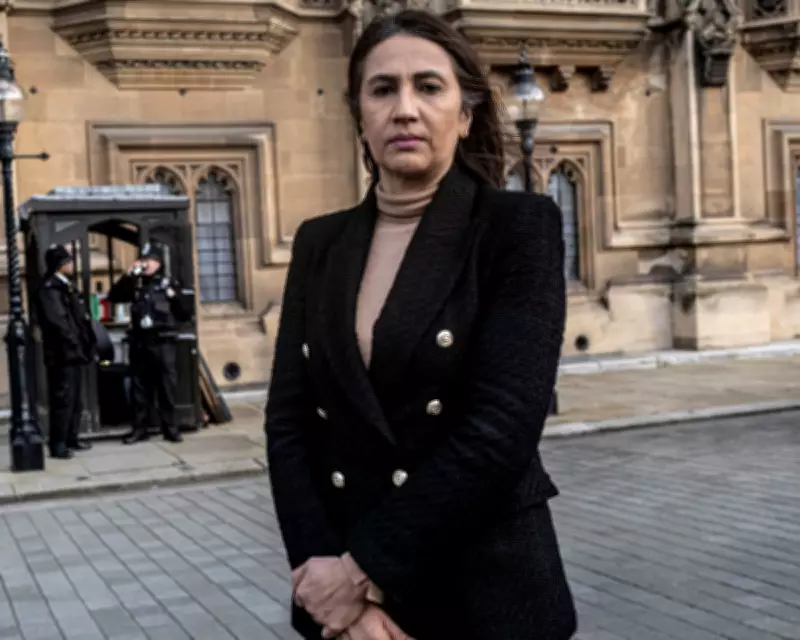
Shaista Gohir, a cross-bench peer and head of the Muslim Women's Network, has launched a scathing criticism of Downing Street for its handling of Islamophobia following alarming government statistics. Official figures reveal that hate crimes targeting Muslims increased by nearly one-fifth in 2025, highlighting a growing crisis that demands urgent attention.
Definition Debate Intensifies as Safety Concerns Mount
Gohir, who participated in a government-established working group on anti-Muslim hatred and Islamophobia in 2025, argues that failing to adopt a clear definition of anti-Muslim hostility sends a dangerous message to British Muslims. "Every group has the right to be protected. The only reason why we're asking for it is because of the high levels of abuse," she stated, emphasizing the personal attacks she and others have faced.
The proposed non-statutory definition, submitted to the government in October, aims to delineate unacceptable treatment, prejudice, and discrimination against Muslims while aligning with existing legal frameworks. Gohir contends that this definition would serve as a practical tool for law enforcement and other institutions to assess anti-Muslim hostility, thereby encouraging victims to report discrimination with greater confidence.

Research Reveals Deepening Crisis of Belonging
The urgency of this issue is underscored by recent research from Muslim Census, whose "The Crisis of Belonging" report paints a bleak picture. The survey of 4,800 individuals, conducted with charities Islamic Relief UK and the National Zakat Foundation, found that only 8.2% of British Muslims feel positive about their future in the UK, while 62.7% express negative sentiments. Moreover, just 51.9% report feeling they "strongly belong to the UK," a dramatic drop from 93% a decade ago in an Ipsos Mori poll.
Key concerns identified in the study include:
- Rising Islamophobia and its impact on daily life
- The current political climate fostering feelings of exclusion
- Job security and economic stability among Muslim communities
- A pervasive sense of being unwelcome in their own country
This research aligns with findings from the Commons' women and equalities committee, which reported that Muslim women disproportionately face hostility and abuse, with rising online, verbal, and physical attacks corroding community cohesion.
Opposition and Legal Challenges to the Proposed Definition
Despite the clear need for action, the adoption of a definition has faced significant opposition. Critics, including some UK faith groups and the Conservative thinktank Policy Exchange, argue that such a definition could limit freedom of expression and undermine counter-terrorism laws, immigration rules, and foreign policy "without democratic consent."
The Equality and Human Rights Commission (EHRC) has voiced strong opposition, warning that an official non-statutory definition risks "breaking the law" by conflicting with existing legal definitions and creating confusion for courts and individuals. An EHRC spokesperson noted, "Legal protections against discrimination and hate crime already exist, so it is unclear what role a new definition would play in addressing discrimination and abuse targeted at Muslims."
Under the Equality Act 2010, Islam is protected as a religion, but Muslims are not classified as a racial group, leaving gaps in protection against racial discrimination. In 2019, the Labour party adopted a working definition from the all-party parliamentary group on British Muslims, describing Islamophobia as "rooted in racism and is a type of racism that targets expressions of Muslimness or perceived Muslimness." This definition has been embraced by many organizations, the Liberal Democrats, and Scottish Conservatives, but not by the Westminster government or Conservative party, which cite a lack of broad acceptance.

Political Implications and Calls for Action
Gohir warns that the opposition to the definition is a deliberate strategy to pressure the government into inaction. She contrasts this with the government's adoption of the International Holocaust Remembrance Alliance's definition of antisemitism in 2016, which was widely accepted without controversy. "When the antisemitism definition was put forward and endorsed by the government and endorsed by many organizations, [there was] not a peep from anyone," she remarked, highlighting what she sees as unequal treatment.
With an election approaching in about three years, Gohir predicts the situation will worsen, placing blame squarely on No 10. "We've got an election in about three years' time and it's just going to get worse," she added. "And personally, if I'm going to blame anybody, I'm blaming No 10."
Last year, over three dozen Labour and independent MPs urged Communities Secretary Steve Reed to adopt an Islamophobia definition after statistics showed a rise in anti-Muslim hate crimes from 2,690 to 3,199 offences in the 12 months to March 2025 in England and Wales, where 3.9 million people identify as Muslim. Gohir concludes with a stark warning: "If they do not adopt a definition the Labour government will be sending a message to the Muslim communities that you don't matter, your safety does not matter, Muslims do not matter."
The working group, chaired by former attorney general Dominic Grieve KC, is expected to put the proposed definition to a consultation if it proceeds, marking a critical juncture in the fight against Islamophobia in the UK.