The 'Polanski Effect': How the Green Party is Reshaping UK Politics
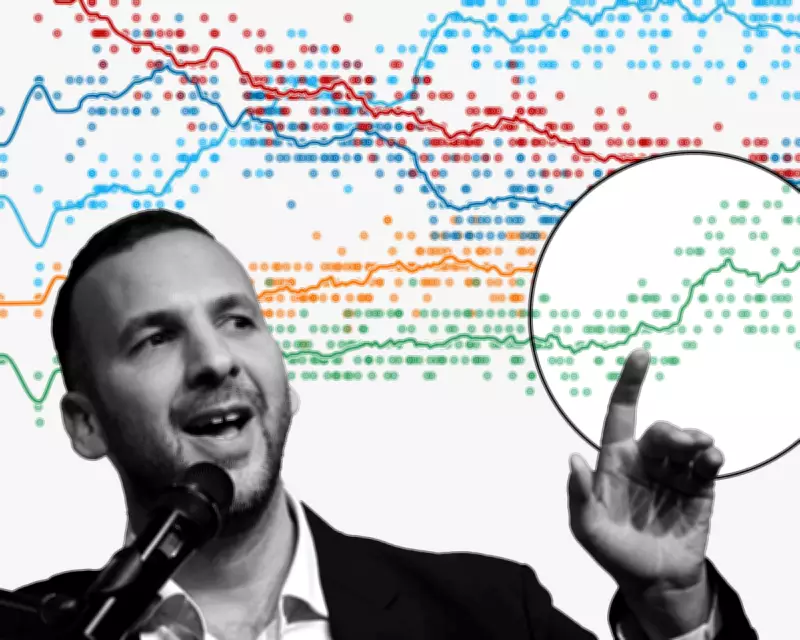
Since Zack Polanski assumed leadership of the Green Party in September 2025, political observers have been tracking what some term the "Polanski effect" – a noticeable increase in momentum and visibility for the party. This phenomenon appears to be translating into tangible gains in public support, with the Greens rising by an average of four points across various opinion polls.
Polling Disparities and Methodology Challenges
The Guardian's latest poll tracker, which aggregates data from the previous ten days, places the Green Party at 13.5% nationally. This positions them just five points behind Labour, who currently stand at 18.6%. However, experts caution that interpreting these numbers requires careful consideration of methodological differences between polling organisations.
Significant variations exist in how different pollsters measure Green support. January polling data reveals substantial discrepancies: YouGov and Find Out Now recorded the Greens at 17%, while Focaldata, More in Common, and Survation all placed them between 10-11%. These differences may stem from whether polling companies include the Greens as an explicit option in their surveys, or from divergent modelling assumptions about voter behaviour.

Demographic Shifts and Labour's Challenge
Perhaps the most striking development is the Green Party's success in attracting former Labour supporters. YouGov polling indicates that 20% of 2024 Labour voters would now vote Green, representing a substantial increase from the 11% recorded when Polanski first took leadership.
Professor Sir John Curtice of the University of Strathclyde observes: "The polls disagree by how much, but the Greens have added to Labour's woes. Already there was the case that Labour's vote was scattering in all directions, and now that's become even clearer in a post-Polanski world."
Age emerges as the most significant factor in Green support. Young voters aged 18-24 demonstrate the strongest affinity for the party, with their support increasing dramatically from 26% in early September to 45% by mid-January. This demographic shift poses particular challenges for Labour, whose support base includes many young, middle-class professionals concentrated in London – precisely the group showing strongest Green alignment.
Policy Priorities and Voter Motivations
While the cost of living remains the top concern for all Green supporters, interesting differences emerge between existing supporters and new converts. Recent Green voters place greater emphasis on the economy and Brexit than established supporters, while showing less concern about Gaza and climate change specifically.
Adam McDonnell, head of UK political and academic research at YouGov, notes: "Those who didn't vote Green in 2024 but now intend to place a higher weight on the economy in general. This implies the Greens may want to look at economic messages which resonate with the voters they are winning over."
Ipsos polling analysis reveals that Green supporters share common ground with Liberal Democrat and Labour voters on defence and NHS issues, but demonstrate stronger concerns about inequality and more relaxed attitudes toward immigration. An anti-establishment sentiment also characterises many Green supporters, who tend to express greater distrust of authority figures and systemic institutions.
Leadership Dynamics and Electoral Prospects
Polanski's personal ratings present a mixed picture. His current net favourability stands at -15 points, with 20% viewing him favourably against 35% unfavourably. While this places him ahead of most national political leaders except Liberal Democrat leader Ed Davey, it's noteworthy that 45% of the public remain undecided or unfamiliar with him.
Joe Twyman, founder of Deltapoll, highlights the Greens' positioning as an anti-establishment alternative: "There is a desire for a new political movement because the 'old guard' have been seen to have failed. If you want proper challengers on a national level, it's either Reform or Green – and it's the Greens if you're more socially liberal."

Looking toward electoral implications, More in Common's latest MRP polling suggests the Greens could secure nine parliamentary seats, mostly in urban areas while maintaining their two rural constituencies from 2024. The modelling identifies 16 seats where Green support exceeds 30%, with four projected gains coming directly from Labour losses in progressive-leaning urban centres like Bristol, Manchester, and Sheffield.
Tactical Voting and Future Challenges
The emergence of multi-party competition creates complex tactical voting scenarios. Analysis reveals 179 constituencies where combined Liberal Democrat, Green, and Labour vote shares exceed Conservative and Reform totals. In forty of these, either Reform or Conservatives are forecast to win – with the Greens emerging as the largest progressive party in eight constituencies.
Twyman emphasises the organisational challenges ahead: "The key question is how parties like Reform and the Greens will convert good polling numbers into actual voters. If you have wider ambitions you have to broaden to a national campaign, which means developing party machinery with boots on the ground."
Upcoming local elections in May, particularly in London, will provide crucial indicators of whether the Greens can translate polling momentum into electoral success. The party has also announced a major push for the Gorton and Denton byelection, testing their ability to mobilise support in specific constituencies while building national presence.