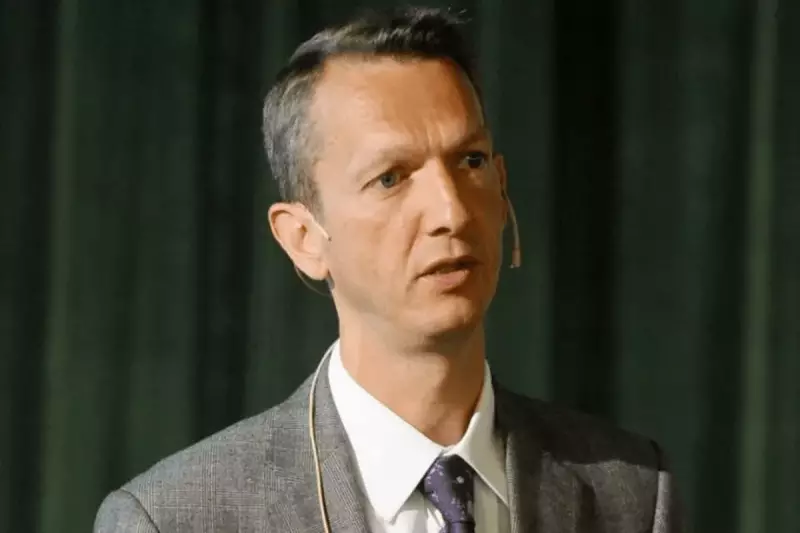
In a striking critique of the current political landscape, former Bank of England chief economist Andy Haldane has launched a pointed assessment of the Labour government's economic capabilities. Speaking in an interview with LBC, Haldane declared that the administration fundamentally lacks anyone with a genuine "nose for business," highlighting what he perceives as a critical deficit in private sector experience among ministers tasked with driving growth.
A Scathing Assessment of Government Competence
Haldane, whose previous criticism of Budget leaks intensified pressure on Chancellor Rachel Reeves, has now turned his attention to the broader ministerial team. He argues that the government exhibits "no sense of what works" in practical economic terms, pointing to a series of policy reversals as evidence of poor planning and inadequate evaluation.
"You mentioned the 13 U-turns. Many of those have been failures of design. Business rates is a case in point. They haven't fully fathomed the consequences for business before they've announced and that's been a big mistake," Haldane stated emphatically.

Calling for Radical Change in Leadership
The economist went further, suggesting that significant personnel changes might be necessary for the government to alter its current trajectory. With the UK economy still "flying below its cruising altitude," Haldane advocated for a dramatic rethinking of growth strategy, proposing that defence spending should become its central pillar.
"We have now set out a very sedate path for increasing defence spending, which is way out of line of what the world and the UK needs... That's far too slow. We could use defence as our centrepiece of a growth and jobs strategy," he argued, criticising the planned gradual increase from 2.3% to 3.5% over a decade as insufficient.
Navigating Complex International Relationships
During the same interview, Haldane endorsed government efforts to strengthen trading relationships with China, despite geopolitical tensions. With Prime Minister Keir Starmer preparing to visit Beijing accompanied by business delegates from major corporations like GSK and HSBC, Haldane acknowledged the delicate balance required in international diplomacy.
He referenced former President Donald Trump's threat to impose higher tariffs on allies like Canada as a "cautionary tale" but maintained that China could still play a vital role in boosting the UK economy. "The reality is that both this government, indeed this country, is lacking friends right now, trade and otherwise," Haldane observed. "Looking to places where we can export more, including China, will be important and I applaud that effort."
Business Community Reacts to Growing Concerns
Haldane's comments arrive at a sensitive moment for the government, as questions mount about economic strategy and delivery pace. Business Secretary Peter Kyle recently proposed linking civil servants' salaries to GDP data—a suggestion previously made by shadow business secretary Andrew Griffith—while Chief Secretary to the Prime Minister Darren Jones announced enhanced bonuses for high-performing civil servants, a policy also supported by Reform UK.
Meanwhile, recent survey data from the Confederation of British Industry (CBI) indicates continued economic challenges. The latest growth indicator revealed weakening private sector activity in the three months to January, with negative expectations persisting for the upcoming quarter.
"The UK economy had 'not experienced a strong start to 2026,'" noted Alpesh Paleja, deputy chief economist at the CBI. "Recent geopolitical tensions will only have added to uncertainty at the margin."
As Haldane assumes his new role as president of the British Chambers of Commerce, describing it as "important in leading the growth charge," his critique underscores deepening concerns about the government's economic direction and its capacity to foster genuine recovery.