Iran's Latest Wave of Unrest Reveals Shift from Progressive Slogans to Monarchist Sentiment
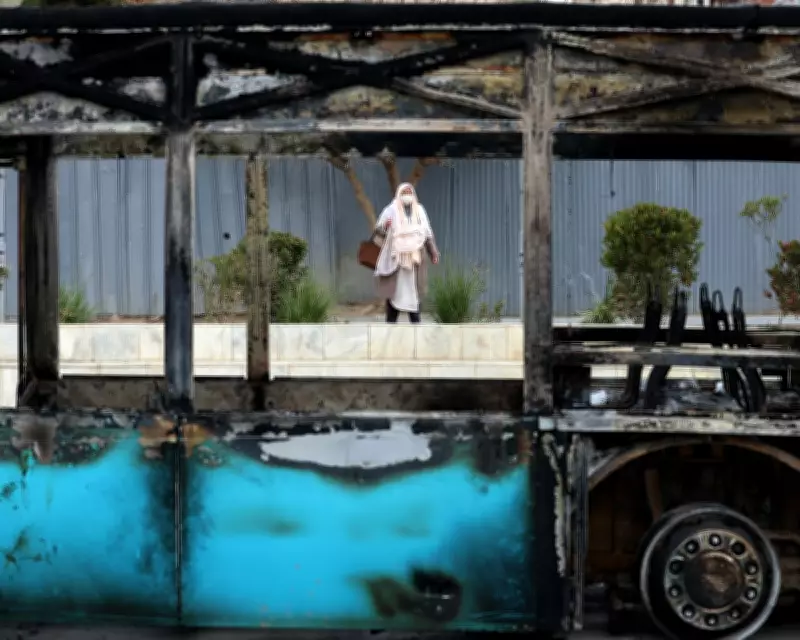
A stark visual of the recent turmoil in Iran shows a woman walking past the wreckage of a public bus destroyed during anti-government protests in Tehran earlier this month. This image captures the physical destruction accompanying the latest wave of dissent, but beneath the surface lies a profound shift in the nature of Iranian protest movements.
From 'Woman, Life, Freedom' to 'Long Live the Shah'
As nightly protests recently gripped Iran, familiar chants of 'death to the dictator' and 'death to Ayatollah Ali Khamenei' filled the air in cities like Karaj, just west of Tehran. However, when female participants attempted to revive the popular 'woman, life, freedom' slogan – which became an inspirational rallying cry during the 2022 demonstrations following Mahsa Amini's death – it found surprisingly few supporters.
'That was the moment I realised, 'OK, this is slightly different than what happened in 2022,' said Parisa, an Iranian film-maker based in France who was visiting relatives when the recent demonstrations began. She used a pseudonym to protect family members still in Iran.

A Changing Protest Demographic
Parisa, a veteran of previous anti-regime protests including the 2009 election rallies, observed that while the 2022 protests were broadly middle-class and progressive – credited with forcing de facto concessions on head covering rules – the latest unrest felt 'very masculinist at heart.' She noted this shift appears underpinned by a broader social rebellion against rising poverty and economic desperation.
The main beneficiary of this changing sentiment appears to be Reza Pahlavi, son of Iran's former pro-western monarch. Many Iranians in their teens and twenties appear to be coalescing around him in desperation to be rid of the current deeply unpopular theocratic regime.
Brutal Crackdown and Growing Desperation
At least 30,000 people are believed to have been killed by security forces in a brutal response to demonstrations that began in provincial towns and cities in late December. The protests were initially sparked by anger over economic privations triggered by a sharp fall in the value of Iran's currency, the rial.
Despite spreading to Tehran and other major centres, the protests eventually abated in the face of ruthless repressive tactics. These included victims being laid out in public en masse inside body bags for relatives to identify. Yet analysts suggest the scale of dissent and simmering rage at the murderous official response poses an existential threat to the Islamic regime's sustainability.
The Pahlavi Phenomenon Among Younger Generations
Parisa noted another significant departure from precedent in the chanted slogans: some protesters shouted 'javid shah' (long live the Shah), 'this is our last fight' and 'Pahlavi is going to come back.' She observed these chants were 'quite well supported' and reflected sentiment among Iran's younger generation.
Many in Generation Z are too young to recall the revolutionary fervour that toppled Mohammad Reza Pahlavi in 1979. The former shah was criticised for torturing opponents and crushing dissent during his rule.
'My cousin and his girlfriend, who are 25 and 26, were participating in the protests every night and until two years ago, these guys were leftists,' said Parisa. 'Now they are completely pro-Pahlavi because they see Reza Pahlavi as the only leader who can bring people together and do something.'
A Transitional Figure or Aspiring Monarch?
Despite doubts about the breadth of his support, Pahlavi – who hasn't been in Iran since before the revolution – predicted at a Washington news conference this month that the Islamic regime would collapse. He proclaimed himself 'uniquely positioned' to lead a transition government.

When asked whether he hoped to return as monarch, Pahlavi remained ambiguous. He suggested a draft constitution would be put to a referendum to establish the form of a new government. 'If it's a republic, the president will be elected. If it's a monarchy, the prime minister will be elected at that time,' he said. 'My role in all this is to lead this transition, help with the transitional structure.'
Historical Echoes and Contemporary Criticism
Pahlavi's modest self-portrayal as a transitional figure, while pointedly declining to rule out a monarchy, has historical echoes of Ayatollah Ruhollah Khomeini. Before returning from exile in France to lead the 1979 revolution, Khomeini vowed he would retire and play no active role in day-to-day politics. Instead, he headed a repressive Islamic theocracy that executed political opponents and restricted personal freedoms.
Pahlavi has faced criticism for urging protesters to take to the streets only for them to face a remorseless crackdown. His recent justification that 'this is a war, and war has casualties' in an interview with CBS News exacerbated this criticism.
He has also come under fire for deleting his previous social media posts supporting the 'woman, life, freedom' movement during the latest unrest. Some have denounced this as cynical opportunism driven by calculations that the new demonstrations were more socially conservative and less female-friendly.
A Leadership Vacuum in Iranian Opposition
Pahlavi's emergence as a potential leadership figure has been aided by the fact that prominent domestic opposition figures are either imprisoned or restricted. Narges Mohammadi, a Nobel peace prize laureate and human rights activist, and Mostafa Tajzadeh, a reformist politician, are currently in jail.
Two other reformists, Mir Hossein Mousavi and Mehdi Karroubi, have been under house arrest for 15 years after disputing the results of the 2009 presidential election. This vacuum in credible domestic opposition leadership has created space for exiled figures like Pahlavi to gain traction among desperate protesters seeking any alternative to the current regime.
The changing nature of protest slogans and allegiances reveals a complex evolution in Iranian dissent. What began as economic protests has transformed into a movement grappling with fundamental questions about Iran's future direction – questions that now include the unexpected resurgence of monarchist sentiment among a generation with no living memory of the Pahlavi dynasty.