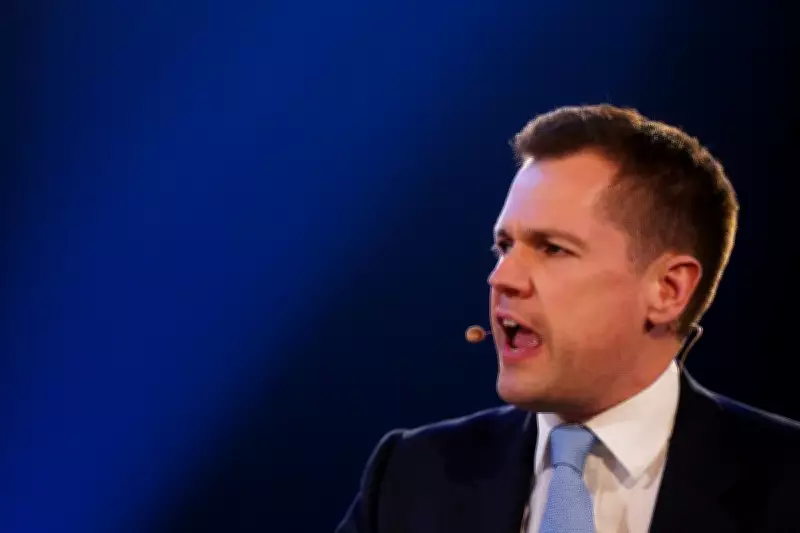
In a significant political development, Robert Jenrick has secured the crucial Treasury portfolio within Reform UK's newly announced shadow cabinet. The Newark MP, who defected to Nigel Farage's party in January, will now serve as the opposition's shadow chancellor, positioning him to directly challenge Labour's economic agenda.
Reform UK's Strategic Cabinet Appointments
Nigel Farage unveiled a comprehensive slate of departmental spokespersons on Tuesday, marking a deliberate effort to demonstrate Reform UK's preparedness for government. Alongside Jenrick's appointment, the party named Zia Yusuf as shadow home secretary and Richard Tice to an expanded portfolio covering business, trade, and energy.
These strategic appointments are designed to project fiscal responsibility and broaden the party's appeal, particularly within financial circles. With only eight MPs compared to the Conservative Party's 116, Reform UK is clearly aiming to strengthen its parliamentary presence and policy credibility.

Jenrick's Economic Mission
In accepting the shadow chancellor role, Jenrick expressed gratitude to Farage for the opportunity to "oppose the wrecking ball that is Rachel Reeves," referring to Labour's current chancellor. He committed to developing what he described as the most "comprehensive plan" to address the UK's economic challenges.
This appointment represents a calculated move by Reform UK to leverage Jenrick's political experience and connections within the City of London. As a former Conservative minister, his defection and subsequent elevation within Reform signals the party's ambition to attract disaffected Tory voters and establish itself as a serious alternative.
Farage's Vision for a Broader Party
Speaking at Westminster on Tuesday, Farage addressed longstanding criticisms that Reform UK functioned as a "one man band." He emphasized that the shadow cabinet appointments marked the beginning of a deliberate expansion process.
"The time has come to broaden the party, to put it to these people in shadow positions, and that process begins today – just begins today with four important announcements," Farage declared, underscoring the strategic nature of these personnel decisions.
Political Context and Recent Victories
The shadow cabinet launch follows what Reform UK characterizes as a significant victory over the Labour government. On Monday, Prime Minister Sir Keir Starmer reversed plans to postpone local elections in May for thirty English councils, a decision Farage hailed as "a big win not just for us, but a big win for democracy."
This policy reversal adds to a growing list of government U-turns since Labour took power eighteen months ago, including sharp reversals on welfare reform, business rates increases, and 'day one' workers' rights. Reform UK appears poised to capitalize on these perceived government weaknesses as it strengthens its opposition role.
The shadow cabinet appointments represent a clear escalation in Reform UK's political strategy, transforming the party from what critics called a single-issue movement to a more comprehensive political force with designated policy leads across key governmental departments.