Amidst a festive season of intense political speculation, Prime Minister Sir Keir Starmer finds himself the subject of relentless Westminster whispers about his future. Yet, a closer examination of the political landscape suggests rumours of his imminent demise are greatly exaggerated.
The Polling Paradox and the First-Past-the-Post Lottery
The current barrage of negative opinion polls paints a grim picture for the Labour leader. However, these figures are a poor predictor of actual electoral outcomes under the UK's first-past-the-post system, especially with multiple parties in contention. A recent in-depth study highlighted in the Economist demonstrated the volatility when party shares hover around the 20-30% mark.
The study's modelling showed wildly varying seat projections, with Reform predicted to win anywhere between 112 and 373 seats, and Labour between 36 and 295. This inherent uncertainty renders many headline-grabbing polls almost meaningless for forecasting a majority. The system's quirks were starkly illustrated at the 2024 general election, where Reform's 14% of the vote translated to just five MPs, while the Liberal Democrats' 12% yielded 72.
With roughly five parties currently polling between 15% and 30%, the next election becomes a lottery. Leadership 'popularity' in this fragmented environment can swing on charisma or a single media appearance, rather than deep-seated voter loyalty.
Assessing Starmer's Tenure and the Lack of a Successor
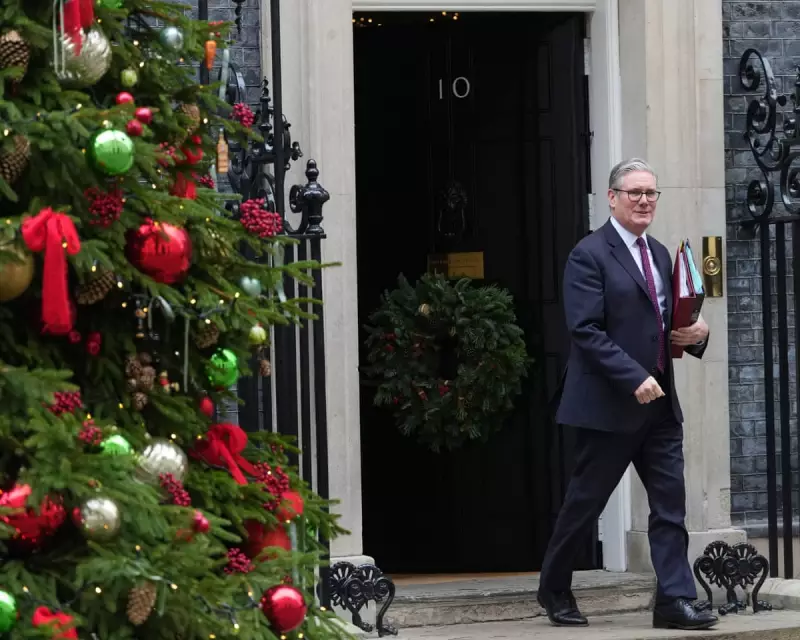
Sir Keir's premiership, which began with his move into 10 Downing Street in December 2025, has not been without its challenges. His close alliance with Chancellor Rachel Reeves has sparked friction with various sectors, including employers, farmers, and landlords. Major spending commitments on projects like HS2 and green energy have also drawn criticism.
Nevertheless, his government has avoided the kind of dramatic crises seen under predecessors like Liz Truss or Boris Johnson. On key policy fronts, Starmer has held a steady course. His government's restraint on public borrowing has, according to the IMF, positioned the UK for strong growth, forecast to be the second strongest in the G7 after the USA in the coming year.
Furthermore, he has taken initial steps to recalibrate the UK's post-Brexit stance, notably by reopening the Erasmus student exchange scheme. While his foreign policy has accrued air miles, he has managed defence spending pressures deftly.
Critically for Starmer's internal standing, no obvious successor has emerged to mount a credible challenge. Speculation around figures like Angela Rayner, Wes Streeting, or Andy Burnham leading armies of supporters appears overblown. There is little appetite within the Labour Party for a self-destructive civil war when no clearly superior alternative leader is waiting in the wings.
Time, Survival, and the Lessons of History
Westminster's lobby journalists, ever hungry for drama, have been quick to write Starmer's political obituary. It is a familiar script; similar predictions of terminal decline were made about Margaret Thatcher in 1981, just two years into her premiership. She, of course, went on to dominate British politics for a decade.
The upcoming local elections in May will be seized upon as a verdict, but they are more likely to reflect passing voter whims than a definitive choice for prime minister. The ultimate electoral test remains utterly unpredictable.
Sir Keir Starmer may not be the most electrifying leader to have occupied Number 10, but that in itself is not a novel phenomenon. His strategy now may well be to borrow from the Thatcher playbook: to endure, to survive, and to use the power of incumbency that time affords. In the chaotic, multi-party arena of modern British politics, steady survival might just be the most potent strategy of all.