Labor MPs Voice Private Concerns Over Government's Rapid Endorsement of Iran Strikes
Senior Labor ministers are facing significant internal criticism following their immediate endorsement of US and Israeli military strikes against Iran, with multiple parliamentarians privately expressing alarm about the legal implications and timing of the government's support. The controversy has exposed deep divisions within the party regarding Australia's foreign policy alignment with American military actions.
Immediate Support Sparks Internal Debate
Guardian Australia has confirmed that several Labor MPs were privately alarmed by the Albanese government's rapid response to the February strikes, which included a statement offering unreserved support for attacks that international law experts argue violated the United Nations charter. The concerns were reportedly aired during a meeting of Labor's left faction shortly after the initial strikes, though these discussions remained confidential until now.
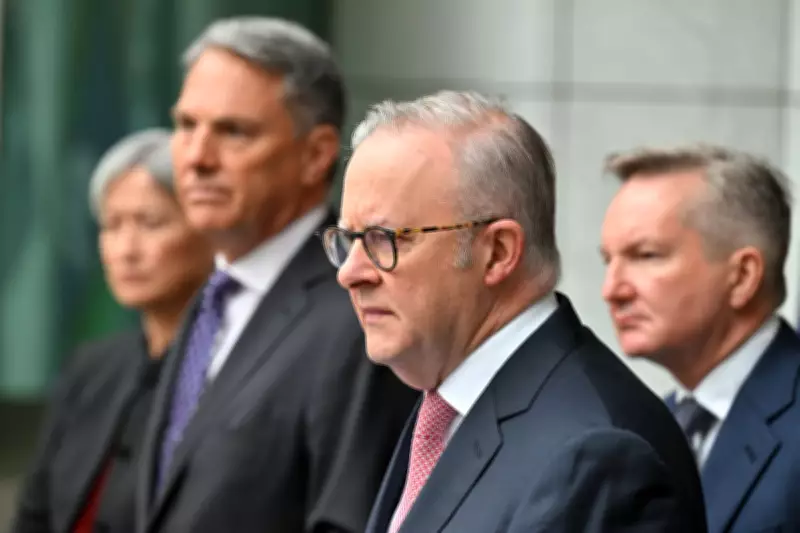
The government's statement, issued within hours of the attacks on February 28 by Prime Minister Anthony Albanese, Foreign Minister Penny Wong, and Defence Minister Richard Marles, declared support for "the United States acting to prevent Iran from obtaining a nuclear weapon and to prevent Iran continuing to threaten international peace and security." This immediate endorsement contrasted sharply with the government's more measured 24-hour delay before supporting similar US actions against Iranian nuclear sites in June of the previous year.

Legal Questions and Internal Dissent
Multiple Labor sources have confirmed that several MPs questioned why the government rushed to endorse strikes that were likely in breach of international law. The omission of any reference to international law or explicit acknowledgment that Iran was being bombed particularly confounded some parliamentarians, who raised their concerns directly with senior ministers including Penny Wong.
During a "robust" debate at the Labor left faction's March 2 meeting, members expressed unease about the government's position. While Wong was not present, Defence Industry Minister Pat Conroy answered questions on her behalf. The concerns extend beyond the left faction, with members of Labor's right faction also privately expressing discomfort about how quickly the party aligned itself with the US administration's decision.
International Law Experts Challenge Legitimacy
A growing number of international law experts, including United Nations special rapporteur Ben Saul, have argued that the attacks constituted a clear breach of the UN charter. Despite these concerns, Albanese, Wong, and Marles have continued to endorse the strikes while maintaining that it is up to the United States and Israel to explain whether their actions were consistent with international law.
The government has attempted to balance its support with limitations on Australian involvement, with Albanese stating that Australia would not participate in offensive actions against Iran or deploy troops to the Middle East. However, the government did announce it would send a specialist surveillance aircraft and stocks of air-to-air missiles to help defend the United Arab Emirates from Iranian retaliatory attacks.
Grassroots Opposition and Historical Parallels
Labor Against War, the party's grassroots anti-war group, is planning to circulate a motion to branches in New South Wales and Victoria condemning the US and Israel's actions as an "illegal act of aggression against a sovereign nation." The group argues that the conflict provides "concrete evidence that Aukus locks Australia into support for US military adventurism."
The proposed motion draws direct parallels with Labor's principled opposition to the 2003 Iraq war, stating that supporting the Iran strikes "stands in contrast to the principled position taken by the Australian Labor Party to oppose the illegal war on Iraq in 2003, which was also based on false claims about weapons of mass destruction." Organizers hope the motion will gain traction ahead of Labor's national conference in Adelaide this July.

Broader Implications for Labor Policy
This internal dissent represents a significant challenge for the Albanese government as it navigates Australia's foreign policy commitments. While local branch motions are not binding on state or federal MPs, they represent one of the most effective ways for rank-and-file members and unions to influence party policy.
The controversy follows previous internal debates about Australia's position on Palestine, with Labor Friends of Palestine having drafted motions urging stronger support for Gaza. At last year's Victorian state conference, members voted to immediately recognize Palestine less than ten days before the federal government officially adopted the position, demonstrating the potential influence of grassroots movements within the party.
As the conflict continues to unfold across the region, the Albanese government faces increasing pressure to reconcile its support for allied military actions with growing internal concerns about international law and Australia's independent foreign policy stance.