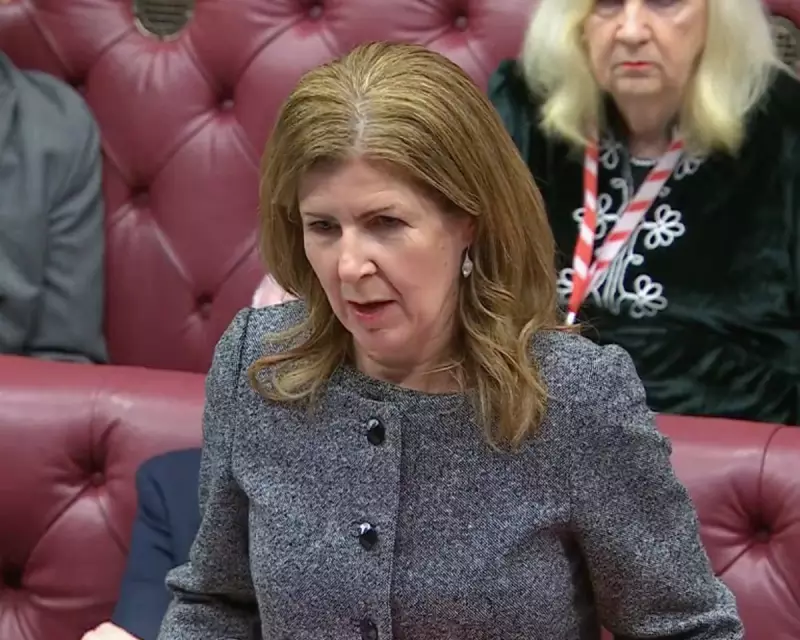
Labour Minister's Proposal to Scrap Aid Watchdog Sparks Bipartisan Condemnation
The Starmer government faces mounting criticism over controversial plans to dismantle the UK's independent aid spending watchdog, with senior figures from both major political parties accusing ministers of attempting to avoid proper scrutiny.
Development Minister Considers Closing Independent Commission
Jenny Chapman, the development minister and a close ally of Prime Minister Keir Starmer, has confirmed she is actively considering the closure of the Independent Commission for Aid Impact (ICAI). The body, which costs under £4 million annually to operate, provides crucial oversight of projects funded by Britain's substantial £14 billion aid budget.
Chapman's remarks came during questioning by MPs on the Commons' international development committee, where she suggested that maintaining the current watchdog structure would be "really odd" given the government's commitment to reforming public spending. "With much less money to spend, we need to look at everything," Chapman stated, emphasising that Prime Minister Starmer had demanded a "line-by-line review" of aid expenditure with "no sacred cows."

Manifesto Commitment Contradiction Raises Eyebrows
The proposed move appears to directly contradict Labour's 2024 general election manifesto, which explicitly promised to work "closely with the Independent Commission for Aid Impact" while in government. This discrepancy has intensified concerns about transparency and accountability within the administration's approach to international development spending.
Sarah Champion, the Labour chair of the international development committee, expressed strong reservations about the potential closure. "At a time of reduced funding and increased need, it is essential that the government spends its aid wisely – and with full transparency," she argued. "To consider scrapping the independent body that secures value for money for the taxpayer is misguided."
Conservative Criticism and "Cover Up" Allegations
Andrew Mitchell, the Conservative MP and former cabinet minister who originally established the ICAI in 2011, delivered particularly scathing criticism of the proposal. Mitchell suggested the watchdog provides essential public reassurance that aid money is being properly spent and questioned the government's motivations.
"I can only wonder, therefore, whether this plan to scrap the watchdog is motivated by a wish to escape scrutiny and hide the inevitable damage caused by Labour's brutal aid and development cuts – to cover up their crime," Mitchell stated bluntly, highlighting the political tensions surrounding the issue.
ICAI's Recent Critical Reports and Ongoing Work
The Independent Commission for Aid Impact has published several significant reports recently that have been critical of government decisions. In April, the watchdog warned that using more than a quarter of the aid budget to support refugees within Britain was "wreaking havoc" with international development and poverty reduction plans overseas.
Another report in November questioned why the Foreign and Commonwealth Office had selected the "least ambitious" atrocity prevention plans for Sudan despite intelligence warnings about the impending fall of El Fasher. Currently, the ICAI's ten full-time officials are examining government plans to address violence against women and girls – a priority area championed by Foreign Secretary Yvette Cooper.
Budget Context and Defence Funding Pressures
The controversy emerges against a backdrop of significant aid budget reductions, with Number Ten aiming to cut spending from 0.5% to 0.3% of gross national income by 2027 – representing a 40% reduction. These cuts are expected to release substantial funds for defence spending, with projections indicating £500 million available in 2025/26, rising to £4.8 billion in 2026/27 and £6.5 billion in 2027/28.
This reallocation follows pressure from former US President Donald Trump for increased NATO funding commitments, creating complex financial and diplomatic considerations for the government.

Defence of Independent Scrutiny Mechanism
Tamsyn Barton, who served as ICAI's chief commissioner until July 2024, robustly defended the watchdog's continued importance. She argued that the logic of cutting the ICAI because aid budgets are being reduced "does not stand up" to proper examination.
"When there is less money to go round, it is all the more important that independent scrutiny ensures that it is well spent, and that if not, it is called out," Barton emphasised, highlighting the paradox of reducing oversight precisely when financial accountability becomes most critical.
An ICAI spokesperson reinforced this perspective, noting that the commission costs less than 0.03% of the total UK aid budget while delivering "robust, independent scrutiny that helps ensure taxpayers' money has maximum impact around the world." The watchdog's work spans vital areas including vaccine funding, climate change initiatives, and support for conflict-affected populations.
Chapman assumed her ministerial role in February following the resignation of Anneliese Dodds, who left over controversial plans to divert aid funds to defence purposes. The current debate reflects ongoing tensions within government about balancing international development commitments with other spending priorities while maintaining public trust through transparent oversight mechanisms.