

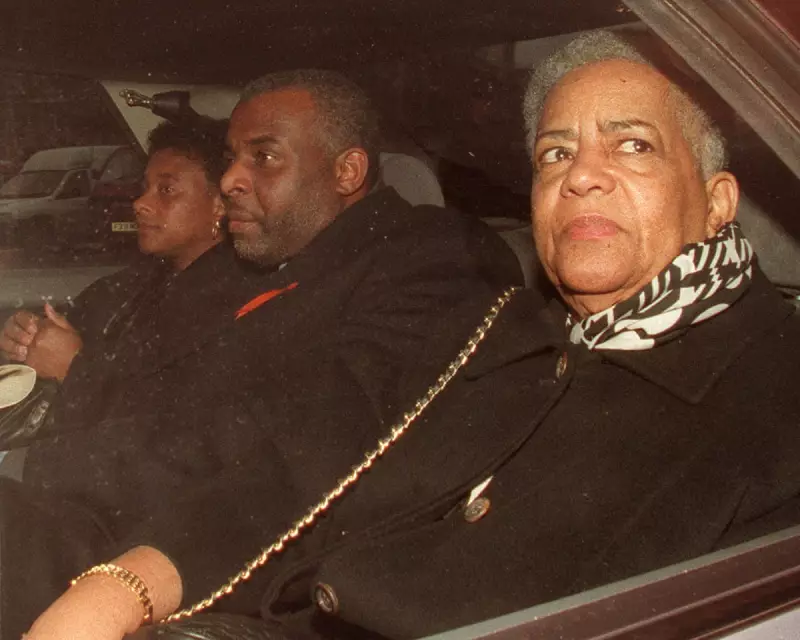
From Caribbean Dreams to British Reality: The Making of an Activist
Lady Rosalind Howells, who has died aged 94, arrived in Britain from Grenada in 1951 with aspirations of becoming a lawyer, but quickly discovered the harsh realities of racial discrimination that would shape her life's work. Instead of pursuing her original career path, she dedicated herself to fighting inequality and improving conditions for black communities in south London.
Howells spent nearly fifty years working tirelessly to enhance housing, education, health services and overall quality of life for marginalised communities. Her commitment extended well beyond her official retirement when she entered the House of Lords in 1999, where she continued advocating for equality on both national and international platforms for two decades.
A Voice for Justice: Championing Major Causes
Known for being both loved and feared, Howells possessed an unwavering determination that made her an formidable advocate. She famously refused to take "no" for an answer from authorities while never saying "no" to anyone seeking her help. Her pursuit of justice spanned from the streets to the courts, representing victims of some of Britain's most significant racial injustices.

She became the prominent spokeswoman for the Lawrence family following the 1993 murder of Stephen Lawrence, persistently challenging government inaction. Her advocacy also extended to the families of the 13 young black people killed in the 1981 New Cross fire, demonstrating her lifelong commitment to seeking justice for all victims of racial violence.
Howells was deeply sceptical of empty gestures, once stating: "Representation means little if the door behind you is closed to others." This philosophy guided her approach to creating genuine, lasting change rather than accepting token positions.
Building Legacy Through Education and Public Service
Born on 10 January 1931 in St David, Grenada, Howells understood from childhood that education represented freedom and power. She often emphasised that "any investment in education is a good one," a belief she put into practice through numerous educational roles.
Her career began at Catford Library, where she met her future husband John Howells, a librarian. She later trained as a social worker and worked for Lewisham council, supporting young single black mothers before confronting council policies across Greenwich's social services.
Howells broke barriers as the first black female member of the Greater London Training Board and served as governor of what would become the University of Greenwich from 1985 to 1997, becoming the institution's first female court of governors member. She later became Chancellor of the University of Bedfordshire from 2009 to 2014.
Her extensive committee work included directorships at the Greenwich Council for Racial Equality (1980-87) and chairing the Lewisham Racial Equality Council (1994-97). During turbulent political times in Grenada during the early 1980s, she served as the country's deputy high commissioner in London.
Howells received an OBE in 1994 and was made a Companion of the Order of Grenada in 2009. In the House of Lords, she served on the constitution committee (2001-04), works of art committee (2009-14) and social mobility committee (2015-16) before retiring in 2019.
She is survived by her daughter Anne, two grandchildren and three great-grandchildren. Her husband John died in 2004 and their daughter Amanda predeceased her in 2011.






