

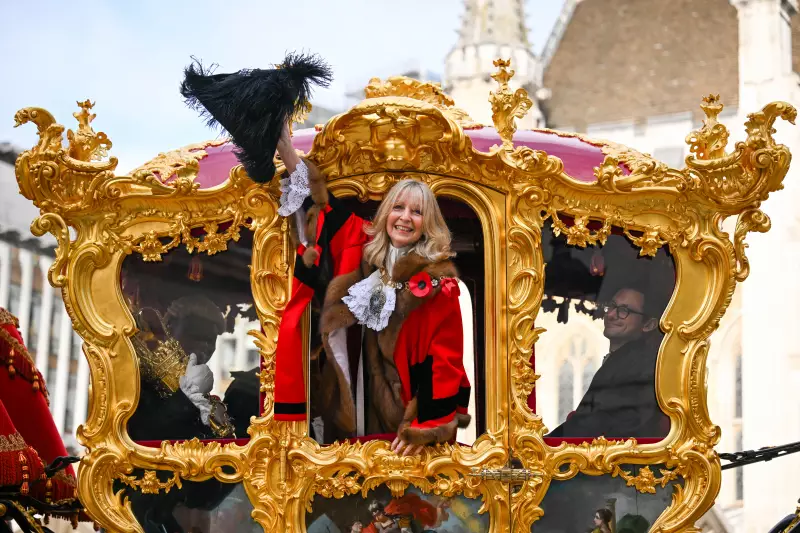
London witnessed a historic moment this weekend as Dame Susan Langley DBE became the first woman to hold the title of "Lady Mayor" in the City of London's 800-year history. The ceremonial procession, traditionally known as the Lord Mayor's Show, transformed into the Lady Mayor's Show for this landmark occasion.
A Symbolic Break from Tradition
Dame Susan arrived at the State Coach, built in 1757, on November 08, 2025, to participate in the world's oldest, longest and least-rehearsed civic procession. This tradition dates back to the early 13th century when King John granted the City of London the right to appoint its own mayor.
The shift from "Lord Mayor" to "Lady Mayor" represents more than just linguistic change. Among over 700 men who have held the position throughout history, only two women have formally occupied the role before Dame Susan. Her appointment signals profound cultural evolution in one of Britain's most traditional institutions.

Progress and Persistent Barriers in Business
While visible leadership milestones are being achieved, women continue to face deep systemic barriers in business. Recent statistics reveal both encouraging progress and concerning gaps in gender equality.
Women now hold 43% of board positions in FTSE 350 companies, a significant increase from just 9.5% in 2011. The complete elimination of all-male boards in the FTSE 350 represents another step forward. Across the Square Mile, women now lead major institutions including asset managers and insurance giants.
However, beneath this progress lies a more complex reality. Only 20% of UK businesses are female-led, and women occupy just 35% of leadership positions. The numbers become even starker at the highest levels - only 17% of FTSE 350 Chairs are women, and female CEOs within the FTSE 350 have dropped to just 19.
The Business Case for Gender Equality
The persistence of these gaps is particularly puzzling given the strong financial performance of gender-diverse companies. Research consistently shows that female-led businesses achieve better returns than those led by men, with one study indicating 35% better returns for ventures founded by women.
McKinsey reports higher financial returns for gender-diverse companies because diverse teams make better decisions, identify opportunities others miss, and connect with broader markets. The business case for equality isn't theoretical - it represents billions of pounds in untapped potential for the UK economy.
The funding gap remains stark. In 2024, only 2% of equity investment went to female founders. Government estimates suggest that if women were funded equally, UK GDP could grow by £310bn.
As the Lady Mayor's Show winds through London's ancient streets this weekend, it carries forward centuries of tradition while embracing necessary change. For every young woman watching Dame Susan in her gilded carriage, the message is clear: the City's highest civic honour is no longer exclusive to one gender. However, the real work lies in transforming symbolic progress into systemic change that enables the next generation of female leaders to thrive in boardrooms, on trading floors, and throughout the entrepreneurial ecosystems that drive Britain's economy forward.






