Melania Trump's Epstein Denial Creates Major Public Relations Disaster
The First Lady of the United States has plunged herself into a significant public relations crisis with a surprise press conference that has achieved the exact opposite of its intended purpose. Melania Trump's decision to address rumors about her connections to convicted sex offender Jeffrey Epstein has instead amplified speculation and drawn renewed attention to the Trump family's relationship with the disgraced financier.
The Barbra Streisand Effect in Overdrive
In what observers are calling a textbook example of the Barbra Streisand effect, Melania Trump's attempt to suppress speculation about her relationship with Epstein has instead generated massive new interest in the topic. The phenomenon, named after the singer's failed attempt to suppress photographs of her Malibu home, describes how efforts to censor information often backfire spectacularly.
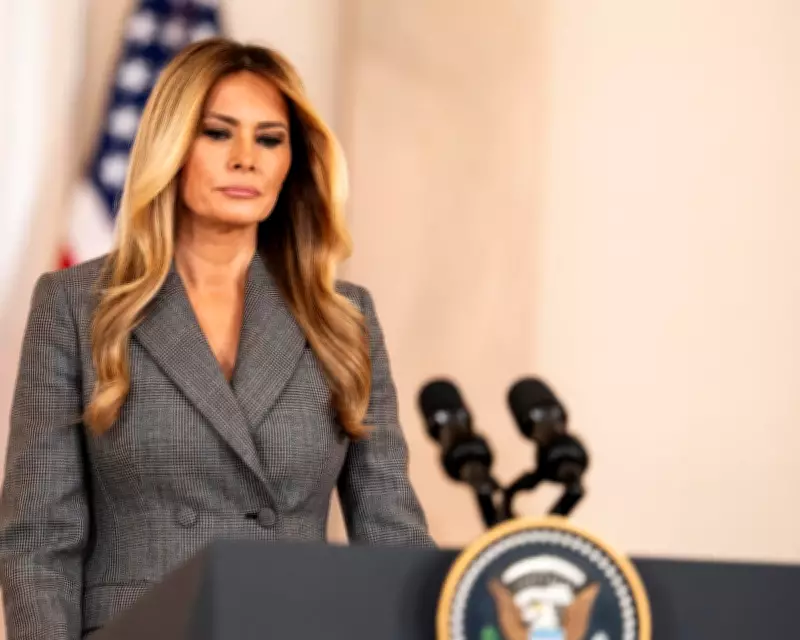
On Thursday, without warning or clear explanation, the First Lady held a press conference to declare that she "never had a relationship" with Epstein or his associate Ghislaine Maxwell. While acknowledging she had met Epstein and even sent a friendly email to Maxwell signed "Love, Melania," Trump insisted these were insignificant interactions that shouldn't be scrutinized.

Questionable Timing and Motivation
The timing of this unexpected announcement has raised numerous questions among political analysts and public relations experts. With global attention focused on international conflicts, Trump's decision to voluntarily bring the Epstein matter back into headlines appears strategically baffling. It remains unclear whether President Donald Trump was aware of or approved his wife's decision to address these rumors publicly.
Several theories have emerged to explain this puzzling move. The official explanation suggests Trump simply reached her limit with the speculation. However, alternative theories suggest the White House might be anticipating damaging revelations about the Trump-Epstein connection and attempted to get ahead of the story. Others speculate this represents another example of the administration's tendency toward impulsive, poorly considered actions.
Survivors' Groups Condemn Statement
The response from Epstein survivors has been particularly critical. In a statement released Thursday, a coalition of survivors accused Trump of "shifting the burden onto survivors under politicized conditions to protect those with power." They further criticized her for diverting attention from former Attorney General Pam Bondi, who faces questions about withheld Epstein files and the exposure of survivors' identities.
"Those failures continue to put lives at risk while shielding enablers," the statement continued. "Survivors have done their part. Now it's time for those in power to do theirs."
Broader Implications and Continuing Questions
Bondi has since announced she will not appear for a scheduled deposition regarding the Justice Department's handling of Epstein files, citing her departure from the Attorney General position. This development ensures questions about the Epstein case will continue, with Trump's press conference having guaranteed renewed media focus on the matter.
The incident raises broader questions about decision-making within the Trump administration and the potential consequences of operating within what critics describe as a sycophantic bubble. When individuals occupy positions of extreme wealth and power, they often lose perspective and receive little honest feedback about their ideas and actions.
Public relations experts universally agree that Trump's approach represents a fundamental misunderstanding of crisis communication principles. Rather than quieting speculation, her statement has fueled it. Rather than distancing herself from the Epstein controversy, she has inextricably linked her name to it in the public consciousness.
As the fallout continues, this episode serves as a case study in how not to handle public relations challenges. The First Lady's attempt to control the narrative has instead created what observers describe as a self-inflicted PR nightmare that will likely have lasting consequences for her public image and the administration's credibility.