The military-backed Union and Solidarity Party (USDP) has secured a sweeping victory in Myanmar's three-phase general election, according to state media reports, cementing an outcome widely anticipated after a tightly controlled political process conducted amidst ongoing civil conflict and widespread repression.
A Predicted Outcome in a Controlled Process
Human rights organisations and several Western nations have denounced the election, the first held since the 2021 military coup, describing it as neither free nor fair. The 11-member Association of Southeast Asian Nations (ASEAN) has stated it will not endorse the process, adding to international condemnation.
The final round of voting concluded in late January, bringing an end to an election that commenced on 28 December. This poll took place more than four years after the military seized power in a coup that overthrew the elected government led by Nobel peace prize laureate Aung San Suu Kyi.

Dominant Parliamentary Results
According to results released on Thursday and Friday, the USDP dominated all phases of the vote, winning an overwhelming majority in Myanmar's two legislative chambers. The party secured 232 of the 263 seats available in the lower Pyithu Hluttaw house and 109 of the 157 seats announced so far in the Amyotha Hluttaw upper chamber.
Myanmar's parliament is expected to convene in March to elect a president, with a new government set to take over in April, as reported by the pro-military Eleven Media Group earlier this month, citing junta spokesman Zaw Min Tun.
Political Context and Criticisms
Myanmar has been in profound political turmoil since the 2021 coup, with the violent suppression of pro-democracy protests sparking a nationwide rebellion. The United Nations estimates that approximately 3.6 million people have been displaced due to the ensuing conflict.
Aung San Suu Kyi's National League for Democracy party was dissolved along with dozens of other political groups, while some remaining parties declined to participate. Critics argue the entire electoral process was meticulously designed to entrench military rule under a civilian facade.
Under Myanmar's political system, the military is constitutionally guaranteed 25% of parliamentary seats, ensuring its continued control even after formal power is transferred to a civilian-led administration.
The Military's Political Proxy
The USDP was founded in 2010 after decades of direct military rule in the Southeast Asian nation, explicitly created to serve as a political proxy for the armed forces. The party is chaired by a retired brigadier general and is packed with other former high-ranking military officers.
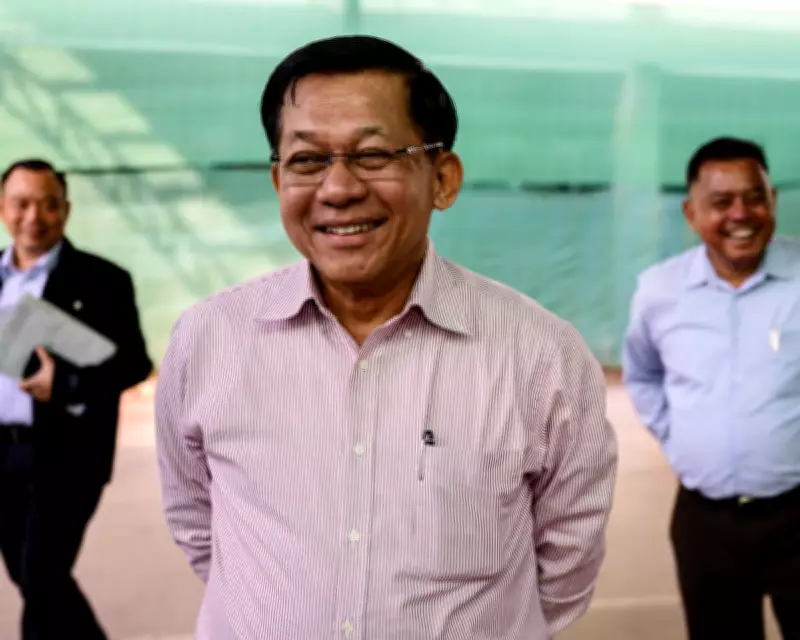
For this election, the USDP contested with 1,018 candidates, representing approximately one-fifth of all registered candidates. Junta chief Min Aung Hlaing, who visited a polling station during the third phase in Mandalay on 25 January 2026, is expected to play a central role in the next administration despite the formal transition.
Turnout and Voting Limitations
Voter turnout reached around 55% across all three phases, significantly lower than the approximately 70% participation in previous elections. This includes the 2015 vote that brought Aung San Suu Kyi to power and the ill-fated 2020 poll, whose results were cancelled by the junta before it staged the coup.
Voting was conducted in 263 of Myanmar's 330 townships, with many areas excluded from the process. The election was cancelled in numerous regions due to ongoing fighting between the military and armed ethnic groups, as well as local resistance forces that emerged following the 2021 coup.
The military government insists the polls were free, fair, and publicly supported. Junta chief Min Aung Hlaing has defended the election as a necessary step toward national stability, rejecting criticism from both domestic opponents and foreign governments while affirming that state responsibilities will be transferred to the elected government.