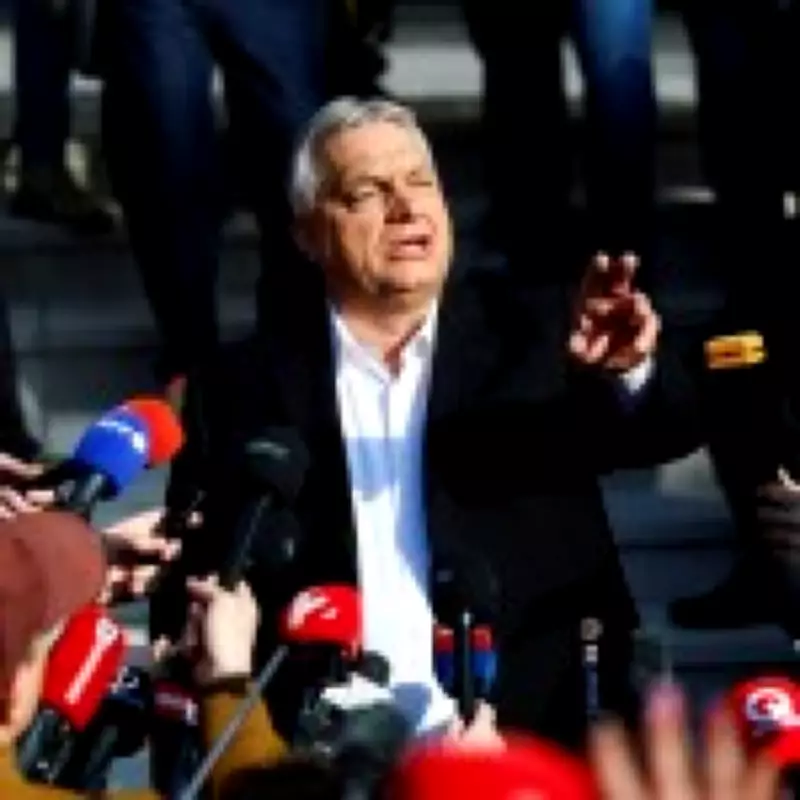
Orban's Defeat After 16 Years Shakes Global Right-Wing Movements
In a historic election on Sunday, Hungarian voters decisively ousted Prime Minister Viktor Orban, ending his 16-year tenure marked by authoritarian policies and a prominent right-wing agenda. The victory went to Peter Magyar, a former loyalist of Orban who campaigned vigorously against corruption and focused on pressing domestic issues such as health care and public transport. Magyar has pledged to rebuild Hungary's strained relationships with the European Union and NATO, ties that significantly deteriorated under Orban's leadership.
Impact on Trump and MAGA Allies
President Donald Trump's MAGA politicians have long supported Orban's government, viewing it as a successful example of conservative, anti-globalist politics in action. However, even a recent intervention by US Vice-President JD Vance, who endorsed Orban during a visit to Budapest earlier this month, failed to secure the necessary votes for Orban's re-election. This outcome signals potential trouble for Trump's movement, which had aligned closely with Orban's populist strategies.
Dr. Sherrill Stroschein, a lecturer in politics at University College London, described Orban's loss as a major win for European politics. She stated, 'Orban's defeat is a good earthquake. It will really change the way things looked like they were going, in terms of the right-wing movement seeming inevitable.' Dr. Stroschein added that Trump and Vance had been riding the idea of an inevitable right-wing international, but Magyar's victory, though conservative, defeated an organization closely tied to Russia and problematic aspects of Trump and Vance's politics.

Expert Analysis on International Implications
Dr. Balazs Szent-Ivanyi, a professor at Aston University in politics and international relations, noted that Orban's defeat might not have a direct impact on the US but carries symbolic weight. He explained, 'Orbán had outsized influence because he demonstrated how you can stay in power while promoting fairly unorthodox policies when he first came to power in the early 2010s. Those policies have become more mainstream and have been adopted by others. We've also seen Trump copying quite a lot from Orbán's playbook.'
According to Dr. Szent-Ivanyi, Orban's ousting after sixteen years shows that hard-right populist leaders who have eroded democratic institutions can still be defeated through constitutional means. He emphasized, 'It's an uphill battle for the opposition, but if they have the right leader at the right time—and conditions align, like economic dissatisfaction—then it is possible. The message for the US is similar: despite Trump rolling back certain freedoms, including around the press, he is not undefeatable.'
Dr. Eitan Tzelgov from the University of East Anglia commented, 'After sixteen years, the architect of illiberal democracy is out. Viktor Orbán wrote the playbook that populist leaders worldwide came to Budapest to study – he was 'Trump before Trump'. But he ran out of enemies to demonise and faced an unprecedented combination: a unified opposition and a conservative challenger from within his own political world.'
Vance's Visit Deemed Ineffective
Both Dr. Stroschein and Dr. Szent-Ivanyi believe that Vance's visit to Budapest and his endorsement of Orban had little effect on the election outcome. Dr. Stroschein described it as a damp squib, noting, 'It was a huge stadium, it was packed, but the real victory in Hungary came from a two-year campaign that was extremely well organised by Tisza. That's the real story.' Dr. Szent-Ivanyi added that the average Hungarian voter likely did not recognize Vance, making his visit insignificant in swaying votes.
Despite this, Orban had invested heavily in building relationships with US conservative circles and evangelical groups, using these connections to bolster his image domestically. However, these efforts proved insufficient in the face of a well-organized opposition campaign.

Future Outlook for Orban and Hungarian Politics
After conceding the race, Orban vowed not to give up, hinting at a possible continued role in Hungarian politics. Dr. Stroschein observed, 'This might have been a way for him to psychologically process a serious defeat, or he might continue to operate in the background. His network still holds a lot of power, but some of them may flee the country. It's definitely something to watch going forward.' As Hungary transitions to new leadership under Peter Magyar, the global political landscape watches closely, with implications for right-wing movements worldwide.