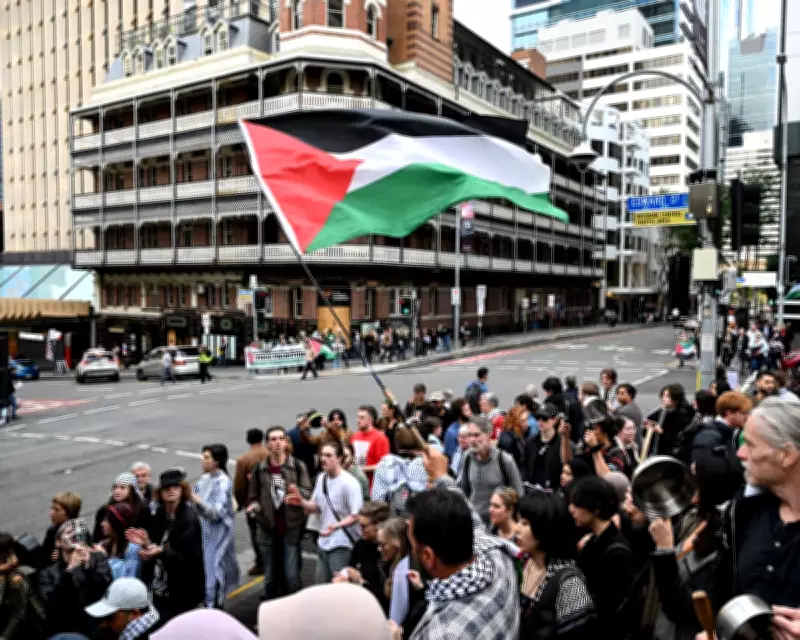
Queensland Implements Ban on Pro-Palestinian Phrase 'River to Sea'
In a significant legislative move, the state of Queensland in Australia has officially banned the use of the pro-Palestinian phrase "river to sea" in public settings. This decision, enacted under new laws, aims to regulate political expressions that authorities deem potentially inflammatory or divisive. The phrase, often associated with Palestinian advocacy groups, has been a point of contention in global political discourse, and its prohibition in Queensland marks a notable step in local governance.
Details of the New Legislation
The new laws, passed by the Queensland government, specifically target the phrase "river to sea," which is commonly used in pro-Palestinian rhetoric to express aspirations for Palestinian sovereignty. Under these regulations, displaying or uttering this phrase in public spaces, such as protests, rallies, or educational institutions, could result in legal penalties. The legislation is part of broader efforts to maintain public order and prevent hate speech, but it has raised concerns among civil liberties advocates.
Supporters of the ban argue that it helps prevent the escalation of tensions and protects community harmony, especially in a multicultural society like Australia. They cite instances where the phrase has been linked to anti-Semitic sentiments or used in contexts that promote violence. However, critics contend that this move infringes on free speech rights and sets a dangerous precedent for political censorship.

Reactions and Implications
The ban has sparked widespread debate across Australia, with various groups weighing in on its implications. Pro-Palestinian activists have condemned the decision, viewing it as an attack on their right to express political views and advocate for human rights. They argue that the phrase "river to sea" is a peaceful expression of solidarity and should not be conflated with extremism.
On the other hand, some community leaders and politicians support the ban, emphasizing the need to curb language that could incite division or hatred. They point to Australia's commitment to social cohesion and the importance of balancing free speech with public safety. Legal experts are also examining the potential constitutional challenges to the laws, as Australia's framework for free expression is less absolute compared to other democracies like the United States.
This development in Queensland reflects broader global trends where governments are increasingly regulating political speech in response to rising social tensions. It also highlights the complex interplay between national security concerns and individual freedoms in modern societies.
Future Outlook and Broader Context
As Queensland enforces this ban, other Australian states may consider similar measures, depending on the outcomes and public response. The situation underscores the ongoing challenges in managing diverse political expressions in a democratic context. Observers note that this could influence how other countries handle similar phrases or symbols in public discourse.
In summary, Queensland's prohibition of the "river to sea" phrase under new laws represents a pivotal moment in Australian politics, stirring debates over free speech, political advocacy, and community relations. The long-term effects on civil liberties and social harmony remain to be seen, but this action is likely to resonate in political and legal circles for years to come.